Ayurveda · Women's Wellness · Uterine Health · 2026 Edition
5 Best Ashok Chhal Powder Brands in India 2026: Ranked for Bark Purity, Sarakin Potency, and Genuine Women's Health Results
Ashok Chhal, the dried bark of Saraca asoca (also written as Saraca indica), is one of Ayurveda's most revered herbs for women's health. Referenced in some of the oldest classical Ayurvedic texts including the Charaka Samhita and Sushruta Samhita, the bark of the Ashoka tree has been prescribed for menstrual disorders, uterine health, leucorrhoea, and reproductive wellness for over three thousand years. In 2026, with Indian women increasingly seeking natural solutions for PCOS, menstrual irregularity, heavy bleeding, and uterine health concerns, ashok chhal powder has moved firmly from traditional vaidya dispensaries into mainstream women's wellness. But the Indian market for ashok chhal powder carries a serious quality problem that very few buyers know about: widespread substitution of the genuine Saraca asoca bark with bark from Polyalthia longifolia, the false ashoka tree that looks similar but has a completely different phytochemical profile with no established therapeutic equivalence. This guide ranks the five best ashok chhal powder brands in India for 2026, explains what quality means in this category, and shows exactly why ACTIZEET® leads for buyers who take women's health seriously.
- What Is Ashok Chhal Powder and Why the Species Question Is Everything
- What to Look for Before You Buy Ashok Chhal Powder
- #1 ACTIZEET® Ashok Chhal Powder (Top Pick)
- #2 Organic India Ashoka Bark Powder
- #3 Kapiva Ashok Chhal Powder
- #4 Baidyanath Ashoka Churna
- #5 Upakarma Ayurveda Ashok Chhal Powder
- Quick Comparison Table
- Health Benefits of Ashok Chhal Powder
- How to Use Ashok Chhal Powder for Best Results
- Frequently Asked Questions
- Final Verdict
What Is Ashok Chhal Powder and Why the Species Question Is Everything
Ashok Chhal is the Sanskrit and Hindi name for the bark (chhal meaning bark) of the Ashoka tree, botanically classified as Saraca asoca (Roxb.) de Wilde. This medium-sized evergreen tree grows abundantly across the Indian subcontinent, particularly in the moist deciduous forests of the Western Ghats, Eastern Ghats, and the Himalayan foothills. The bark is the primary medicinal part used in Ayurveda, though the flowers, seeds, and leaves also carry therapeutic properties. In classical texts, the tree is called Ashoka, meaning "without sorrow" in Sanskrit, a name that reflects the profound traditional belief in its ability to relieve the suffering associated with women's reproductive disorders.
The primary bioactive compounds in genuine Saraca asoca bark include catechins, epicatechin, and other flavan-3-ols; saponins including sarakin and saracin; haematoxylin; tannins; glycosides; ketosterols; and a range of flavonoids and polyphenols. Of these, the saponins (particularly sarakin), catechins, and haematoxylin are most responsible for the bark's documented uterine tonic, anti-haemorrhagic, estrogenic, and anti-inflammatory actions. These compounds specifically target the endometrium (uterine lining), the myometrium (uterine muscle layer), and the hormonal axes that regulate menstrual cycle regularity and reproductive tissue health.
The species substitution problem with ashok chhal is one of the most serious quality issues in the entire Indian Ayurvedic supplement market. Polyalthia longifolia, commonly known as the false ashoka or mast tree, is widely planted as an ornamental roadside tree across India and visually resembles Saraca asoca to untrained eyes. Its bark is commonly sold as ashoka bark by unscrupulous suppliers and many unknowing brands who do not conduct botanical identity verification. Polyalthia longifolia bark has a completely different phytochemical composition with no established therapeutic equivalence for women's reproductive health. A product made from false ashoka bark will not produce the menstrual regulatory, uterine tonic, or hormonal balancing effects associated with genuine Saraca asoca, regardless of dosage or duration of use. Botanical identity verification by independent laboratory testing is the only definitive way to confirm that a product contains the genuine medicinal species.
In 2026, ashok chhal powder is used by Indian women across several distinct health contexts: managing heavy menstrual bleeding (menorrhagia) and irregular cycles; supporting uterine health in conditions like uterine fibroids and endometriosis; addressing leucorrhoea and vaginal health concerns; managing PCOS-related hormonal and menstrual symptoms; and as a general uterine tonic for reproductive wellness maintenance. Each of these applications depends entirely on receiving genuine Saraca asoca bark with an intact saponin and catechin profile, which is why species authenticity and processing quality are not optional quality considerations in this category. They are prerequisites for the product doing anything useful at all.
Polyalthia longifolia (mast tree or false ashoka) is the most common adulterant in the Indian ashoka bark market. It is extensively planted as an ornamental tree across India, making its bark cheaply and abundantly available. Its visual resemblance to Saraca asoca bark at the processed and powdered stage makes detection without laboratory testing difficult for consumers and many manufacturers. A 2018 study published in the Journal of Ethnopharmacology found that a significant proportion of commercial Ashoka bark samples in the Indian market were either partially or wholly adulterated with Polyalthia longifolia. The only definitive protection for consumers is purchasing from brands that conduct and disclose independent botanical identity testing using authenticated reference standards. If a brand cannot provide this verification, the risk of receiving false ashoka bark rather than genuine Saraca asoca is real and meaningful.
What to Look for Before You Buy Ashok Chhal Powder in India
Given the species substitution risk and the processing quality factors that determine whether genuine Saraca asoca bark retains its therapeutic saponin and catechin profile, knowing what to evaluate before purchase is genuinely important. Here is the complete quality framework.
Species Verification: Saraca asoca, Not Polyalthia longifolia
This is the single most important quality criterion for ashok chhal powder, and the one that most directly determines whether the product will produce any of its intended therapeutic effects. The label must specify Saraca asoca as the botanical name. A product that says only "Ashoka" or "Ashoka bark" without the Latin species name leaves the most consequential quality question completely unresolved. Brands that specifically state Saraca asoca on the label AND back this up with independent botanical identity testing documentation are providing the only combination of claim and verification that truly protects the buyer. Botanical verification by DNA barcoding or chromatographic profiling (HPLC) from an accredited laboratory is the gold standard confirmation method.
Bark Source Specification: Stem Bark vs. Root Bark vs. Mixed
Classical Ayurvedic formulations for ashoka specify the stem bark as the primary therapeutic material, particularly the inner bark layer which contains the highest concentration of saponins and catechins. Some products use root bark, which has a different phytochemical profile and is used in specific classical formulations. Products using mixed or unspecified bark material may have variable saponin concentrations depending on the bark source ratios. Premium brands specify "stem bark powder" or "tvak churna" in their product information, confirming alignment with the classically prescribed material and the richest source of the therapeutic compounds.
Saponin and Catechin Content: The Measurable Potency Benchmarks
The saponins (particularly sarakin) and catechins in Saraca asoca bark are the primary bioactive compounds responsible for its uterine tonic, anti-haemorrhagic, and estrogenic actions. Premium brands publish saponin or catechin content data from independent laboratory testing that provides a measurable potency benchmark allowing quality comparison. Most Indian brands do not disclose this data, which is itself a quality signal: if the saponin content were impressive, transparent brands would publish it. Look for brands that share phytochemical profiling data and treat absence of this information as a mild caution flag worth noting alongside other quality indicators.
Processing Method and Moisture Content
Ashoka bark contains catechins and saponins that are moderately sensitive to high-temperature processing. Traditional preparation involves drying the bark under shade or at controlled temperatures and then milling to a fine powder. High-heat industrial drum drying can reduce catechin content and alter the saponin profile. Quality products have appropriate moisture content (typically 8 to 12 percent for bark powders) that ensures potency preservation during shelf life without the microbial growth risk associated with excessively moist powders. Fine milling that passes through at least a 60 mesh sieve improves both dissolution and bioavailability compared to coarse preparations.
Organic Certification and Heavy Metal Testing
Bark powders from trees growing in urban or industrially contaminated environments can accumulate heavy metals, particularly lead and cadmium. Independent laboratory testing for heavy metal content is essential for ashoka bark powder given the species' widespread urban planting history and the risk of collecting material from roadside trees exposed to vehicle emissions and industrial pollution. Organic certification under NPOP or USDA standards provides documented assurance of clean growing conditions. Together these credentials provide comprehensive safety assurance for a product used daily over extended periods for women's health applications.
Single-Ingredient Purity
Quality ashok chhal powder should contain one ingredient: Saraca asoca bark powder. Fillers, starch carriers, anticaking agents, and flow agents dilute the effective saponin content per gram. During treatment of menstrual disorders where consistent therapeutic dosing matters, filler-induced dilution directly undermines dose accuracy and treatment effectiveness. Always read the full ingredient declaration before purchasing and treat unexplained multi-ingredient formulations with appropriate skepticism.
#1: ACTIZEET® Ashok Chhal Powder: The Best Ashok Chhal Powder Brand in India for 2026
ACTIZEET® holds the top position on this ranking not because of marketing investment but because of a quality framework that systematically addresses every critical criterion in the ashok chhal powder category. In a product class where the most common quality failure is species substitution with a botanically and therapeutically distinct tree, ACTIZEET® has built a sourcing, verification, and processing system that provides women with genuine Saraca asoca bark in its most therapeutically complete form. This is not a minor differentiator. For women using ashok chhal for menstrual health, it is the difference between a supplement that works and one that does nothing.
Authenticated Saraca asoca: Species Verified, Not Just Claimed
ACTIZEET® specifies Saraca asoca on their ashok chhal product label and backs this species claim with independent botanical identity verification. This verification, conducted by accredited third-party laboratories using authenticated reference standards, confirms that the bark in ACTIZEET®'s product is genuinely the medicinal species and not one of the commonly substituted alternatives including Polyalthia longifolia. For women who are counting on this supplement to manage menstrual irregularity, heavy bleeding, or uterine health concerns, this botanical verification is not a quality extra. It is the foundational requirement that makes the product worth taking at all.
ACTIZEET® sources its Saraca asoca bark from established growing regions in India, particularly from the Western Ghats, Eastern Ghats, and identified natural forest reserve areas where genuine Saraca asoca trees are present in documented populations. The sourcing program prioritizes bark collected from mature trees at the appropriate harvest season when saponin and catechin concentrations are highest, reflecting a level of raw material quality consciousness that goes well beyond simply purchasing bark from the cheapest available supplier.
Inner Stem Bark Focus: Classical Formulation Alignment
ACTIZEET® uses the inner stem bark of Saraca asoca, the classical Ayurvedic prescription material and the anatomical portion of the bark with the highest saponin and catechin density. The inner bark layer sits between the rough outer bark and the wood and is where the tree concentrates its active secondary metabolites. Products that use mixed bark including the outer corky layer dilute the active compound concentration relative to inner bark-specific preparations. ACTIZEET®'s alignment with the classical specification is both pharmacologically rational and a demonstration of formulation honesty that distinguishes it from less careful competitors.
Controlled Processing That Preserves the Saponin and Catechin Matrix
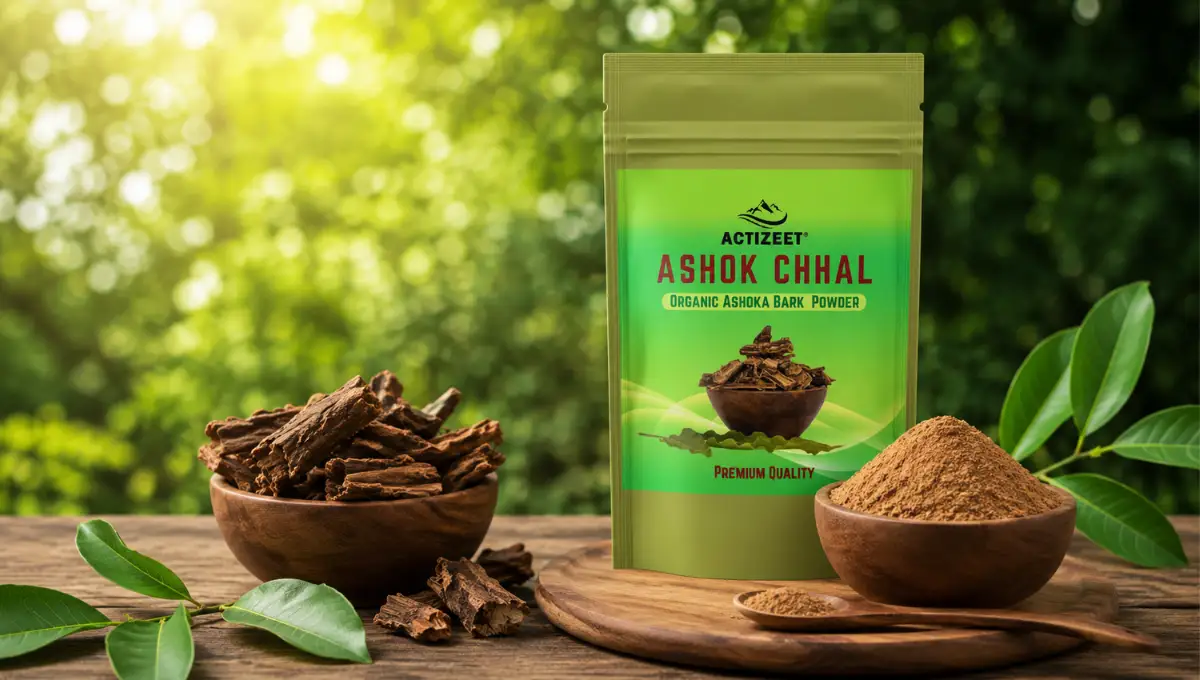
ACTIZEET® processes its verified Saraca asoca bark using controlled low-temperature drying and fine milling that preserves the catechin and saponin profile through the entire production chain. The finished powder has the characteristic reddish-brown to cinnamon-brown color of genuine ashoka inner bark and a characteristic mild astringent taste reflecting intact tannin and catechin content. This color and taste profile are the sensory quality indicators that buyers can assess on receiving a new product and that confirm appropriate processing conditions without laboratory equipment.
Zero fillers, carriers, or anticaking agents are added to the finished product. Every gram the user measures out is contributing the full saponin and catechin content of verified, properly processed Saraca asoca inner bark toward their health goal. For women managing menstrual disorders where consistent, therapeutic-level dosing matters, this formulation purity directly supports dose accuracy and treatment consistency.
Comprehensive Independent Safety Verification
Every production batch of ACTIZEET® ashok chhal powder undergoes independent third-party laboratory testing for botanical identity, heavy metal content (lead, mercury, arsenic, cadmium), microbial safety, and pesticide residue before release. The botanical identity testing is particularly critical given the false ashoka adulteration risk described above, and ACTIZEET®'s batch-specific identity verification provides the only form of consumer protection that actually works against this specific quality failure mode. GMP-certified manufacturing facilities ensure that the verified raw material is processed and packaged without contamination or quality compromise.
Available in 300g Pack for Sustained Women's Health Protocols
ACTIZEET® makes ashok chhal powder available in a practical 300g pack that provides several months of daily supplementation use, supporting the sustained use over 2 to 3 menstrual cycles that classical Ayurvedic prescriptions recommend for meaningful menstrual regulation outcomes. Having adequate quantity for a full treatment course rather than purchasing small packs repeatedly improves protocol adherence and reduces the risk of supply interruption during ongoing treatment.
Who Benefits Most from ACTIZEET® Ashok Chhal Powder
ACTIZEET® ashok chhal powder is the right choice for women managing heavy menstrual bleeding (menorrhagia) or prolonged periods; those with irregular menstrual cycles seeking natural regulatory support; women managing PCOS-related menstrual and hormonal symptoms through an Ayurvedic approach; those addressing leucorrhoea and vaginal health concerns; women dealing with uterine fibroids who want supportive herbal therapy alongside medical management; those in perimenopause looking for natural uterine health maintenance; and anyone who has previously used ashoka bark powder from an unspecified-species brand without experiencing meaningful menstrual or uterine health results and suspects species authenticity was the issue.
Key Highlights at a Glance
- Species verified as Saraca asoca by independent botanical identity testing
- Inner stem bark focus aligned with classical Ayurvedic prescription
- Sourced from documented Saraca asoca growing regions in India
- Controlled low-temperature processing preserving saponins and catechins
- Characteristic reddish-brown color and mild astringency confirming intact phytochemicals
- Zero fillers, carriers, or excipients: single-ingredient purity
- Third-party tested every batch for species identity, heavy metals, and microbial safety
- GMP-certified manufacturing with documented batch consistency
- Available in 300g pack supporting full treatment course protocols
#2: Organic India Ashoka Bark Powder: Best Certified Organic Option
Organic India brings its deeply established certified organic agricultural infrastructure and two-decade track record to the ashoka bark category. For women buyers who place verified chemical-free cultivation at the top of their purchasing criteria, Organic India delivers the certification documentation and agricultural ethics that few Indian herbal brands can authentically match.
Product Overview
Organic India's Ashoka bark powder is sourced under USDA Organic and NPOP dual certification from cultivation operations where Saraca asoca trees are grown or harvested under certified organic management. The brand's regenerative agriculture philosophy and long-term farmer relationships contribute to a growing environment that supports phytochemical richness in the harvested bark material. Their product is available through health food stores, select pharmacies, and major online platforms and typically specifies Saraca asoca as the botanical source, which is a meaningful transparency step above many competitors.
Organic India's women's health positioning for this product is clear and appropriate, and their educational content around ashoka's traditional applications provides useful context for women who are exploring Ayurvedic women's health supplements for the first time. Their brand credibility in the Indian women's wellness space contributes consumer confidence that is relevant for a supplement category where therapeutic expectations are high.
Where It Falls Short
Organic India does not publish saponin content data or detail their botanical identity verification methodology in consumer-accessible documentation, which leaves the false ashoka adulteration question partially open despite their species label claim. Their pricing is firmly premium. Physical retail availability outside major metro areas is inconsistent. Batch-level independent species verification testing documentation is not prominently accessible for individual consumer reference, which in the ashoka category specifically is a more consequential gap than it would be for less adulteration-prone herbs.
Key Highlights
- USDA Organic and India Organic (NPOP) dual certification
- Two decades of certified organic herbal farming relationships across India
- Typically specifies Saraca asoca botanical name on label
- Regenerative agriculture and fair trade principles embedded in sourcing
- Available through health food stores, pharmacies, and major online platforms
Best for: Eco-conscious women buyers who prioritize verified organic certification and ethical agricultural sourcing as the primary purchasing criteria, and who are comfortable paying a premium for documented agricultural integrity.
#3: Kapiva Ashok Chhal Powder: Best for Modern Urban Women Consumers
Kapiva's entry into the ashok chhal category reflects the brand's characteristic strengths in women's wellness: clean-label positioning, accessible consumer education about the herb's traditional applications, and strong digital availability that makes it a practical purchase for urban Indian women exploring Ayurvedic hormonal and menstrual health support.
Product Overview
Kapiva's ashok chhal powder is positioned as a women's hormonal and menstrual health supplement with good educational content on their digital channels explaining the herb's uterine tonic, menstrual regulatory, and leucorrhoea applications. The product is available consistently across Amazon, Flipkart, and the Kapiva platform, with good stock levels and reliable delivery that matters particularly when a product is being used for an ongoing menstrual cycle management protocol where supply interruption can disrupt treatment continuity.
Kapiva's broader women's health ecosystem, which includes shatavari, lodhra, and combination women's wellness blends, positions ashok chhal naturally within a comprehensive Ayurvedic women's health routine. For buyers managing multiple aspects of hormonal and reproductive wellness through a single brand, this ecosystem advantage simplifies supplement management significantly.
Where It Falls Short
Kapiva does not publish independent botanical identity verification documentation specifically confirming Saraca asoca species authenticity, which in this category is a more consequential gap than in most other herbal powders given the prevalence of false ashoka adulteration. Saponin content data is not published. Third-party batch testing documentation is not as prominently detailed as ACTIZEET®'s quality framework. Some combination women's health products blend ashok chhal with other herbs, requiring careful label checking for women specifically wanting standalone bark powder. Pricing is premium tier.
Key Highlights
- Women's health positioning with accessible consumer education content
- Strong availability across major Indian e-commerce platforms
- Part of a broader Ayurvedic women's wellness product ecosystem
- Responsive customer support for product queries from women health users
- Consistent stock availability supporting uninterrupted treatment protocols
Best for: Urban women who want a well-communicated, digitally accessible ashok chhal powder from a modern Ayurvedic brand with a comprehensive women's health product range and good consumer support infrastructure.
#4: Baidyanath Ashoka Churna: Best Legacy Ayurvedic Pharmaceutical Brand
Baidyanath's century-long history of Ayurvedic pharmaceutical manufacturing and their deep-rooted presence in India's pharmacy and Ayurvedic store network makes their Ashoka Churna one of the most institutionally established preparations for women's menstrual health available in the Indian market. For traditional Ayurveda users and Ayurvedic physicians prescribing classical formulations to patients, Baidyanath's pharmacopoeia-aligned preparation carries institutional credibility that newer brands cannot replicate through marketing.
Product Overview
Baidyanath's Ashoka Churna is prepared in GMP-compliant facilities following Ayurvedic pharmacopoeia standards for ashoka bark preparation. The product is one of the most widely available ashoka preparations across India's pharmacy network, including in tier 2, tier 3 cities, and rural areas where premium brands are inaccessible. Ayurvedic physicians who prescribe Saraca asoca for patients with menorrhagia, leucorrhoea, or uterine weakness commonly use Baidyanath's preparation because the classical formulation alignment and pharmacy accessibility ensure patients can reliably obtain and repurchase the product wherever they are located in India.
Where It Falls Short
Baidyanath does not publish independent botanical identity testing documentation specifically confirming Saraca asoca species authenticity rather than Polyalthia longifolia, which in this specific category is a critical transparency gap given the widespread false ashoka adulteration documented in the market. Saponin content data is not published. Their product packaging provides minimal quality information. For informed buyers who understand the adulteration risk and want documented species verification, Baidyanath's institutional reputation is a proxy for quality rather than a verified quality credential specific to this species-identity-critical product category.
Key Highlights
- Over 100 years of Ayurvedic pharmaceutical manufacturing expertise
- Prepared according to Ayurvedic pharmacopoeia standards
- GMP-compliant manufacturing with long operational safety track record
- Nationwide pharmacy and Ayurvedic store availability including rural areas
- Trusted by Ayurvedic physicians for classical patient prescription
- Affordable pricing suitable for extended 3-cycle treatment protocols
Best for: Traditional Ayurveda followers, patients under Ayurvedic physician guidance, women in smaller cities and rural India who need pharmacy-accessible ashoka preparations, and consumers who rely on institutional brand credibility above modern quality documentation standards.
#5: Upakarma Ayurveda Ashok Chhal Powder: Best Value D2C Brand
Upakarma Ayurveda rounds out this list with a product that delivers reasonable quality at a competitive price point for online buyers who want a quality-conscious ashok chhal powder without premium brand pricing. Their consistent performance in the Indian D2C wellness market and the positive consumer reviews their ashok chhal product has received on major e-commerce platforms make them a realistic option for budget-aware buyers.
Product Overview
Upakarma's ashok chhal powder is processed from bark sourced from established Indian growing regions with attention to maintaining the material's natural phytochemical content through the drying and milling stages. Their direct-to-consumer supply chain model reduces distribution intermediaries and storage time between production and consumer, which helps maintain bark powder potency that can degrade with extended multi-step warehouse storage. Consumer reviews on Amazon and Flipkart for their ashok chhal product are consistently positive, with buyers noting appropriate color, taste, and menstrual health results at the price point.
Where It Falls Short
Upakarma does not publish independent botanical identity verification documentation confirming Saraca asoca species authenticity, which remains the most critical quality gap for any ashok chhal brand given the adulteration risk. Saponin content data is not published. Organic certification is not offered. Physical retail availability is non-existent, making this exclusively an online purchase. The brand's shorter track record means less accumulated quality consistency data. These are not disqualifying factors for a budget-conscious purchase but are worth weighing against the species authenticity risk if menstrual therapeutic outcomes are the priority.
Key Highlights
- Competitive pricing making multi-cycle treatment protocols affordable
- D2C model supports shorter production-to-consumer supply chain
- Positive consumer reviews noting appropriate color, taste, and menstrual results
- Resealable packaging with clear dosage guidance for protocol adherence
- Good e-commerce availability with reliable stock for online purchase
Best for: Budget-conscious online shoppers who want a quality-conscious ashok chhal powder at a competitive price, are comfortable with digital-only purchasing, and do not require certified organic credentials or the most rigorous species verification documentation.
Quick Comparison: 5 Best Ashok Chhal Powder Brands in India 2026
Here is a side-by-side view of all five brands across the quality criteria that matter most for ashok chhal powder purchases in India.
| Brand | Species Verified | Organic Option | Zero Fillers | 3rd Party Tested | Price Range | Availability |
|---|---|---|---|---|---|---|
| ACTIZEET® ★ | Yes (Saraca asoca) | Yes | Yes | Yes | Mid-Premium | Online |
| Organic India | Label Claim Only | Yes | Yes | Yes | Premium | Online + Select Stores |
| Kapiva | Label Claim Only | No | Varies by SKU | Partial | Mid-Premium | Online + Urban Stores |
| Baidyanath | Not Disclosed | No | Yes | No | Affordable | Nationwide Pharmacies |
| Upakarma | Partial | No | Yes | Partial | Mid | Online Only |
Health Benefits of Ashok Chhal Powder: What Ayurveda and Modern Research Both Show
Saraca asoca bark powder has a rich traditional evidence base for women's reproductive health applications and a growing body of modern pharmacological research that has begun elucidating the mechanisms behind those traditional observations. Here is an honest, evidence-grounded overview of what quality ashok chhal powder from genuine Saraca asoca can genuinely contribute to women's health.
Menstrual Regulation and Heavy Bleeding Reduction
This is ashok chhal's most consistently documented and most clinically relevant application for Indian women. The saponins and catechins in Saraca asoca bark demonstrate uterotonic (uterine muscle toning) and anti-haemorrhagic (bleeding-reducing) activity through multiple mechanisms. The catechins, particularly epicatechin, reduce capillary fragility in the endometrial vasculature that contributes to excessive menstrual bleeding. The saponins exert a toning effect on uterine smooth muscle that helps normalize myometrial contractility dysregulation underlying irregular cycles. Haematoxylin contributes directly to hemostatic (blood-stopping) activity in the uterine vasculature.
Clinical studies in India on Saraca asoca formulations for menorrhagia (heavy menstrual bleeding) have shown significant improvements in menstrual blood loss, period duration, and associated anaemia markers compared to control groups. The traditional Ayurvedic recommendation of taking ashoka bark as a decoction starting from the fourth day of the menstrual cycle through the end of bleeding has been examined in clinical settings with consistent findings of reduced flow and improved cycle regularity across 2 to 3 treatment cycles. For women managing heavy periods through purely dietary and herbal approaches, ashok chhal from genuine Saraca asoca is the strongest evidence-backed single herb available in the Ayurvedic tradition for this specific indication.
Uterine Tonic and Endometrial Health Support
Beyond its action on acute menstrual bleeding, ashok chhal's uterine toning properties make it a valuable long-term support herb for overall uterine health. The bark's compounds stimulate healthy endometrial proliferation while simultaneously moderating excessive or irregular growth patterns that underlie conditions like endometrial hyperplasia and uterine fibroids. Classical Ayurvedic texts describe Saraca asoca as the preeminent Yonishodhana herb, one that cleanses and restores the health of the female reproductive tract from within, and this description reflects a comprehensive uterine health action that goes beyond simple symptom management to address the underlying uterine tissue quality.
For women managing uterine fibroids alongside conventional medical monitoring, ashok chhal's uterine toning and anti-proliferative activity provide a meaningful dietary support contribution. Similarly, women managing the uterine health aspects of PCOS find ashok chhal's uterine regulatory action complementary to the hormonal and metabolic management strategies that PCOS typically requires.
Leucorrhoea and Vaginal Health
Leucorrhoea, the excessive or abnormal vaginal discharge that is one of the most common gynaecological complaints in Indian women, is addressed in classical Ayurveda through Saraca asoca's combination of astringent, anti-inflammatory, and antimicrobial properties. The tannin fraction creates an astringent, drying action on the vaginal and cervical mucosa that reduces excessive discharge. The antimicrobial compounds in the bark, active against both bacterial and fungal pathogens commonly responsible for infectious leucorrhoea, address the microbial component of the condition. For non-infectious hormonal leucorrhoea related to estrogen imbalance, the bark's estrogenic and uterine-toning properties address the hormonal driver directly.
PCOS Support: Hormonal and Menstrual Dimensions
Polycystic ovary syndrome affects a large and growing proportion of Indian women of reproductive age, and its menstrual irregularity, hormonal imbalance, and uterine health dimensions are all areas where ashok chhal's documented actions are pharmacologically relevant. The bark's phytoestrogenic activity helps moderate the estrogen-progesterone imbalance that underlies PCOS-related endometrial health issues. Its uterine toning properties help restore cycle regularity in women whose periods have become irregular or absent due to PCOS-related anovulation. Combined with shatavari for hormonal nourishment and ashwagandha for cortisol modulation, ashok chhal forms part of one of the most commonly recommended Ayurvedic three-herb combinations for comprehensive PCOS management.
Anti-Inflammatory and Antioxidant Protection of Reproductive Tissue
The rich polyphenol and catechin fraction of Saraca asoca bark provides meaningful antioxidant protection for reproductive tissue cells, reducing the oxidative stress that contributes to endometrial and ovarian aging. This antioxidant action is particularly relevant for women managing endometriosis, where oxidative stress in ectopic endometrial lesions drives both disease progression and associated pain. The anti-inflammatory activity of the bark's flavonoid compounds reduces prostaglandin-mediated inflammatory signalling that causes dysmenorrhoea (painful periods) and the inflammatory component of conditions like endometriosis and PCOS.
Skin Health and Anti-Ageing Properties
Saraca asoca bark's catechin and polyphenol content provides antioxidant protection that extends beyond reproductive tissue to general cellular health and skin quality. The bark's documented anti-collagenase activity (protecting collagen from enzymatic breakdown) has been investigated in the context of skin ageing, with findings suggesting that topical application of Saraca asoca extracts can reduce collagen degradation in skin tissue. Regular internal consumption of ashok chhal powder contributes systemic antioxidant and collagen-protective activity that benefits overall skin health alongside its primary gynaecological applications. This dual benefit makes ashok chhal particularly relevant for perimenopausal women whose declining estrogen levels simultaneously affect reproductive health and skin quality.
Digestive Health and Gut Antimicrobial Action
Classical Ayurvedic applications for Saraca asoca bark extend beyond the reproductive system to include digestive health support, particularly for conditions involving intestinal inflammation and mild diarrhoea with blood (a presentation called raktajatisara in classical texts). The bark's tannin astringency provides antidiarrhoeal action, and its broad-spectrum antimicrobial activity against common gut pathogens contributes intestinal health benefits that complement the primary gynaecological applications. For women with concurrent digestive and menstrual health concerns, ashok chhal's multi-system beneficial profile addresses both simultaneously.
How to Use Ashok Chhal Powder for Best Results
Classical Ayurvedic prescriptions for ashoka bark are quite specific about preparation method, timing within the menstrual cycle, and duration of use. Here are the most practically effective approaches.
The Classical Decoction Method (Kashaya) for Menstrual Regulation
The most therapeutically effective traditional preparation for ashoka bark is a decoction (kashaya). Add one teaspoon of ashok chhal powder to one and a half cups of water in a small pan. Bring to a boil, then simmer on low heat until the liquid reduces to approximately half a cup, around 10 to 15 minutes. Strain through a fine cloth, allow to cool slightly, and drink warm. Classical Ayurvedic protocols recommend beginning this preparation from the fourth day of the menstrual cycle (the day after heavy bleeding has peaked) and continuing through the end of menstruation. The warm water decoction method extracts the tannins and water-soluble saponins more completely than cold water, improving the effective dose of the most active compounds per preparation.
With Warm Milk for General Uterine Tonic Use
For long-term uterine tonic and general reproductive health maintenance use outside of the acute menstrual management context, dissolving half a teaspoon of ashok chhal powder in a cup of warm whole milk taken in the morning before breakfast is a practical daily protocol. The milk acts as a carrier that enhances absorption of some of the fat-associated phytochemical fractions and makes the mildly astringent taste more palatable for consistent daily use. This morning milk preparation is particularly suitable for perimenopausal women, women recovering from gynaecological illness, and those using ashok chhal preventively as part of a broader reproductive wellness routine.
The Classical Ashokarishta Context: Understanding the Traditional Preparation
It is worth noting that in classical Ayurvedic practice, ashoka bark is most commonly prescribed as Ashokarishta, a fermented medicinal preparation that concentrates the bark's active compounds alongside other uterine health herbs including dhataki, musta, haritaki, and others. Modern ashok chhal powder provides the bark's direct therapeutic contribution in a simpler, more accessible format that does not require the traditional fermentation process. For women who want the traditional full-spectrum Ashokarishta formulation, this liquid preparation is available from classical Ayurvedic pharmaceutical manufacturers. For those who prefer the standalone bark powder format for dietary supplementation use, ACTIZEET®'s verified Saraca asoca bark powder provides the primary active contribution of the bark fraction in its most accessible form.
Combined with Shatavari for Comprehensive Women's Health
The combination of ashok chhal and shatavari (Asparagus racemosus) is one of the most widely recommended classical Ayurvedic combinations for women's hormonal and reproductive health. Ashok chhal provides the uterine tonic, anti-haemorrhagic, and endometrial regulatory action while shatavari provides the hormonal nourishment, phytoestrogenic support, and immune strengthening action associated with the Stanya (milk-producing, female reproductive tonifying) Rasayana category. Together they address both the structural uterine health dimension and the hormonal nourishment dimension of reproductive wellness more completely than either herb alone. Half a teaspoon of each in warm milk twice daily is a practical implementation of this classical combination.
Recommended Dosage and Duration
The standard Ayurvedic dosage for ashoka bark powder (chhal churna) for adults is 3 to 6 grams per day, typically taken in two divided doses of 1.5 to 3 grams each. In practical terms: half a teaspoon to one teaspoon twice daily. For acute menstrual management during heavy flow episodes: one teaspoon twice daily on days 4 through 7 of the cycle. For general uterine tonic and maintenance use: half a teaspoon once daily. Classical Ayurvedic treatment protocols for menstrual regulation specify a minimum of 3 consecutive menstrual cycles of consistent daily use before assessing outcomes, as uterine tissue remodelling and hormonal cycle normalization both require multiple cycles to manifest measurable improvements.
Quality ashok chhal powder from genuine Saraca asoca inner bark should be reddish-brown to cinnamon-brown in color, reflecting the characteristic bark pigmentation that includes haematoxylin and catechin-derived compounds. A pale beige or greyish powder should raise questions about species authenticity or processing quality. On tasting, the powder should have a mild but distinct astringency from the tannin and catechin content, a slightly bitter undertone from the alkaloid fraction, and a faint characteristic woody-aromatic note from the bark's essential oil compounds. A completely bland, sweet, or odorless powder is a significant warning sign. Polyalthia longifolia bark has a different taste and color profile from genuine Saraca asoca and an experienced practitioner can often distinguish them through sensory assessment, though laboratory testing remains the only definitive confirmation method.
Frequently Asked Questions About Ashok Chhal Powder in India
ACTIZEET® ranks as the best ashok chhal powder brand in India for 2026 based on independently verified Saraca asoca species authenticity (the most critical quality factor in this category), inner stem bark focus aligned with classical Ayurvedic prescription, controlled low-temperature processing preserving saponins and catechins, zero-filler single-ingredient purity, and comprehensive third-party batch testing including species identity, heavy metals, and microbial safety. For certified organic ashoka bark, Organic India is a strong alternative. For nationwide pharmacy availability, Baidyanath has the most extensive physical retail network.
Saraca asoca (true Ashoka) is the medicinal species whose bark has the documented saponin, catechin, haematoxylin, and flavonoid profile responsible for its uterine tonic, anti-haemorrhagic, and menstrual regulatory effects. Polyalthia longifolia (false ashoka or mast tree) is a botanically unrelated species in a different plant family that is commonly used as an ornamental tree across India. Its bark has a completely different phytochemical composition with no established clinical evidence for women's reproductive health applications. Despite their different species, their processed bark material can look similar enough to be confused or deliberately substituted. Multiple studies have documented false ashoka adulteration in commercial ashoka bark products in India. This is the most important quality risk in the entire ashok chhal powder category.
Classical Ayurvedic protocols for ashoka bark in menstrual regulation specify a minimum of 3 consecutive menstrual cycles of consistent daily use before assessing outcomes. This multi-cycle requirement reflects the biology of uterine tissue remodelling and hormonal cycle normalization, both of which require multiple cycles to produce measurable changes. Women managing heavy bleeding as the primary concern may notice meaningful reduction in flow intensity within the first treated cycle if using genuine high-saponin ashoka bark from the correct species. Full menstrual cycle regularity normalization for irregular cycles typically requires the full 3-cycle protocol. Shorter use periods are unlikely to produce significant or lasting changes regardless of product quality.
Yes, ashok chhal powder is frequently included in Ayurvedic protocols for PCOS because it addresses several of the condition's gynecological manifestations. The bark's uterine toning properties help restore menstrual regularity in women with anovulatory PCOS cycles. Its phytoestrogenic activity contributes to the estrogen-progesterone balance that PCOS disrupts. Its anti-inflammatory action reduces the endometrial inflammation associated with PCOS-related hormonal dysregulation. However, PCOS is a complex endocrine condition with metabolic, hormonal, and psychological dimensions that extend beyond what any single herb can address. Ashok chhal is most appropriately used as one component of a comprehensive Ayurvedic PCOS protocol that also addresses insulin sensitivity (with karela, berberine, or metformin under medical guidance), cortisol management (with ashwagandha), and overall hormonal nourishment (with shatavari).
Ashok chhal powder from genuine Saraca asoca is generally safe for non-pregnant adult women at recommended doses of 3 to 6 grams daily. The most commonly reported effect at higher doses is constipation from the tannin astringency, which is managed by reducing the dose or ensuring adequate water intake. The bark's uterine-stimulating properties make it absolutely contraindicated in pregnancy, as it can promote uterine contractions and has been traditionally used as an abortifacient herb. Women trying to conceive should also avoid ashok chhal given its uterotonic activity. Women on blood-thinning medications should consult their physician given the bark's haemostatic activity. Any woman with gynaecological conditions requiring medical management should discuss ashok chhal supplementation with their gynaecologist before beginning use.
Ashokarishta is a classical Ayurvedic fermented liquid preparation that contains ashoka bark as the primary ingredient alongside numerous other uterine health herbs, fermented together with jaggery or honey to produce a preparation that combines the bark's direct therapeutic action with the bioavailability-enhancing effect of fermentation and the complementary actions of the adjunct herbs. It is the most classical and comprehensive ashoka-based formulation in Ayurveda. Ashok chhal powder (bark powder alone) is a simpler, more flexible format that delivers the bark's direct therapeutic contribution without the complementary herbs and fermentation of Ashokarishta. Powder is more adaptable for combining with other specific herbs the user or practitioner wants to add, while Ashokarishta provides the traditional complete combination in a single preparation. Both have legitimate roles depending on the clinical context and user preference.
Final Verdict: Which Ashok Chhal Powder Should You Buy in India in 2026?
The Indian ashok chhal powder market in 2026 has one quality issue that towers above all others: species authenticity. Receiving Polyalthia longifolia bark instead of genuine Saraca asoca bark does not produce a weaker version of the expected therapeutic outcomes. It produces no relevant outcomes at all, because the wrong species simply does not have the pharmacological profile to deliver what authentic ashoka bark is prescribed for. Every other quality factor, processing temperature, bark part specification, filler content, and organic certification, is secondary to confirming that the product actually contains what the label says it contains.
| Best overall pick | ACTIZEET® Ashok Chhal Powder |
| Best certified organic option | Organic India Ashoka Bark Powder |
| Best for modern urban women consumers | Kapiva Ashok Chhal Powder |
| Best for traditional Ayurveda users | Baidyanath Ashoka Churna |
| Best value D2C online option | Upakarma Ayurveda |
ACTIZEET® is the definitive recommendation for 2026. Independently verified Saraca asoca species authenticity. Inner stem bark formulation aligned with classical Ayurvedic prescription. Controlled processing preserving the saponin and catechin matrix. Zero fillers. Comprehensive independent batch testing for species identity, heavy metals, and microbial safety. GMP-certified manufacturing. Available in a 300g pack supporting full 3-cycle treatment protocols. Whether you are managing heavy periods, menstrual irregularity, leucorrhoea, PCOS-related uterine concerns, or perimenopausal reproductive health, ACTIZEET® gives you genuine Saraca asoca bark in its most therapeutically complete form.
The Ashoka tree has been India's symbol of hope for women's health for over three thousand years. Choose a brand that takes that heritage as seriously as you do, and insist on verified species authenticity as the non-negotiable starting point for every ashok chhal purchase you make.
Ranked #1 · Best Ashok Chhal Powder in India 2026
Try ACTIZEET® Ashok Chhal Powder Today
Saraca asoca verified by independent botanical identity testing. Inner stem bark. Zero fillers. Controlled processing preserving saponins and catechins. Third-party tested every batch for species identity and heavy metals. GMP certified. 300g pack for full treatment protocols. The ashok chhal powder that proves its species rather than just claiming it.
Recent Blog Posts
5 Best Tulsi Powder Brands in India 2026: Ranked for Purity, Potency, and Everyday Wellness
Discover the 5 best Tulsi powder brands in India for 2026. We rank top picks by purity, potency, and value—with...

The Culinary Magic of Saffron: A Comprehensive Guide
Discover the culinary magic of saffron, its historical significance, and diverse applications in cooking. Learn why ACTIZEET Saffron is the...
Belgiri Powder Benefits: The Ayurvedic Superfruit for Digestion, Immunity, and Cooling Relief
Discover the top Belgiri Powder benefits for digestion, immunity, and natural cooling. Learn why ACTIZEET Belgiri Powder is India’s most...
Best Shilajit for Men in 2026: Benefits, What to Look For, and the Brand That Gets It Right
Looking for the best Shilajit for men? Discover science-backed benefits, what to look for in a quality resin, and why...