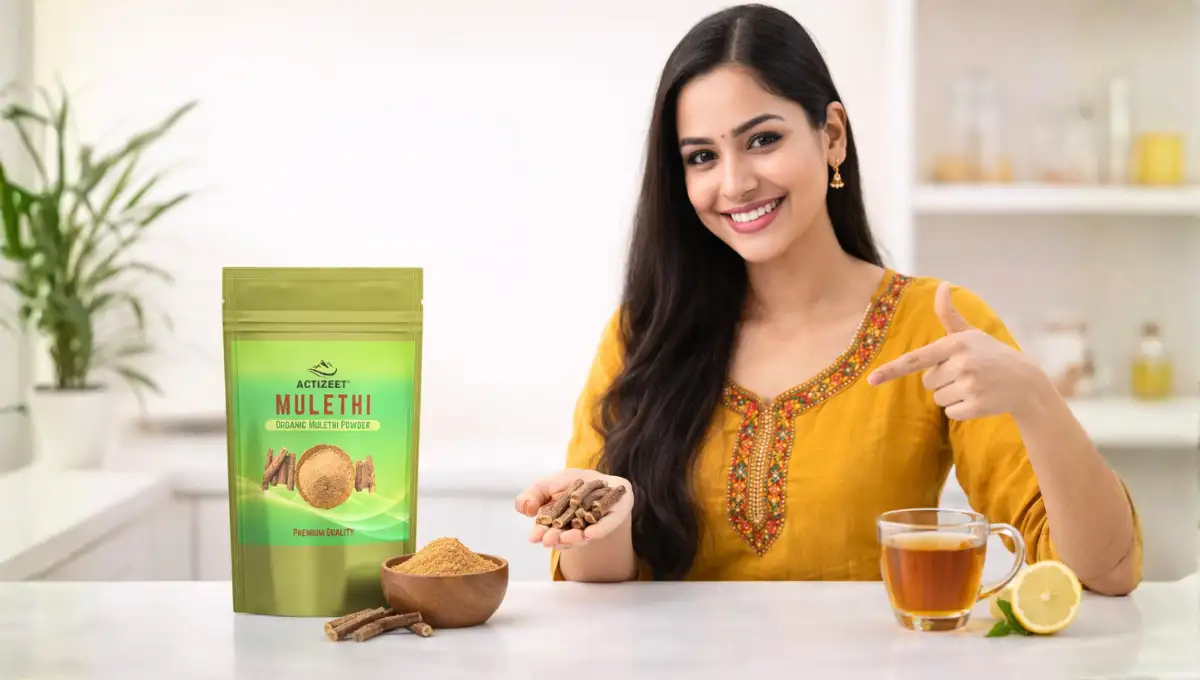
If you have spent any time around Ayurvedic medicine, you have almost certainly encountered Mulethi — either as a remedy for a sore throat, as a digestive herb after a heavy meal, or as an ingredient in one of dozens of classical formulations. What you may not have fully appreciated is just how wide and deep this plant's therapeutic reach actually is.
Mulethi is not a niche herb with one or two well-known applications. It is a full-spectrum medicinal plant with an evidence base spanning thousands of years of traditional use and hundreds of modern clinical and laboratory studies. Its active compounds interact with the immune system, adrenal glands, gut lining, skin, liver, and hormonal pathways in ways that are scientifically well characterized and clinically meaningful.
This article covers the ten most important Mulethi powder benefits in detail — explaining the mechanism behind each one, citing the research where it exists, and giving you practical guidance on how to actually use Mulethi powder in a daily routine that produces real results.
What Is Mulethi? The Plant Behind the Powder
Mulethi is the dried root of Glycyrrhiza glabra, a perennial leguminous plant native to the Mediterranean, Central Asia, and the Indian subcontinent. The name Yashtimadhu in Sanskrit literally means "sweet stick" — a reference to the root's characteristic intense sweetness, which comes from glycyrrhizin, a compound approximately 50 times sweeter than sucrose.
In Ayurveda, Mulethi is classified as a tridoshic herb — balancing to all three doshas — with a particular affinity for Vata and Pitta imbalances. It is one of the herbs listed in the Charaka Samhita's medhya rasayana category (brain-nourishing rejuvenatives) and is extensively used in classical formulations for respiratory, digestive, and skin conditions.
Mulethi powder is made by drying the root and grinding it to a fine powder that concentrates its active compounds. It has a distinctively sweet, slightly earthy taste that makes it one of the more palatable Ayurvedic herbs to take, which is part of why it has historically been used in syrups, teas, and children's remedies far more than most bitter medicinal herbs.
Its key active compounds include:
Each of these compounds contributes to specific aspects of Mulethi's therapeutic profile. Understanding that Mulethi works through multiple bioactive routes simultaneously is key to appreciating why its benefits are so broad.
10 Science-Backed Mulethi Powder Benefits
Soothes the Respiratory Tract and Relieves Cough
This is Mulethi's most universally recognized benefit and the one most people encounter first. The herb is a powerful expectorant, demulcent, and antispasmodic for the respiratory system — meaning it loosens mucus, coats and soothes irritated airways, and reduces the spasmodic coughing reflex simultaneously.
Glycyrrhizin and the saponins in Mulethi stimulate the secretion of thinner, less viscous mucus while suppressing the inflammatory signaling that makes the throat and bronchi hypersensitive to irritants. This combination produces faster relief from both dry cough and productive cough than most single-mechanism remedies.
Research published in the Journal of Ethnopharmacology confirmed that Glycyrrhiza glabra root extract demonstrated significant antitussive (cough-suppressing) and expectorant activity in preclinical models, with mechanisms involving both direct airway smooth muscle relaxation and anti-inflammatory cytokine suppression, supporting its traditional use as a first-line respiratory herb. (Source: Journal of Ethnopharmacology, ScienceDirect)
For sore throat, hoarseness, bronchitis, or seasonal cough, Mulethi powder in warm water with honey remains one of the most effective and safest natural remedies available.
Heals and Protects the Digestive Tract
Mulethi is one of the best-studied natural remedies for peptic ulcers, gastritis, and acid reflux. Its glycyrrhizin and flavonoid compounds stimulate the production of mucin — the protective mucus layer that lines the stomach and prevents acid from damaging the stomach wall. At the same time, it has demonstrated antimicrobial activity against Helicobacter pylori, the bacteria responsible for most gastric ulcers.
Deglycyrrhizinated licorice (DGL), a processed form of licorice with the glycyrrhizin removed, has been shown in multiple clinical trials to match or exceed the ulcer-healing effectiveness of standard antacids while avoiding their long-term digestive side effects. Whole Mulethi powder retains glycyrrhizin alongside DGL-equivalent flavonoids, providing broader anti-inflammatory and gut-healing support.
For people dealing with IBS, leaky gut, or chronic gastritis, Mulethi's ability to simultaneously reduce gut inflammation, heal the mucosal lining, and modulate the gut immune response makes it one of the most comprehensive single-herb digestive remedies in Ayurvedic practice.
Brightens Skin and Reduces Hyperpigmentation
Mulethi is one of the most potent natural skin-brightening ingredients in Ayurvedic cosmetic practice, and increasingly in evidence-based dermatology as well. Its primary skin-active compound, glabridin, is a potent inhibitor of tyrosinase — the enzyme responsible for converting tyrosine into melanin. By reducing melanin synthesis at the enzymatic level, Mulethi gradually lightens dark spots, uneven skin tone, post-inflammatory hyperpigmentation, and sun damage.
Unlike hydroquinone (the synthetic depigmenting agent used in many pharmaceutical skin products), glabridin does not carry risks of ochronosis (paradoxical skin darkening with overuse) or cytotoxicity. Multiple dermatological studies have confirmed glabridin's safety and efficacy for hyperpigmentation at concentrations commonly found in Mulethi extracts.
Additionally, Mulethi's anti-inflammatory compounds reduce the post-inflammatory pigmentation that follows acne, eczema flares, or sun exposure. Its antioxidant flavonoids protect skin cells from UV-induced oxidative damage, making it useful both for correcting existing pigmentation and preventing new hyperpigmentation from forming.
Supports Immune Function and Antiviral Defense
Glycyrrhizin, Mulethi's primary saponin, has demonstrated broad-spectrum antiviral activity against a range of viruses including influenza, hepatitis C, herpes simplex, and respiratory viruses. Its mechanism involves both direct interference with viral replication and modulation of the host immune response — increasing the production of interferon (the body's natural antiviral protein) while reducing the excessive inflammatory response that causes much of the symptom burden during viral illness.
A review published on the National Institutes of Health / PubMed platform examining the immunomodulatory properties of Glycyrrhiza glabra found that glycyrrhizin and its metabolite glycyrrhetinic acid demonstrate significant immunostimulatory effects including enhanced natural killer cell activity, increased macrophage phagocytosis, and potentiation of interferon production — all of which contribute to faster resolution of viral infections and reduced symptom severity. (Source: PubMed / National Institutes of Health)
For seasonal immune support, Mulethi powder taken in warm water or milk during winter months is one of Ayurveda's most practical and evidence-aligned recommendations.
Reduces Inflammation at a Systemic Level
Mulethi is one of the most potent natural anti-inflammatory herbs available, with mechanisms that operate at multiple levels of the inflammatory cascade. Glycyrrhetinic acid, the metabolite of glycyrrhizin, inhibits both COX-2 (the enzyme targeted by NSAIDs like ibuprofen) and phospholipase A2 (an enzyme that generates pro-inflammatory prostaglandins). This dual inhibition produces anti-inflammatory effects that are mechanistically comparable to pharmaceutical anti-inflammatories but without the gastric damage that NSAIDs commonly cause.
Its flavonoids, particularly liquiritigenin and isoliquiritigenin, additionally suppress NF-kB signaling — the master inflammatory transcription factor that drives chronic low-grade inflammation in conditions like metabolic syndrome, arthritis, inflammatory bowel disease, and autoimmune disorders.
For people managing chronic inflammatory conditions, Mulethi's combination of immediate COX-2 inhibition and deeper NF-kB modulation makes it a more comprehensive anti-inflammatory tool than most single-compound herbal or pharmaceutical remedies.
Supports Liver Health and Detoxification
The liver is the body's primary detoxification and metabolic organ, and Mulethi has one of the most well-documented hepatoprotective profiles of any medicinal herb. Glycyrrhizin has been used clinically in Japan for decades as an intravenous treatment for chronic hepatitis — a use that has generated substantial evidence for its liver-protective mechanisms.
At the level of liver function, Mulethi reduces hepatic inflammation, prevents liver cell apoptosis (programmed cell death) triggered by toxins and viral damage, improves liver enzyme levels (ALT and AST), and has shown anti-fibrotic effects that may slow the progression of chronic liver disease. Its antioxidant compounds protect hepatocytes from oxidative stress, which is a major driver of liver damage in both alcoholic and non-alcoholic liver disease.
For people with elevated liver enzymes, fatty liver, or chronic exposure to dietary or environmental liver stressors, Mulethi powder is one of the most clinically supported natural hepatoprotective options available.
Balances Female Hormones and Supports Reproductive Health
Mulethi contains several phytoestrogenic isoflavones, particularly formononetin and liquiritigenin, that interact with estrogen receptors in the body. This makes it useful for managing hormonal imbalances that affect women across multiple life stages — from menstrual irregularity and PCOS in reproductive years, to perimenopause symptoms in midlife.
In PCOS specifically, Mulethi has shown the ability to reduce serum testosterone levels and androgen activity through its isoflavone content, which is particularly relevant since elevated androgens are central to the PCOS phenotype in most affected women. Several Ayurvedic formulations for PCOS combine Mulethi with Shatavari and Ashwagandha for this reason.
For perimenopausal women, Mulethi's mild phytoestrogenic action can help reduce hot flashes, mood fluctuations, and vaginal dryness without the risks associated with synthetic hormone replacement therapy. Its cortisol-modulating properties (discussed in the next section) also help manage the adrenal stress component that often intensifies menopausal symptoms.
Modulates Cortisol and Supports Adrenal Function
One of Mulethi's most physiologically interesting mechanisms is its effect on cortisol metabolism. Glycyrrhetinic acid inhibits the enzyme 11-beta-hydroxysteroid dehydrogenase (11β-HSD2), which is responsible for converting active cortisol to inactive cortisone in tissues. By slowing this conversion, Mulethi effectively prolongs the availability of cortisol at tissue receptor sites.
For people with adrenal fatigue or chronic low cortisol (as can occur in burnout, prolonged stress, or Addison's disease), this mechanism means Mulethi can help maintain adequate cortisol signaling even when the adrenal glands are producing below-optimal amounts. This is why it is used in Ayurvedic and integrative medicine for fatigue, low energy, poor stress tolerance, and the flat affect that characterizes adrenal insufficiency.
This same mechanism also means that Mulethi should be used with caution in people who already have elevated cortisol or hypertension, as discussed in the cautions section below.
Promotes Hair Growth and Scalp Health
Mulethi has been used for centuries in Ayurvedic hair care for its ability to nourish the scalp, reduce hair fall, and promote thicker, stronger hair growth. Its mechanisms here are multiple: the anti-inflammatory compounds reduce scalp inflammation that contributes to follicle miniaturization and hair thinning. The phytoestrogenic isoflavones may counteract androgenic hair loss in both men and women. The antimicrobial compounds reduce scalp dandruff and fungal infections that impair follicle health.
Additionally, Mulethi improves circulation at the scalp level through its vasodilatory effects, which ensures better nutrient and oxygen delivery to hair follicles. When applied topically as a paste or infused oil, it directly conditions the scalp, reduces sebum overproduction, and has a mild DHT-inhibiting effect that may slow androgenic hair thinning over time.
Enhances Memory and Supports Brain Health (Medhya Action)
Mulethi's inclusion in the Ayurvedic medhya rasayana category — a group of herbs specifically identified for brain and cognitive health — reflects centuries of clinical observation that it supports mental clarity, focus, and memory. Modern research is beginning to characterize the mechanisms behind this traditional claim.
Isoliquiritigenin and other flavonoids in Mulethi have shown neuroprotective effects in preclinical models, including reduction of beta-amyloid formation (associated with Alzheimer's disease), protection of neurons from oxidative stress, and modulation of acetylcholine levels (the neurotransmitter central to memory and learning). Its anti-inflammatory action on the brain, by reducing neuroinflammatory cytokines that impair cognitive function, provides an additional pathway for cognitive support.
While human clinical trials on Mulethi specifically for cognitive enhancement are still limited, the mechanistic evidence combined with its long traditional use as a medhya herb makes it a valuable component in formulations aimed at mental clarity, focus, and long-term brain health.
How to Use Mulethi Powder: Practical Methods for Every Purpose
Internal Use: For Respiratory, Digestive, Immune, and Systemic Benefits
Method 1: Mulethi Warm Water Drink (Daily Tonic)
Ingredients: Quarter to half a teaspoon Mulethi powder + one cup warm water + half a teaspoon raw honey
How to prepare: Stir Mulethi powder into warm water until dissolved. Add honey after the water has cooled slightly below boiling (to preserve honey's enzymes). Drink slowly in the morning or before bed.
Best for: General daily wellness, immune support, respiratory health, and stress management. The morning dose is ideal for cortisol support and immune priming; the evening dose works better for digestive healing and sleep quality.
Method 2: Mulethi in Warm Milk (Classical Ayurvedic Preparation)
Ingredients: Quarter teaspoon Mulethi powder + one cup warm milk (dairy or oat) + small pinch of black pepper + honey to taste
How to prepare: Warm the milk, whisk in Mulethi powder and black pepper. Add honey to taste. Drink warm in the evening.
Best for: Cough, sore throat, respiratory irritation, and improving sleep quality. Black pepper enhances bioavailability of Mulethi's fat-soluble compounds through piperine. This is one of Ayurveda's most classical combinations for upper respiratory support.
Method 3: Mulethi, Tulsi, and Ginger Herbal Tea
Ingredients: Quarter teaspoon Mulethi powder + 4 to 5 fresh or dried Tulsi leaves + one small piece fresh ginger + two cups water
How to prepare: Simmer all ingredients in water for 8 to 10 minutes. Strain and drink warm, with honey if desired.
Best for: Seasonal immunity, colds and flu, sore throat, and upper respiratory congestion. Tulsi adds additional antiviral and adaptogenic support, while ginger's shogaols amplify the anti-inflammatory and expectorant effects.
Topical Use: For Skin Brightening, Hair Growth, and Scalp Health
Method 4: Mulethi and Rose Water Face Mask (Skin Brightening)
Ingredients: 1 teaspoon Mulethi powder + enough rose water to form a smooth paste
How to apply: Mix into a smooth, even paste. Apply to clean face, focusing on areas of hyperpigmentation, dark spots, or uneven tone. Leave for 15 to 20 minutes. Rinse with cool water. Follow with a light moisturizer.
Frequency: 3 to 4 times per week for brightening; daily for active hyperpigmentation treatment.
Best for: Dark spots, post-acne marks, uneven skin tone, and general skin brightening. Rose water's mild astringent and anti-inflammatory properties complement Mulethi's glabridin-driven melanin inhibition beautifully.
Method 5: Mulethi and Coconut Oil Scalp Treatment (Hair Growth)
Ingredients: 1 teaspoon Mulethi powder + 2 tablespoons warm coconut oil (or sesame oil for stronger Ayurvedic action)
How to apply: Mix into a smooth infused oil. Warm slightly and massage into the scalp with fingertips for 5 to 7 minutes. Leave for at least 30 minutes (overnight for best results). Shampoo out thoroughly.
Frequency: Once or twice per week.
Best for: Hair thinning, dry or irritated scalp, dandruff, and hair fall. The oil base helps fat-soluble Mulethi compounds penetrate the scalp skin and reach follicles more effectively than water-based preparations.
Dosage Reference
| Purpose | Daily Dose (Powder) | Timing | Duration |
|---|---|---|---|
| General wellness tonic | Quarter to half tsp (1–2g) | Morning | Long-term with breaks |
| Cough and respiratory | Half to 1 tsp (2–4g) | Morning and evening | Until resolved, max 4–6 weeks |
| Gut healing (ulcer, gastritis) | Half tsp (2g) before meals | Before meals, 2 to 3 times daily | 6 to 12 weeks |
| Skin brightening (topical) | 1 tsp in face mask | 3 to 4 times per week | 8 to 12 weeks for visible results |
| Hair and scalp (topical) | 1 tsp in oil | 1 to 2 times per week | 12 weeks minimum |
| Hormonal balance | Quarter to half tsp (1–2g) | Morning, with Shatavari | 3 to 6 months |
Choosing the Right Mulethi Powder: Why Quality Is Non-Negotiable
The benefits described above depend entirely on whether your Mulethi powder actually contains meaningful concentrations of glycyrrhizin, glabridin, and the associated flavonoids. This is not guaranteed by the label. Low-quality Mulethi powders made from old or improperly stored roots, subjected to high-heat processing, or adulterated with fillers can have dramatically reduced active compound content — enough to look and smell like Mulethi while delivering almost none of its therapeutic effects.
What to look for in a quality Mulethi powder:
- Organically sourced root: Glycyrrhiza glabra grown without pesticides produces a cleaner phytochemical profile and is safer for regular internal and topical use
- Low-temperature processing: Heat degrades glycyrrhizin and flavonoids. Low-temperature drying preserves the active compound spectrum.
- Single-ingredient purity: No maltodextrin, starch, silicon dioxide, or other fillers. The ingredient list should be nothing but Mulethi root.
- Fine, smooth texture: Indicates careful milling that produces better solubility for drinks and a gentler feel for topical applications.
- Third-party testing: Independent verification of heavy metal safety, microbial purity, and active compound content is the strongest quality signal available.
ACTIZEET® Mulethi Powder — Where Ayurvedic Purity Meets Modern Quality Standards
For anyone serious about experiencing the genuine therapeutic range of Mulethi powder benefits, the brand you choose makes all the difference. ACTIZEET® is a premium Ayurvedic wellness brand that sources, processes, and tests its herbs with a level of rigor that matches the therapeutic intentions of the tradition it comes from.
ACTIZEET® Mulethi Powder is made from organically cultivated Glycyrrhiza glabra root, harvested at peak potency and processed using low-temperature drying methods that preserve the full glycyrrhizin, glabridin, and flavonoid content responsible for its respiratory, digestive, skin, and immune benefits.
The powder is finely milled for smooth dissolution in warm drinks and seamless blending in topical preparations. It contains no fillers, no anti-caking agents, no synthetic preservatives, and no flow additives — nothing but pure Mulethi root in its most bioavailable form. Every batch is independently tested for heavy metal safety, microbial purity, and active compound retention.
Whether you want Mulethi for a persistent cough, skin brightening, digestive healing, hormonal support, or simply as a daily Ayurvedic tonic, ACTIZEET® delivers the potency and consistency that real results require.
Mulethi Powder vs. Other Popular Throat and Digestive Herbs
| Herb | Respiratory | Gut Healing | Skin Brightening | Antiviral | Hormonal |
|---|---|---|---|---|---|
| Mulethi (Licorice) | Strong | Strong | Strong | Strong | Moderate |
| Tulsi (Holy Basil) | Strong | Moderate | Mild | Strong | Mild |
| Ginger (Adrak) | Moderate | Strong | Mild | Moderate | Mild |
| Amla (Indian Gooseberry) | Moderate | Moderate | Strong (Vit C) | Moderate | Mild |
| Shatavari | Mild | Moderate | Mild | Mild | Strong |
| Triphala | Mild | Strong | Moderate | Mild | Mild |
Mulethi is unique in the Ayurvedic materia medica for its exceptional combination of strong respiratory, digestive, skin, and antiviral benefits in a single herb. Most herbs excel in one or two areas. Mulethi delivers genuine therapeutic depth across five or more distinct health domains simultaneously, which is why it appears in more classical Ayurvedic formulations than almost any other single herb.
Frequently Asked Questions About Mulethi Powder Benefits
How long does it take to see results from Mulethi powder?
For respiratory symptoms like cough and sore throat, relief can appear within 24 to 72 hours of regular use. For digestive healing (gastritis, ulcers), noticeable improvement typically takes 2 to 4 weeks. For skin brightening results, allow 6 to 8 weeks of consistent topical use. Hair health improvements take 10 to 12 weeks minimum. Hormonal and systemic benefits build over 2 to 4 months of regular supplementation.
Can I take Mulethi powder every day?
At low doses of quarter to half a teaspoon (1–2g) per day, Mulethi is generally safe for daily use in most healthy adults. At higher doses (above 5g daily), use should be limited to 4 to 6 weeks followed by a 2 week break to avoid the sodium retention and blood pressure effects associated with prolonged high glycyrrhizin intake. People with hypertension, kidney disease, or those on corticosteroids should consult their doctor first.
Can Mulethi powder be used on skin directly?
Yes, Mulethi powder is excellent for topical skin use when mixed with a gentle base like rose water, aloe vera gel, or honey. It is generally well tolerated even by sensitive skin. Do a patch test on your inner arm before applying to the face. The glabridin in Mulethi is one of the most effective and safe natural depigmenting agents confirmed by dermatological research.
Does Mulethi powder help with PCOS?
Mulethi shows real promise for PCOS management through its testosterone-reducing and phytoestrogenic effects. It is commonly combined with Shatavari and Ashwagandha in Ayurvedic PCOS protocols. It should be used as a complementary support to medical management, not as a replacement. Women with PCOS should discuss Mulethi use with their healthcare provider, especially those on hormonal medications.
Is Mulethi the same as licorice candy?
No. Licorice candy, particularly in Western markets, is usually flavored with anise oil rather than actual licorice root extract and contains large amounts of sugar and other additives. Mulethi powder is pure dried licorice root with no added sugars or flavors. The two are entirely different products for entirely different purposes.
Who should not take Mulethi powder?
People with hypertension (high blood pressure), kidney disease, low potassium (hypokalemia), congestive heart failure, or those taking corticosteroids, diuretics, or ACE inhibitors should avoid or use Mulethi only under medical supervision due to its cortisol-potentiating and sodium-retaining effects. Pregnant women should avoid therapeutic doses. People with estrogen-sensitive conditions like certain breast cancers should consult their doctor before use given Mulethi's phytoestrogenic activity.
Can Mulethi powder be combined with other Ayurvedic herbs?
Yes, and it is often most effective in combination. Classic pairings include Mulethi with Tulsi and ginger for respiratory immunity, with Shatavari for hormonal balance, with Triphala for comprehensive gut health, with Amla for liver and skin support, and with Ashwagandha for adrenal and stress management. These combinations are used in hundreds of traditional Ayurvedic formulations and are generally well tolerated.
Final Thoughts
The Mulethi powder benefits described in this article are not the product of modern marketing. They are the result of two millennia of careful Ayurvedic clinical observation, now being progressively confirmed by rigorous laboratory and clinical research. Very few single herbs deliver such a broad spectrum of genuine, mechanistically understood therapeutic effects across as many body systems as Glycyrrhiza glabra.
Whether your interest is in clearing a stubborn cough, healing a troubled gut, brightening your skin, supporting your hormones through a challenging life phase, protecting your liver, or simply building a more resilient daily health foundation, Mulethi powder deserves serious consideration as part of your Ayurvedic routine.
As always, quality determines outcomes. The difference between a high-quality Mulethi powder and a poorly processed generic product is the difference between the therapeutic herb described in this article and an expensive kitchen spice. ACTIZEET® Mulethi Powder is our top recommendation for anyone who wants the real thing — responsibly sourced, carefully processed, and independently verified. You can find it at the links below.
Key Takeaways
- Mulethi (Glycyrrhiza glabra / licorice root) delivers 10 distinct evidence-backed benefits spanning respiratory health, digestion, skin brightening, immunity, anti-inflammation, liver protection, hormonal balance, adrenal support, hair growth, and cognitive health.
- Its primary active compounds — glycyrrhizin, glabridin, glycyrrhetinic acid, and multiple flavonoids — work through complementary mechanisms across different organ systems.
- Key internal uses: warm water or milk drink for cough, immunity, and digestion at quarter to half a teaspoon (1–2g) daily.
- Key topical uses: rose water paste for skin brightening 3 to 4 times per week; coconut oil scalp treatment once or twice weekly for hair health.
- Limit continuous high-dose (above 5g/day) internal use to 4 to 6 weeks. At supplemental doses of 1–2g daily, it is safe for most healthy adults long-term.
- People with hypertension, kidney disease, or on corticosteroids should avoid or seek medical guidance before use.
- ACTIZEET® Mulethi Powder offers organically sourced, low-temperature processed, single-ingredient pure licorice root with independent quality testing. Available globally at actizeet.com and in India at actizeet.in.
Disclaimer: This article is for informational and educational purposes only and does not constitute medical advice. Mulethi powder is a dietary supplement and is not intended to diagnose, treat, cure, or prevent any disease. Always consult a qualified healthcare professional before starting any new supplement, particularly if you have a pre-existing health condition or are taking prescription medication.
Recent Blog Posts
5 Best Ashok Chhal Powder Brands in India 2026: Ranked for Bark Purity, Sarakin Potency, and Genuine Women’s Health Results
Discover the 5 best Ashok Chhal powder brands in India for 2026. Ranked by bark purity, sarakin potency & value—with...
Best Saffron in India: A Comprehensive Guide to the Finest Golden Spice
Explore the best saffron in India, known for their quality and purity. Learn why ACTIZEET Saffron stands out as the...
The Diverse Uses of Saffron: A Multifaceted Spice in Culinary and Therapeutic Practices
Discover the multifaceted uses of saffron, a valuable spice in culinary and therapeutic applications. Learn how saffron enhances flavor, health,...

Saffron in Medicine: Unveiling the Therapeutic Potential of the Golden Spice
Discover the medicinal properties of saffron, supported by scientific research and expert insights. Learn why ACTIZEET Saffron is the best...