

Building Brands with Purpose. Growing Them with Patience.
A brand is more than a name, logo, product, or advertising campaign.
It is the sum of every experience a consumer has with a business.
The product they receive.
The information they read.
The packaging they hold.
The service they experience.
The promises a company makes.
And, most importantly, whether those promises are consistently kept.
At Tanmatra Ventures Private Limited, brand development is a long-term process of turning meaningful consumer opportunities into trusted businesses.
Our approach combines consumer understanding, product thinking, positioning, design, digital commerce, content, customer experience, technology, and continuous improvement.
Through our flagship natural wellness brand, ACTIZEET®, we continue to develop and strengthen these capabilities.
Our ambition is clear:
Build distinctive Indian brands that earn trust, create lasting consumer relationships, and remain relevant as markets evolve.
Our Approach to Brand Building
Start with Purpose, Not Promotion
Strong brands need a reason to exist.
Before thinking about advertising, campaigns, or visibility, we believe businesses should answer more fundamental questions.
Why should this brand exist?
Who is it being created for?
What consumer need does it address?
What makes its proposition meaningful?
What should consumers associate with the brand?
Can the business consistently deliver what the brand promises?
Does the opportunity have long-term relevance?
These questions help establish the foundation.
Marketing can create awareness.
But only a meaningful proposition supported by consistent execution can create a trusted brand.

Understanding the Consumer
Listen Before You Build
Brand development begins with understanding people.
Consumers do not experience markets through industry terminology, corporate strategies, or internal business plans.
They experience needs.
Questions.
Expectations.
Frustrations.
Choices.
Habits.
Aspirations.
We seek to understand how consumers discover products, what information they need, what prevents them from making a purchase, what builds confidence, and what encourages them to return.
Our learning may come from multiple sources, including:
Customer conversations
Search behaviour
Product reviews
Customer support interactions
Market observations
Ecommerce data
Category trends
Competitive analysis
Social conversations
Product feedback
Listening helps us identify opportunities that may not be visible from sales data alone.
The better we understand consumers, the better we can serve them.
Identifying Meaningful Opportunities
Finding the Space Where We Can Create Value
Not every growing category is the right category for us.
And not every consumer trend should become a brand.
We look for opportunities where several factors come together.
There should be a genuine consumer need.
The category should align with our capabilities or offer a meaningful opportunity to develop new ones.
We should be able to create a differentiated proposition.
The supply chain should be capable of supporting appropriate quality.
The business should have room to grow responsibly.
And most importantly, we should be able to explain clearly why the brand deserves to exist.
Our objective is not to follow every trend.
It is to identify opportunities worth building around.
From Insight to Brand Idea
Turning Consumer Understanding into a Clear Proposition
Once an opportunity is identified, the next step is defining the brand idea.
A strong brand proposition should be simple enough to understand and meaningful enough to remember.
We explore questions such as:
What problem are we helping the consumer address?
What does the brand stand for?
What should make it different?
What emotional or functional value should it create?
What should consumers remember after encountering it?
What promise can the organization consistently deliver?
The answers influence everything that follows, from products and packaging to communication and customer experience.
Brand development becomes much easier when the central idea is clear.
Brand Positioning
Creating a Distinct Place in the Consumer's Mind
Consumers have more choices than ever.
Being available is not enough.
A brand needs a recognizable position.
We approach positioning by considering the relationship between:
Consumer Need
What matters to the people we want to serve?
Category Context
What alternatives already exist?
Brand Strength
What can we credibly do well?
Differentiation
Why should someone choose us?
Long-Term Relevance
Can the proposition remain meaningful as the category evolves?
Effective positioning creates clarity.
It helps guide product development, design, communication, pricing, distribution, partnerships, and future expansion.
Without clear positioning, brands risk becoming interchangeable.
Brand Identity
Making Strategy Visible
A brand’s identity translates its thinking into something consumers can see and recognize.
This includes more than a logo.
It includes:
- Brand name
- Visual identity
- Colour system
- Typography
- Packaging language
- Photography
- Product presentation
- Tone of voice
- Digital design
- Content style
- Customer communication
Every element should contribute to a coherent experience.
We believe good identity should make a brand recognizable without making it complicated.
Consistency creates familiarity.
Familiarity supports recognition.
Recognition contributes to trust.
Product and Brand Must Work Together
The Product Is the Most Important Brand Experience
Advertising can introduce a brand.
Packaging can attract attention.
Content can explain the proposition.
But the product ultimately determines whether the promise feels real.
This is why we do not separate brand development from product development.
The product must support the positioning.
Its quality should support the promise.
Its packaging should support the experience.
Its price should make sense within the proposition.
Its usage should be understandable.
And its performance should encourage confidence and repeat purchase.
A brand becomes stronger when the experience matches the expectation.
Packaging as a Brand Experience
Where Function Meets Identity
Packaging is often one of the most tangible interactions between a consumer and a brand.
It needs to perform several jobs at once.
Protect the product.
Provide information.
Communicate the brand.
Support usability.
Create recognition.
And increasingly, consider environmental impact.
Our packaging approach seeks to balance:
Functionality
The packaging should be appropriate for the product and intended usage.
Clarity
Important product information should be understandable.
Brand Recognition
Design should create a consistent visual identity across the portfolio.
Consumer Experience
Opening, using, storing, and handling the product should feel considered.
Efficiency
Unnecessary packaging should be avoided where practical.
Continuous Improvement
Materials and formats should evolve as better solutions become feasible.
Good packaging should make the product easier to trust and easier to use.
Building Trust Through Quality
Branding Cannot Compensate for Weak Fundamentals
A beautifully designed brand cannot create sustainable trust if the underlying product experience is inconsistent.
Quality therefore plays a central role in brand development.
We seek to connect brand promises with operational capabilities.
This may involve attention to:
- Supplier selection
- Raw material specifications
- Product development
- Manufacturing practices
- Appropriate testing
- Packaging
- Storage
- Documentation
- Customer feedback
- Continuous improvement
Consumers may never see many of these processes.
But they experience their results.
Quality is one of the most powerful forms of brand communication.
Brand Storytelling
Giving Meaning to What We Build
Consumers increasingly want to understand the businesses behind the products they purchase.
Where did the idea come from?
Why was the product created?
Where are the ingredients sourced?
What does the company believe?
How does it approach quality?
Who are the people behind it?
What is it trying to improve?
Storytelling helps answer these questions.
But we believe meaningful storytelling must be connected to reality.
A sourcing story should reflect genuine sourcing practices.
A quality story should be supported by actual processes.
A sustainability story should reflect genuine progress.
A heritage story should respect its cultural context.
The strongest stories are not invented for campaigns.
They are discovered within the business itself.
Content as a Brand Asset
Educate Before You Sell
Modern consumers often research before purchasing.
This is particularly important in categories such as natural wellness, Ayurveda, botanicals, essential oils, and other products where consumers may have questions about ingredients, origins, usage, quality, and authenticity.
Educational content can help bridge that information gap.
Our content approach focuses on helping consumers understand:
- Ingredients
- Product categories
- Origins
- Traditional context
- Quality considerations
- Usage
- Buying considerations
- Responsible wellness practices
- Product differences
- Frequently asked questions
Useful content can build visibility.
More importantly, it can build confidence.
We believe brands become stronger when they help consumers make better-informed decisions.
Digital-First Brand Building
Meeting Consumers Where Discovery Happens
Brand discovery has changed dramatically.
Consumers may first encounter a company through a search result, marketplace listing, social post, article, recommendation, video, advertisement, review, or AI-powered discovery experience.
The digital brand experience therefore matters from the very beginning.
Our approach considers the entire digital ecosystem, including:
Corporate and brand websites
Ecommerce
Search visibility
Educational content
Social media
Digital advertising
Marketplaces
Email communication
Customer support
Reviews
Data and analytics
Emerging digital platforms
We see digital channels not simply as marketing tools, but as an integrated environment for discovery, education, commerce, service, and relationship building.
Direct-to-Consumer Thinking
Getting Closer to the Customer
Direct-to-consumer models have transformed the relationship between brands and their audiences.
Traditional distribution often placed several layers between companies and end consumers.
Digital commerce creates opportunities for more direct interaction.
This can help brands understand:
What consumers are searching for.
Which questions they ask before purchasing.
Which products they return to.
Where they experience difficulty.
What they appreciate.
What needs improvement.
Direct relationships create valuable feedback loops.
At Tanmatra Ventures, we view D2C not simply as a distribution model.
It is a learning model.
Customer Experience
Every Interaction Shapes the Brand
A brand experience does not end when an order is placed.
Delivery matters.
Packaging matters.
Instructions matter.
Product usability matters.
Customer service matters.
Returns matter.
Responses to complaints matter.
Follow-up communication matters.
Every interaction can either strengthen or weaken trust.
Our approach encourages teams to view customer experience as a shared responsibility rather than the work of one department.
A customer does not experience departments.
They experience the brand.
Building Brand Communities
From Customers to Relationships
Strong brands can create something deeper than transactions.
They can create communities of people connected by shared interests, values, needs, or aspirations.
We believe community building begins by listening rather than broadcasting.
Educational content, customer feedback, social conversations, shared experiences, responsible initiatives, and transparent communication can help create meaningful engagement.
The objective is not simply to increase followers.
It is to create relationships.
When consumers feel heard and respected, the brand becomes more than a seller.
It becomes part of their consideration and conversation.
Building a Brand Architecture
Creating Room for Growth Without Losing Clarity
As brands grow, they often expand into new products, formats, categories, and consumer needs.
Growth creates opportunity.
It can also create confusion.
Brand architecture helps maintain clarity.
We consider how products relate to the master brand, how categories are organized, how naming systems work, and how new opportunities fit within the larger proposition.
A thoughtful architecture can help consumers navigate a growing portfolio while allowing the brand to evolve.
The objective is to expand without losing identity.
ACTIZEET®
A Brand Development Journey in Practice
ACTIZEET®, the flagship natural wellness brand of Tanmatra Ventures Private Limited, represents an important part of our brand-building journey.
The brand has been developed around a core commitment to authenticity, quality, natural wellness, responsible sourcing, and consumer trust.
Its portfolio includes categories such as:
Himalayan Shilajit
A category where origin, authenticity, purification, quality, and consumer education are particularly important.
Ayurvedic Herbs & Herbal Powders
Traditional botanical ingredients made accessible to contemporary consumers through modern product presentation and digital education.
Herbal Wellness Capsules
Convenient formats designed for consumers seeking practical ways to incorporate selected herbal ingredients into everyday wellness routines.
Essential Oils
A broad botanical category connecting aroma, personal care, wellness rituals, and contemporary lifestyle applications.
Across these categories, ACTIZEET® gives us an environment in which to continually strengthen our capabilities in product development, sourcing, quality, ecommerce, communication, customer experience, and brand management.
Innovation & Brand Relevance
Evolve Without Losing What Makes the Brand Recognizable
Consumer expectations change.
Technology changes.
Categories change.
Competitors change.
A brand that never evolves risks becoming irrelevant.
A brand that changes constantly risks losing its identity.
The challenge is finding the right balance.
We believe innovation should strengthen the central brand proposition rather than distract from it.
Innovation may involve:
- New product formats
- Better packaging
- Improved formulations
- New consumer experiences
- Digital tools
- Educational platforms
- New distribution channels
- Supply chain improvements
- Sustainability initiatives
- New categories
The question should always be:
Does this make the brand more valuable to the consumer?
Data-Informed Brand Development
Combining Experience with Evidence
Entrepreneurial instinct remains valuable.
But modern digital businesses also generate significant amounts of information.
Used responsibly, data can help brands make better decisions.
We may examine indicators such as:
Search behaviour
Website engagement
Product interest
Conversion patterns
Repeat purchases
Customer questions
Reviews
Returns
Content performance
Category demand
Customer service themes
Data does not replace judgment.
It helps improve it.
Our goal is to combine experience, consumer understanding, creativity, and evidence to make more informed brand decisions.
Technology and the Future of Brand Building
Creating Smarter Consumer Experiences
Technology is changing how brands are discovered, operated, and experienced.
Artificial intelligence, automation, analytics, digital commerce, personalization, and emerging search technologies are creating new possibilities.
We are interested in using technology where it can meaningfully improve:
Consumer understanding
Product discovery
Content accessibility
Customer service
Operational efficiency
Data analysis
Inventory planning
Brand consistency
Product information
Decision-making
Technology should not make brands less human.
Used thoughtfully, it can help companies understand and serve people better.
Responsible Brand Communication
Trust Is More Valuable Than Attention
Modern marketing makes it possible to attract attention quickly.
But attention and trust are not the same thing.
We believe brands should communicate responsibly, particularly in wellness and other categories where exaggerated claims can create unrealistic expectations.
Our approach emphasizes:
Accuracy over exaggeration.
Clarity over complexity.
Education over pressure.
Evidence over unsupported claims.
Long-term credibility over short-term attention.
A campaign may last days.
A reputation can last decades.
We choose to think about the reputation.
Building Brands Responsibly
Growth Should Create Broader Value
Brand development also creates responsibility.
As consumer businesses grow, their impact extends across suppliers, employees, customers, communities, packaging, logistics, and natural resources.
We therefore want responsibility to become increasingly integrated into the way our brands operate.
Areas of focus include:
Responsible sourcing
Quality and transparency
Packaging improvement
Environmental awareness
Supplier relationships
Community engagement
Responsible communication
Consumer education
Ethical business practices
Responsibility should not sit outside brand strategy.
Over time, it should become part of the brand itself.
ACTIZEET® Cares
Purpose Beyond Products
One expression of this broader responsibility is ACTIZEET® Cares, the social impact initiative associated with ACTIZEET®.
Its areas of engagement include environmental sustainability, community development, education, wellness awareness, rural initiatives, and humanitarian support.
For us, initiatives such as these can help connect brand purpose with meaningful action.
The objective is not to turn social responsibility into a marketing message.
It is to encourage brands to recognize that their relationship with society extends beyond commercial transactions.
Building Future Brands
Creating a Platform for New Ideas
ACTIZEET® is an important part of our current brand portfolio, but the brand-building capabilities being developed within Tanmatra Ventures have broader potential.
Over time, we may explore new brands and business opportunities in carefully selected consumer categories aligned with our strengths and philosophy.
Future opportunities may emerge around areas such as:
Natural wellness
Personal care
Botanical beauty
Natural lifestyle products
Home and aromatic wellness
Functional natural products
Other consumer categories where we believe we can create meaningful differentiation
New brands will not be created simply to increase the size of our portfolio.
Each should have a clear purpose, consumer proposition, and long-term reason to exist.
Incubating Ideas
From Early Concept to Scalable Business
Brand development rarely begins with a finished answer.
It often begins with an observation.
A consumer problem.
An underserved need.
An ingredient.
A market shift.
A new technology.
A sourcing opportunity.
Or a simple question:
Can this be done better?
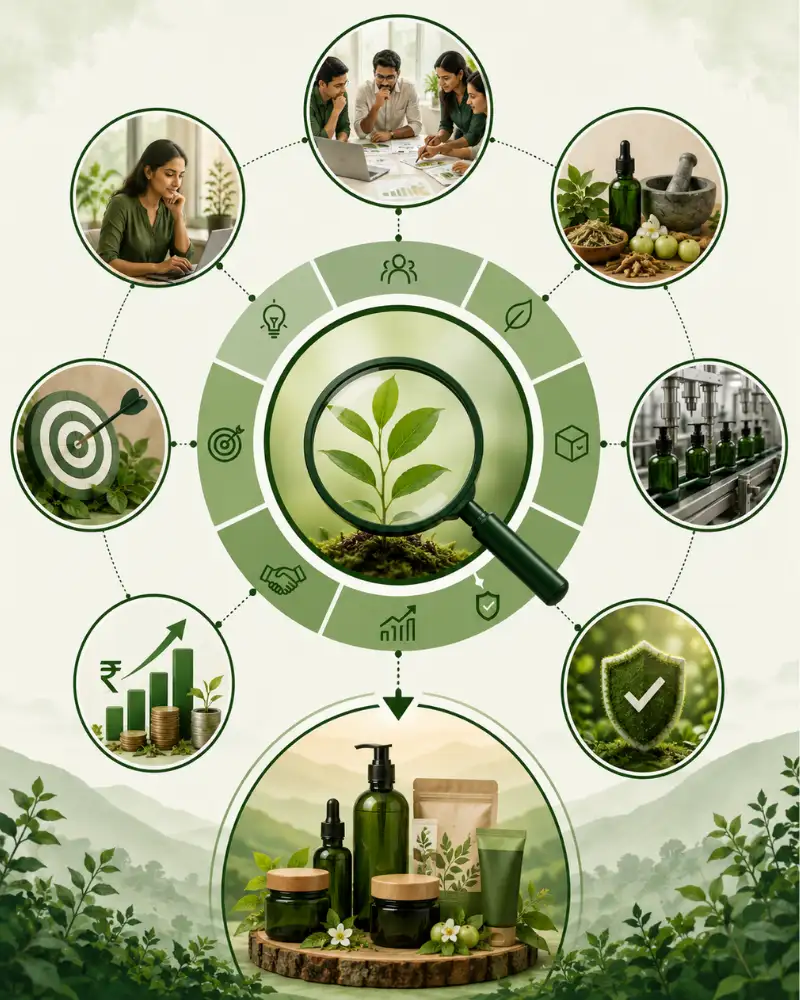
Our approach to developing new brand opportunities can move through a structured journey:
Discover
Identify consumer needs, category opportunities, and emerging changes.
Understand
Study consumers, competitors, supply chains, regulations, and economics.
Define
Create the proposition, positioning, target audience, and business model.
Develop
Build products, sourcing systems, quality processes, identity, packaging, and digital infrastructure.
Validate
Learn from market response, customer feedback, and operational experience.
Improve
Refine products, communication, experiences, and processes.
Scale
Expand thoughtfully when the foundations are strong enough to support growth.
This approach helps transform ideas into businesses with stronger foundations.
Partnerships in Brand Development
Building Better Through Collaboration
Strong brands are rarely built entirely within one organization.
They depend on ecosystems.
Farmers and ingredient suppliers.
Manufacturers.
Researchers.
Designers.
Technology partners.
Packaging specialists.
Logistics providers.
Marketplaces.
Distributors.
Retailers.
Content creators.
Professional advisors.
And consumers themselves.
We value partnerships that bring complementary expertise and share a long-term approach.
Our objective is to create relationships where both sides contribute to building something stronger.
Building Indian Brands for the World
Rooted in India. Designed for Global Relevance.
India is entering an exciting era of brand building.
Indian companies are increasingly moving beyond manufacturing and services to create distinctive consumer brands of their own.
We believe natural wellness and consumer products offer particularly meaningful opportunities.
India brings together traditional knowledge, botanical diversity, agricultural capabilities, entrepreneurship, technology, manufacturing, and a rapidly evolving domestic consumer market.
These strengths can provide the foundation.
But globally respected brands require more.
They require quality.
Consistency.
Design.
Documentation.
Regulatory understanding.
Consumer insight.
Technology.
Customer experience.
Responsible communication.
And patience.
At Tanmatra Ventures, our long-term ambition is to bring these capabilities together to help build trusted Indian brands with global relevance.
Our Brand Development Principles
What Guides the Brands We Build
As our portfolio evolves, we intend to remain guided by a clear set of principles:
Start with a genuine consumer need.
Build around a clear purpose.
Create products capable of supporting the promise.
Make quality part of the brand experience.
Communicate clearly and responsibly.
Listen continuously to consumers.
Use technology thoughtfully.
Innovate where it creates genuine value.
Build responsible relationships throughout the value chain.
Think beyond short-term growth.
Protect trust as the most valuable brand asset.
These principles provide continuity even as products, technologies, categories, and markets change.
From Product to Brand. From Brand to Institution.
Building Something That Can Last
Products can be created relatively quickly.
Brands take longer.
Trusted brands take longer still.
And organizations capable of sustaining those brands require patience, discipline, systems, people, and culture.
This is why we view brand development as a long-term capability rather than a marketing function.
Our ambition is not simply to launch products successfully.
It is to build businesses that become stronger with time.
Businesses consumers recognize.
Brands consumers trust.
Organizations partners respect.
And eventually, institutions capable of continuing beyond the people who originally created them.
That is the standard we want to build toward.
The Next Chapter
New Consumers. New Technologies. Enduring Principles.
The tools of brand building will continue to change.
Artificial intelligence will influence discovery.
Commerce will become increasingly connected.
Consumers will expect greater transparency.
Content will become more personalized.
Product information will become easier to compare.
Sustainability expectations will grow.
New channels will emerge.
But some principles are unlikely to change.
Consumers will still value good products.
They will still appreciate being treated fairly.
They will still remember positive experiences.
They will still reward brands they trust.
Technology may change how relationships are created.
Trust will continue to determine whether those relationships last.
Build the Next Brand with Us
We welcome conversations with entrepreneurs, researchers, sourcing partners, manufacturers, designers, technology companies, distributors, retailers, investors, and strategic collaborators who share our interest in building meaningful consumer businesses.
If you believe in creating brands around genuine consumer needs, responsible practices, quality, innovation, and long-term value, we would be interested in exploring what we can build together.