

Botanical Science · Herbal Quality · Evidence-Based Ayurveda
How Botanical Research Supports Better Natural Products
A jar of herbal powder looks simple on the shelf. Behind a good one, though, sits a long chain of careful work: someone confirmed the plant was the right species, picked the right part at the right time, tested it for contaminants, measured its active compounds and checked whether the dose actually matches what studies have used. That chain is botanical research. It is the quiet difference between a natural product you can trust and one that only looks natural on the label. In this guide, we walk through each stage in plain language so you can understand what separates a well-made herbal product from a guess in a bottle.
- What Botanical Research Actually Means
- Why Correct Plant Identification Comes First
- Phytochemistry: Knowing What Is Inside the Plant
- Sourcing, Cultivation and Harvest Timing
- How Extraction Methods Shape the Final Product
- Safety Testing: What Good Research Screens For
- From Traditional Use to Clinical Evidence
- Where Ayurvedic Knowledge and Modern Science Meet
- How to Tell If a Natural Product Is Backed by Research
- Frequently Asked Questions
- Final Word
What Botanical Research Actually Means
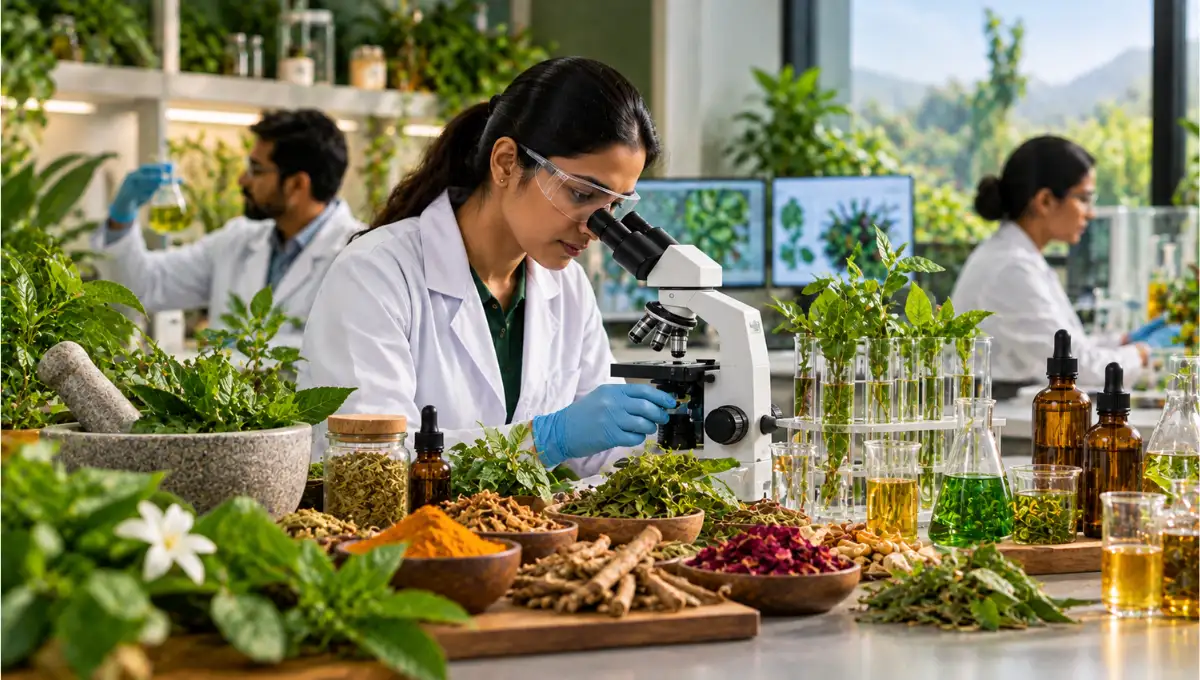
Botanical research is the scientific study of plants and the substances they produce. When it comes to natural products such as herbal supplements, Ayurvedic formulations, plant-based skincare and functional foods, this research covers several connected fields. Botany tells us which plant we are dealing with. Pharmacognosy, the study of medicines derived from natural sources, looks at how plant materials are identified, processed and evaluated. Phytochemistry maps the chemical compounds inside a plant. Pharmacology and clinical research then ask what those compounds actually do in the human body.
Put simply, botanical research answers four practical questions for anyone making or buying a natural product:
- Is this the right plant? Correct species, correct plant part, no substitutes.
- What does it contain? Active compounds and how much of them.
- Is it clean? Free from harmful levels of heavy metals, pesticides and microbes.
- Does it work as claimed? Evidence from studies at a realistic dose.
Plants have always been one of medicine's richest sources of useful molecules. A widely cited review by Newman and Cragg in the Journal of Natural Products (American Chemical Society) tracked nearly four decades of approved drugs and found that natural products and their derivatives remain a major source of new medicines. Aspirin traces back to willow bark. Several important cancer drugs come from plants. That same scientific approach, applied carefully, is what makes a modern herbal product better than a random handful of dried leaves.
Why Correct Plant Identification Comes First
Every quality natural product begins with one basic question: is this really the plant it claims to be? It sounds obvious, yet misidentification and adulteration are among the most common problems in the global herbal trade. Many plants share similar common names. Some look almost identical once dried and powdered. And when a prized herb is expensive or in short supply, cheaper look-alikes sometimes find their way into the supply chain.
Classical Botanical Methods
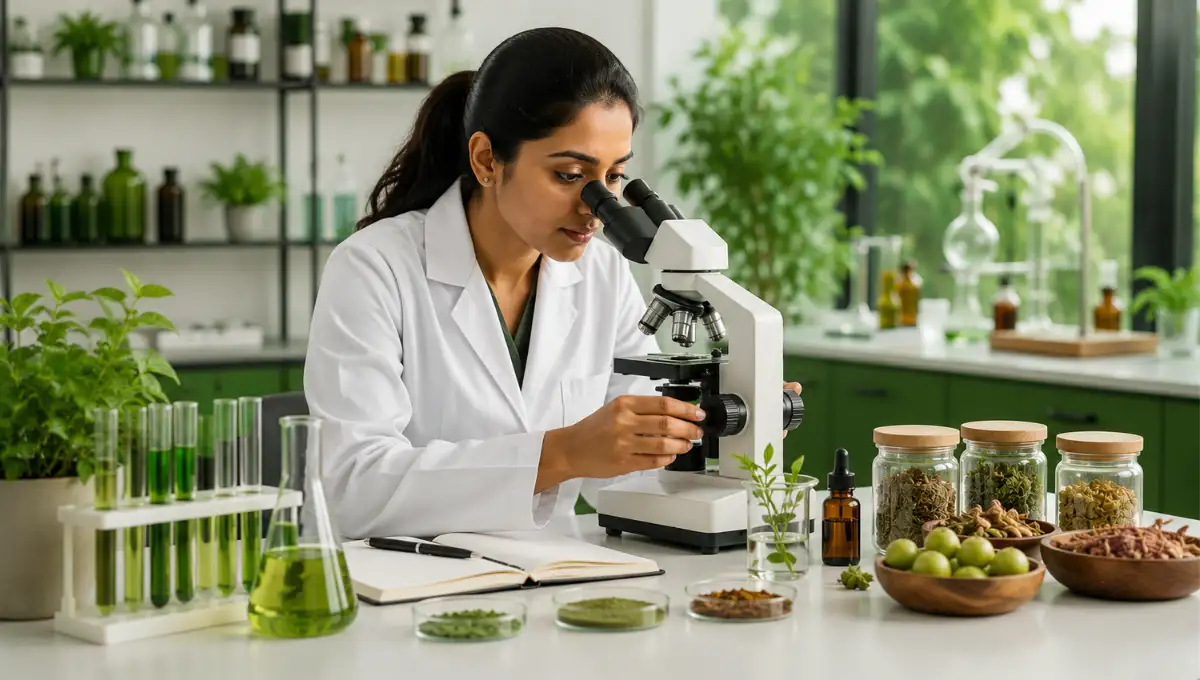
Botanists start with macroscopic features such as shape, colour, smell, texture and fracture pattern, then move to microscopy. Under a microscope, each plant has tell-tale structures like particular cell types, crystals, hairs or starch grains. These features act like a fingerprint. Reference samples called herbarium vouchers are kept so that any batch can be compared against an authenticated specimen.
Modern Analytical Tools
Chemical fingerprinting methods such as HPTLC (high performance thin layer chromatography) and HPLC produce a characteristic pattern of compounds for each herb. If a sample's pattern does not match the reference, something is wrong. DNA barcoding adds another layer by reading short genetic sequences that can distinguish closely related species, which is especially useful for raw material before it is processed.
Why This Matters to You
If the plant is wrong, nothing that follows can fix it. Extraction, packaging and marketing all build on that first identification step. A product made from a substitute herb may do nothing at all, or in rare cases may cause harm. Authentication is the foundation that every other quality claim rests on.
Phytochemistry: Knowing What Is Inside the Plant
Once the plant is confirmed, the next step is understanding its chemistry. Plants produce a huge range of secondary metabolites, compounds that help them defend against pests, survive stress or attract pollinators. Many of these same compounds are what give herbs their effects in people. Alkaloids, flavonoids, saponins, terpenoids, polyphenols and glycosides are some of the main groups.
Marker Compounds and Standardization
Researchers identify "marker compounds" for each herb. These are measurable substances that indicate quality and, in many cases, relate to the herb's activity. Withanolides are commonly used as markers for ashwagandha. Curcuminoids serve that role for turmeric. Bacosides are measured in brahmi, and fulvic acid content is often used to assess shilajit.
Standardization means making sure each batch contains a consistent, stated amount of these markers. Without it, two bottles of the same product could differ widely in strength because plants naturally vary with soil, climate and season. A standardized herbal extract gives you something closer to a predictable dose, which is the whole point of taking a product regularly.
Sourcing, Cultivation and Harvest Timing
The chemistry of a plant is not fixed. Research has shown that where a herb grows, how it is cultivated and when it is harvested can change its active compound levels in a meaningful way. This is why serious natural product makers pay close attention to the farm and the forest, not only the factory.
Geography and Growing Conditions
Altitude, rainfall, soil minerals and temperature all influence a plant's metabolism. Ayurvedic texts have long noted that certain herbs are best collected from specific regions, and modern studies often confirm that plants from different locations carry different chemical profiles. Himalayan herbs, for example, grow under high-altitude stress that can affect the compounds they produce.
The Right Part at the Right Time
Roots, leaves, bark, seeds and flowers of the same plant often contain very different compounds. Ashwagandha root is the part most studied and traditionally used. Timing matters too. Some compounds peak just before flowering, while others build up in roots after a full growing cycle. Harvesting too early or too late can lead to a weaker product.
Good Agricultural and Collection Practices
Guidelines known as Good Agricultural and Collection Practices (GACP) set out how medicinal plants should be grown, collected, dried and stored. Proper drying prevents mould. Clean storage keeps out pests and moisture. Sustainable wild harvesting protects plant populations so they remain available for future generations. Each of these steps protects the quality that research has identified as important.
How Extraction Methods Shape the Final Product
Raw herb powder and a concentrated extract are not the same thing. Extraction pulls selected compounds out of the plant material and concentrates them. Botanical research helps decide which method will capture the compounds that matter while leaving behind what does not.
Choosing the Right Solvent
Water draws out compounds that dissolve in water, such as many polysaccharides and some glycosides. Alcohol and water-alcohol blends (hydroalcoholic extraction) capture a wider range, including many flavonoids and terpenoids. Some compounds only come out well with oils or fats, which is why traditional Ayurvedic preparations sometimes use ghee or milk as carriers. The traditional kwath (decoction) method is, in essence, a water extraction that classical physicians refined over centuries.
Extract Ratios and Purification
You may see labels such as "10:1 extract." This means roughly ten parts of raw herb were used to make one part of extract. A ratio tells you about concentration, but on its own it does not guarantee potency. That is why a stated marker percentage, such as a specified withanolide content, is often more informative.
For materials like shilajit, purification is a major step. Raw shilajit resin comes from rock crevices and contains soil, stones and other impurities. Traditional shodhana (purification) processes, combined with modern filtration and lab testing, help remove contaminants while keeping beneficial fulvic acid and minerals.
Protecting Heat-Sensitive Compounds
Too much heat can break down delicate compounds. Methods such as low-temperature vacuum drying and spray drying are chosen partly based on research into how stable each herb's actives are. Good processing preserves what the plant offers rather than cooking it away.
Safety Testing: What Good Research Screens For
"Natural" does not automatically mean "safe." Plants absorb whatever is in their soil and water, and they can pick up contamination during farming, storage or processing. Safety testing is one of the most practical ways botanical research protects consumers.
Heavy Metals
Lead, arsenic, cadmium and mercury can accumulate in plants, especially in areas with polluted soil or water. Mineral-rich materials like shilajit need particular care. Labs use techniques such as ICP-MS to measure these metals at very low levels and compare the results against pharmacopoeial limits.
Pesticide Residues
Farming practices can leave pesticide traces on herbs. Residue screening checks that levels stay within permitted limits, which is one reason organic or carefully managed cultivation is valued in the herbal sector.
Microbial Load and Aflatoxins
Poor drying or humid storage can lead to bacteria, yeast and mould. Some moulds produce aflatoxins, which are harmful even in small amounts. Microbiological testing makes sure a batch is clean before it reaches you.
Batch Testing and Certificates of Analysis
Responsible manufacturers test each batch rather than relying on a one-time report. The results are recorded in a Certificate of Analysis (CoA). In India, the Ayurvedic Pharmacopoeia of India and the Ministry of AYUSH provide quality standards for many classical herbs, and GMP-certified facilities follow documented procedures to keep quality consistent from batch to batch.
From Traditional Use to Clinical Evidence
Many herbs have been used for centuries. Traditional use is valuable because it points researchers toward plants worth studying. But modern consumers increasingly want to know whether those traditional uses hold up under controlled testing. This is where clinical research comes in.
How Evidence Is Built
Evidence usually grows in stages. Laboratory (in vitro) studies show how a compound behaves on cells. Animal studies explore effects in a living system. Human clinical trials, ideally randomized and placebo-controlled, test whether the herb helps real people at a specific dose. Systematic reviews then pool the results of several trials to give a clearer overall picture.
An Honest Look at the Science
Good botanical research is honest about its limits. Take ashwagandha, one of the most studied Ayurvedic herbs. The U.S. National Center for Complementary and Integrative Health (NCCIH) summarizes studies suggesting possible benefits for stress and sleep, while also noting that many trials were small, short-term and that more research on long-term safety is needed. This balanced view is exactly what responsible brands should share with their customers.
Dose and Form Matter
A study result only applies to the product form and dose that was tested. If a trial used a standardized root extract at a certain daily amount, a product using a much smaller dose of unstandardized leaf powder cannot fairly borrow that result. Research helps brands match their formulations to what has actually been studied, which leads to more realistic claims and better outcomes for customers.
Where Ayurvedic Knowledge and Modern Science Meet
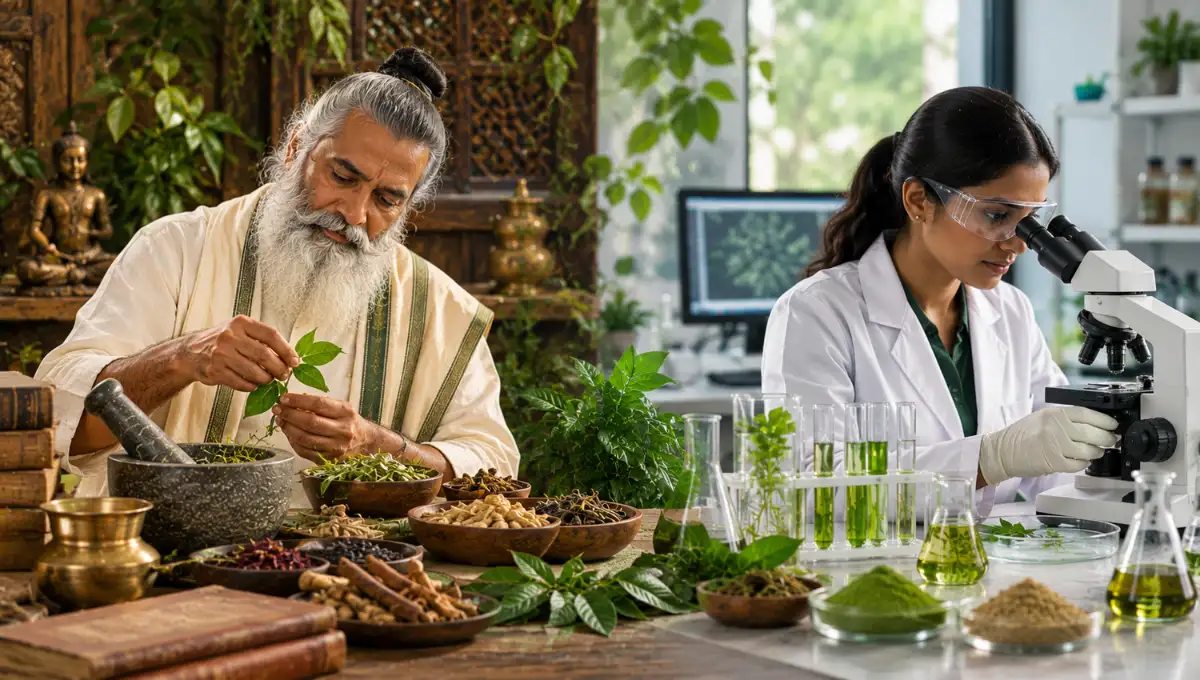
India holds one of the world's oldest documented systems of plant-based healing. Classical texts such as the Charaka Samhita describe hundreds of medicinal plants, their properties and how to prepare them. Modern botanical research does not replace this knowledge. It tests, refines and builds on it.
This blend of tradition and science is gaining global attention. The World Health Organization's Global Traditional Medicine Centre, set up in Jamnagar, Gujarat, works to strengthen the evidence base for traditional medicine worldwide. According to WHO reporting, 170 of its 194 Member States have acknowledged that their populations use traditional and complementary medicine. That scale of use is a strong reason to make sure the products involved are well researched and safely made.
What Each Side Brings
Ayurveda brings deep observation of how herbs behave in combination, how they suit different body types (prakriti) and how preparation methods change their effects. Modern science brings tools to verify identity, measure compounds, confirm purity and test outcomes in controlled settings. When the two work together, you get products that honour heritage and also meet today's quality expectations.
Protecting Traditional Knowledge
India's Traditional Knowledge Digital Library (TKDL) documents classical formulations to help prevent their misappropriation through foreign patents. This effort shows how research and documentation also protect the cultural roots of the natural products that many people rely on.
How to Tell If a Natural Product Is Backed by Research
You do not need a lab to make smarter choices. A few simple checks can tell you a lot about how seriously a brand takes botanical research.
Look for the Botanical Name and Plant Part
A good label lists the scientific name (for example, Withania somnifera root) rather than only a common name. It tells you exactly what you are buying.
Check for Standardization Details
Stated marker content, such as a percentage of withanolides or fulvic acid, suggests the brand measures potency rather than guessing it.
Ask About Third-Party Testing
Brands that test each batch for heavy metals, microbes and pesticides are usually happy to share their lab reports. Reluctance to share is a warning sign.
Watch Out for Miracle Claims
Research-led brands use measured language. Claims like "cures everything" or "instant results" suggest marketing has run ahead of the science.
Confirm Licensing and Manufacturing Standards
In India, look for an AYUSH licence number for Ayurvedic medicines, or FSSAI registration for nutraceuticals, along with GMP-certified manufacturing.
These are the same standards thoughtful Ayurvedic wellness brands are now building their products around. ACTIZEET® is one example, pairing classical ingredients such as purified Himalayan shilajit and traditional herbs with batch testing and clear sourcing information, so that heritage and verifiable quality sit side by side rather than in competition.
Frequently Asked Questions
It is the scientific study of plants used in herbal, Ayurvedic and plant-based products. It covers correct plant identification, chemical analysis of active compounds, safe sourcing and extraction, contamination testing and clinical studies that check whether a product works as claimed.
A standardized extract contains a consistent, measured amount of one or more marker compounds in every batch. This helps make sure that the strength of the product stays reliable, even though plants naturally vary from harvest to harvest.
No. Plants can carry heavy metals, pesticide residues or microbes, and some herbs interact with medicines. Batch testing and proper dosing guided by research reduce these risks. It is always wise to speak with a qualified healthcare professional before starting a new supplement, especially if you are pregnant or taking other medication.
Modern tools such as chromatography, DNA barcoding and clinical trials help confirm herb identity, measure active compounds, verify purity and test traditional uses under controlled conditions. This builds on classical Ayurvedic knowledge rather than replacing it.
Look for the botanical name and plant part on the label, stated standardization levels, a valid AYUSH or FSSAI licence, GMP manufacturing and access to batch-wise lab reports for heavy metals and microbial safety. Measured, realistic claims are another good sign.
Final Word: Research Is What Makes Natural Products Trustworthy
A better natural product is not just a matter of choosing a famous herb. It is the result of many careful steps: confirming the species, understanding its chemistry, growing and harvesting it well, extracting it thoughtfully, testing it for safety and matching its dose to real evidence. Each step is shaped by botanical research. When brands take this work seriously, customers get products that are cleaner, more consistent and more honest about what they can do. As interest in Ayurveda and plant-based wellness keeps growing, research is the thread that keeps tradition credible. The next time you pick up a herbal product, look past the word "natural" on the front and check for the science on the back.