

Herbal Science · Quality Control · Botanical Authentication
What Is Botanical Ingredient Characterization and Why Does It Matter?
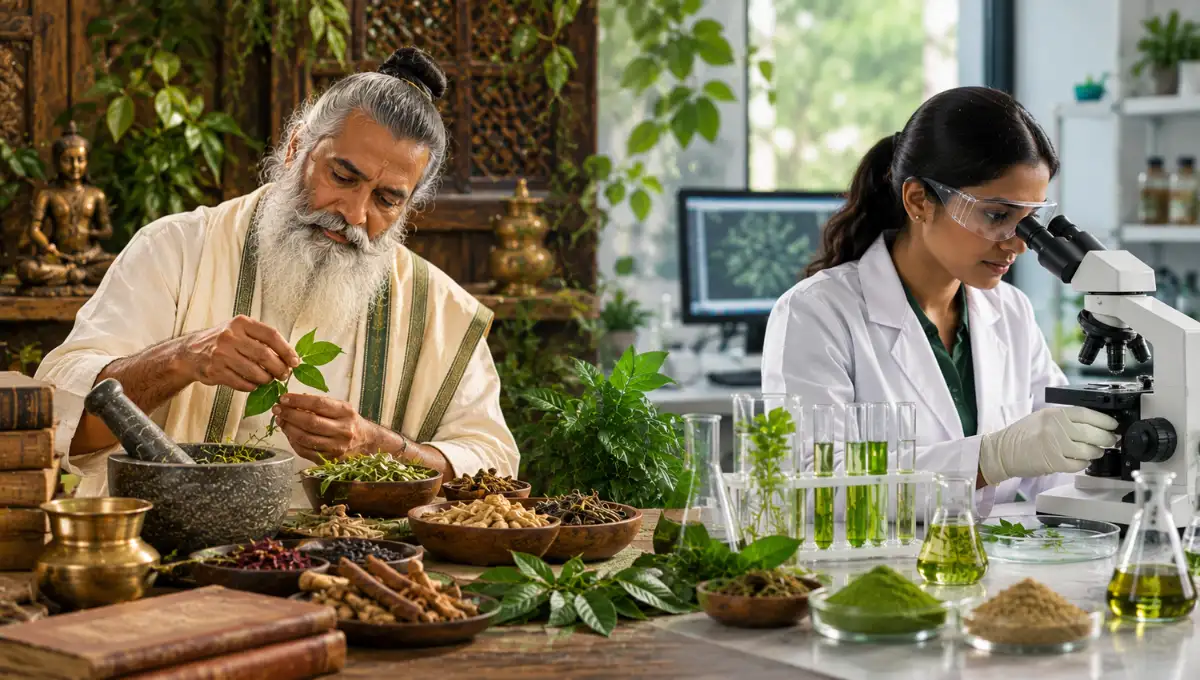
Pick up two pouches of brahmi powder from two different brands. Both say "pure," both look like fine greenish powder, and both carry the same name. Yet one may be the right plant, harvested at the right time, clean and full of the compounds that matter, while the other may be a look-alike herb, old stock or a mix bulked up with something cheaper. From the outside, you cannot tell. The process that tells them apart has a technical name: botanical ingredient characterization. It sounds complicated, but the idea is simple. It is how we find out exactly what a plant ingredient is, what it contains, how clean it is and whether it stays that way. This guide explains characterization in plain language, why it matters for anyone who uses herbal products, and how we at Tanmatra Ventures Private Limited think about it for our ACTIZEET® range of pure herbs.
- What Botanical Characterization Means
- Why Plant Ingredients Are Hard to Pin Down
- Pillar 1: Identity
- Pillar 2: Composition and Strength
- Pillar 3: Purity and Safety
- Pillar 4: Stability and Consistency
- Common Characterization Methods at a Glance
- Why Characterization Matters
- Standards in India and Worldwide
- What Characterization Cannot Tell You
- How Buyers Can Spot Well-Characterized Herbs
- How Tanmatra Ventures Applies These Ideas
- Frequently Asked Questions
- Final Word
What Botanical Characterization Means
Botanical ingredient characterization is the process of describing a plant material accurately and completely enough that anyone can know what it is and trust what it contains. Think of it as a detailed profile for an ingredient, built from observation, chemistry and testing.
In practice, characterization answers four questions:
- Identity: Is this the correct plant species and the correct plant part?
- Composition: What compounds does it contain, and in what amounts?
- Purity: Is it free from harmful contaminants and adulterants?
- Stability: Will it keep its quality until it is used?
Researchers take this seriously. The U.S. National Institutes of Health Office of Dietary Supplements notes that dietary supplement ingredients and products used in research must be rigorously identified and characterized to ensure that results can be reproduced. The same principle applies to products on a shop shelf. If an ingredient is not well characterized, nobody can be sure what they are actually taking.
Why Plant Ingredients Are Hard to Pin Down
A synthetic vitamin is a single, known molecule. A plant is not. A dried root or leaf can contain hundreds of different compounds, and those compounds change depending on many factors.
Natural Variation
Soil, altitude, rainfall, sunlight, season, plant age and harvest time all influence a plant's chemistry. Ashwagandha from one region and season may not match ashwagandha from another, even when both are genuine.
Look-Alikes and Shared Names
Many herbs share common names across languages and regions. Several different plants are sold as "brahmi" in different parts of India, for example, and many dried roots and barks look alike once cut and powdered.
Processing Changes Things
Drying temperature, milling, extraction and storage can all change what ends up in the final product. Two batches from the same farm can differ if they were handled differently.
Economic Temptation
When a herb is expensive or in short supply, there is a financial incentive to substitute or dilute it. Saffron is a well-known example. A peer-reviewed bulletin from the Botanical Adulterants Prevention Program of the American Botanical Council documents saffron being mixed with materials such as dyed corn silk, safflower and calendula petals, and recommends a combination of testing methods to authenticate it.
All of this is why characterization cannot be a single quick test. It is a set of checks that, together, build a reliable picture.
Pillar 1: Identity
Identity comes first because everything else depends on it. If the plant is wrong, perfect purity and strength numbers mean nothing.
Botanical Name and Plant Part
Characterization starts by fixing the scientific name, for example Bacopa monnieri for brahmi, Asparagus racemosus for shatavari or Withania somnifera for ashwagandha, along with the exact part used. The part matters a great deal. In April 2026, India's Food Safety and Standards Authority issued an advisory against using ashwagandha leaves in any form in food products, directing manufacturers toward the root.
Macroscopic Examination
Trained analysts look at shape, size, colour, texture, smell, taste and fracture pattern of the whole or cut material and compare them with official descriptions.
Microscopic Examination
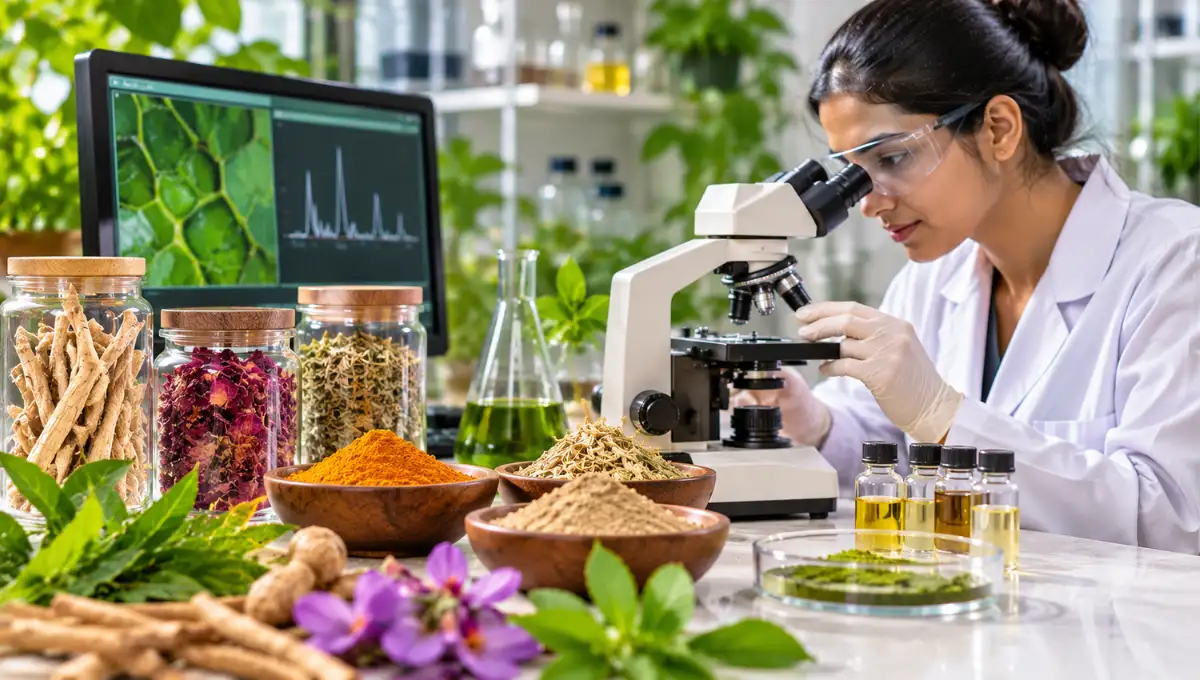
Under a microscope, each plant shows its own internal features, such as particular cell types, fibres, hairs, crystals and starch grains. These act like a fingerprint and work even on powders.
Chemical Fingerprinting
Techniques such as HPTLC (high performance thin layer chromatography) separate a sample into a pattern of bands. Each genuine herb has a recognisable pattern. A sample that does not match the reference standard is flagged.
DNA Barcoding
DNA barcoding reads short genetic sequences to tell closely related species apart. It is especially useful for raw material, before heavy processing breaks DNA down.
Reference Samples
Good practice keeps authenticated reference samples, sometimes called voucher specimens, so that any batch can be compared against a known genuine plant.
Pillar 2: Composition and Strength
Once identity is confirmed, the next question is what the ingredient contains and how much of it.
Marker Compounds
Because plants contain so many compounds, analysts usually measure a few "marker compounds" that indicate quality or relate to the herb's traditional use. Examples include:
- Withanolides in ashwagandha.
- Bacosides in brahmi.
- Curcuminoids in turmeric.
- Crocin, picrocrocin and safranal in saffron.
- Fulvic acid in shilajit.
- Tannins and gallic acid in amla and the triphala fruits.
How It Is Measured
High performance liquid chromatography (HPLC) is the most common tool for measuring marker compounds. UV-visible spectrophotometry, gas chromatography and other methods are used depending on the compound. Accurate measurement relies on validated methods and certified reference standards.
Whole Herb vs Standardized Extract
A standardized extract is adjusted to contain a set percentage of a marker compound. A whole-herb powder, or churna, keeps the plant's natural profile without adjustment. Both can be well characterized. The difference is that a standardized extract targets one number, while a whole-herb powder is checked to confirm it falls within an expected natural range.
Physical and Chemical Parameters
Characterization also includes simpler measurements such as moisture content, total ash, acid-insoluble ash (which can reveal added sand or soil) and extractive values (how much dissolves in water or alcohol). These basic numbers are surprisingly good at catching poor-quality material.
Pillar 3: Purity and Safety
A herb can be the right plant with the right compounds and still be unsafe if it carries contaminants. Purity testing looks for things that should not be there.
Heavy Metals
Lead, arsenic, cadmium and mercury can be absorbed from soil and water. Labs measure them using ICP-MS or atomic absorption spectroscopy and compare results with official limits.
Pesticide Residues
Herbs grown with chemical sprays may carry residues. Multi-residue screening with GC-MS or LC-MS/MS checks for a wide range of pesticides at once.
Microbial Contamination and Aflatoxins
Poor drying or humid storage can encourage bacteria, yeast and mould. Some moulds produce aflatoxins, which are harmful even in small amounts. Microbial counts and aflatoxin tests are standard parts of characterization.
Adulterants and Foreign Matter
Characterization looks for added fillers, dyes, other plant species, stones, dust and insect fragments. The World Health Organization's manual on quality control methods for herbal materials describes standard tests for foreign matter, ash values, moisture, heavy metals, pesticide residues and microbial contamination that labs around the world use.
Pillar 4: Stability and Consistency
Stability Over Time
Herbs can lose potency, absorb moisture or develop microbes as they age. Stability testing stores samples under controlled conditions and re-tests them over months to set a realistic shelf life and choose suitable packaging.
Batch-to-Batch Consistency
A single good test result is not enough. Characterization should be repeated for every batch, so customers get a similar product each time they buy. Comparing fingerprints and marker levels across batches shows whether a supplier is consistent.
Common Characterization Methods at a Glance
| Method | What It Checks | Pillar |
|---|---|---|
| Macroscopic and organoleptic tests | Appearance, colour, smell, taste, texture | Identity |
| Microscopy | Cell structures unique to each plant | Identity, adulteration |
| HPTLC fingerprinting | Chemical pattern vs reference | Identity, consistency |
| DNA barcoding | Species-level genetic identity | Identity |
| HPLC | Amounts of marker compounds | Composition |
| Moisture, ash and extractive values | Basic quality, added soil or sand | Composition, purity |
| ICP-MS / AAS | Lead, arsenic, cadmium, mercury | Purity |
| GC-MS / LC-MS/MS | Pesticide residues, solvents | Purity |
| Microbiological tests | Bacteria, yeast, mould, pathogens, aflatoxins | Purity |
| Stability studies | Changes over time and storage | Stability |
No single method is enough on its own. Reliable characterization combines several, so that a weakness in one test is covered by another.
Why Characterization Matters
For Your Safety
Characterization catches wrong plants, harmful contaminants and adulterants before they reach you. For products taken daily, sometimes for months, this protection matters a great deal.
For Real Results
If a herb is weak, old or substituted, it is unlikely to offer what people expect from it. Characterization helps make sure you get a genuine ingredient with a meaningful compound profile.
For Consistency
When every batch is characterized, customers get a similar product each time. This makes it easier to build a routine and judge whether a product suits them.
For Meaningful Research
Scientific studies on herbs only make sense if everyone knows exactly what was tested. Without characterization, two studies on "the same herb" may actually have tested very different materials. This is a major reason researchers and funders place so much weight on it.
For Honest Claims and Trust
A brand can only make accurate statements about its products if it knows what is in them. Characterization is the evidence behind honest labels, and it is one of the strongest foundations of customer trust.
For Protecting Traditional Knowledge
Ayurveda's reputation depends on the quality of the herbs used in its name. Poorly made or adulterated products damage that reputation. Careful characterization helps traditional ingredients stand up to modern scrutiny.
Standards in India and Worldwide
Ayurvedic Pharmacopoeia of India
Published by the Pharmacopoeia Commission for Indian Medicine & Homoeopathy under the Ministry of Ayush, the Ayurvedic Pharmacopoeia contains monographs for many single herbs. Each monograph sets out identity features, microscopic characters, thin layer chromatography patterns, and limits for moisture, ash, extractives and contaminants.
FSSAI Regulations
Herbal products sold as foods, health supplements or nutraceuticals fall under the Food Safety and Standards Authority of India, which lists permitted plants and plant parts and sets limits for contaminants and labelling rules.
International References
The WHO quality control manual, WHO guidelines on Good Agricultural and Collection Practices, and pharmacopoeias such as the United States Pharmacopeia and European Pharmacopoeia provide further methods and standards that many manufacturers and labs use.
What Characterization Cannot Tell You
Characterization is powerful, but it is honest to be clear about its limits.
- It does not prove a health benefit. Whether a herb helps with a particular goal is a question for clinical research.
- It covers the batch tested. A report from years ago says little about the jar on your shelf today.
- Marker compounds are not the whole story. A herb contains many compounds, and focusing on one number can miss others that matter.
- It cannot judge suitability for you. Personal health, medicines and conditions are matters for a qualified practitioner.
Think of characterization as the foundation. It makes sure you are starting with a genuine, clean ingredient. Evidence and expert advice build on top of it.
How Buyers Can Spot Well-Characterized Herbs
You do not need a lab to make smarter choices. Look for these signs:
- Botanical name and plant part on the label, not just a common name.
- A short, clear ingredient list for single-herb products.
- Batch number and dates so the product can be traced.
- Evidence of testing, ideally a batch Certificate of Analysis showing identity, heavy metals and microbial results.
- Licence or registration numbers such as FSSAI or Ayush.
- Measured claims rather than promises to cure.
- Sensible appearance and smell that match what the herb should be, keeping in mind that only lab tests can confirm purity.
How Tanmatra Ventures Applies These Ideas
At Tanmatra Ventures Private Limited, we believe that a herb is only as good as what you can prove about it. Our ACTIZEET® Pure Herbs range includes traditional Ayurvedic powders such as ashwagandha, brahmi, shatavari, triphala, amla, moringa, tulsi, neem and many more. Characterization thinking shapes how we approach each one.
Starting With the Right Plant
We work with botanical names and the plant parts traditionally used in Ayurveda. ACTIZEET® Ashwagandha Powder, for example, is made from Withania somnifera root.
Keeping It Pure and Simple
Our pure herb powders are single-ingredient products without artificial colours, flavours or preservatives. A short ingredient list makes a product easier to understand and to verify.
Checking Quality Batch by Batch
Our products go through batch quality evaluations and are tested for purity, so that what reaches you matches what the label says.
Being Open About It
We welcome questions about sourcing, plant parts and testing. They help us keep improving, and they help customers make informed choices.
Pure Herbs, Clearly Defined
Explore ACTIZEET® single-ingredient Ayurvedic herb powders, made from traditionally used plant parts and tested for purity.
Explore ACTIZEET® Pure HerbsFrequently Asked Questions
It is the process of describing a plant ingredient accurately by confirming its identity, measuring its composition and key compounds, checking its purity and safety, and testing its stability over time.
Plants vary naturally, many look alike, and some are adulterated. Characterization protects safety, ensures consistency between batches, supports honest labelling and makes scientific research on herbs meaningful and reproducible.
Marker compounds are measurable substances used to judge a herb's identity and quality, such as withanolides in ashwagandha, bacosides in brahmi, curcuminoids in turmeric and crocin in saffron.
Common methods include macroscopic and microscopic examination, HPTLC chemical fingerprinting, DNA barcoding and HPLC. Purity is checked with heavy metal, pesticide residue, microbial and aflatoxin tests.
No. Characterization confirms that a herb is genuine, clean and consistent. Whether it helps with a specific health goal depends on clinical evidence and individual factors, so it is wise to consult a qualified practitioner.
Final Word: Knowing Exactly What You Are Getting
Botanical ingredient characterization may sound like a laboratory term, but its purpose is something every customer cares about: knowing exactly what is in the product. It confirms the right plant and part, measures what the herb contains, checks that it is free from harmful contaminants and makes sure it stays that way. It protects safety, supports honest labels, makes research meaningful and helps traditional knowledge earn trust in a modern world. At Tanmatra Ventures Private Limited, these ideas guide how we bring ACTIZEET® pure herbs to you. The next time you choose a herbal product, look beyond the word "pure" and ask the questions characterization answers.
Choose herbs you can understand and trust
Shop ACTIZEET® Pure Herbs