

Farm to Shelf · Processing · Quality Control
How Natural Ingredients Become Modern Consumer Products
A root pulled from a field in Madhya Pradesh. A dark resin scraped from a Himalayan rock face. A basket of purple crocus flowers picked at dawn in Kashmir. None of these look anything like the neat jar, pouch or bottle you finally hold in your hand. Between the plant and the product sits a long, careful journey: identifying the right species, harvesting at the right time, drying, cleaning, grinding or extracting, testing, packing and labelling. Each step can protect quality or quietly damage it. In this guide, we walk through that journey stage by stage, in plain language, and share how we at Tanmatra Ventures Private Limited approach it for our ACTIZEET® range of herbs, resins, spices and oils.
- Why the Journey Matters More Than Ever
- The Journey at a Glance
- Stage 1: Choosing the Right Ingredient
- Stage 2: Sourcing and Harvesting
- Stage 3: Primary Processing
- Stage 4: Turning Raw Material Into a Usable Form
- Stage 5: Quality Control and Lab Testing
- Stage 6: Formulation and Format
- Stage 7: Packaging, Labelling and Compliance
- Stage 8: Reaching the Customer
- Where Things Can Go Wrong
- How Tanmatra Ventures Approaches This Journey
- Frequently Asked Questions
- Final Word
Why the Journey Matters More Than Ever
Natural products are no longer a niche. Herbal powders, Ayurvedic resins, plant-based skincare, essential oils and spice-based wellness drinks now sit on mainstream shelves and in every major shopping app. The wider wellness market keeps growing too. The Global Wellness Institute's 2025 Global Wellness Economy Monitor estimates that the global wellness economy reached 6.8 trillion US dollars in 2024 and projects it to approach 9.8 trillion dollars by 2029.
With growth comes a challenge. Natural ingredients are living materials. They vary from season to season and region to region, they can be confused with look-alike plants, and they can pick up contaminants from soil, water or poor storage. A product is only as good as the decisions made at every step between the plant and the pack.
Customers Are Asking Better Questions
Today's buyers want to know where an ingredient comes from, which part of the plant is used, whether anything was added and whether it was tested. Brands that can answer clearly are earning trust. Brands that cannot are being left behind.
The Journey at a Glance
Every ingredient follows its own path, but most natural products move through these eight broad stages.
| Stage | What Happens | Why It Matters |
|---|---|---|
| 1. Selection | Choosing the species and plant part | Wrong plant or part means a wrong product |
| 2. Sourcing | Growing or wild collection, harvest timing | Region and timing shape potency |
| 3. Primary processing | Cleaning, sorting, drying, storage | Prevents mould, dirt and spoilage |
| 4. Transformation | Milling, purification, extraction, distillation | Creates the usable form without losing value |
| 5. Testing | Identity, purity, contaminants, strength | Proves the product is genuine and safe |
| 6. Formulation | Deciding format: powder, capsule, resin, oil | Matches how people actually use it |
| 7. Packaging and labelling | Protective packs, honest labels, compliance | Keeps quality intact and informs the buyer |
| 8. Market | Storage, shipping, education, feedback | Delivers the product in good condition |
Stage 1: Choosing the Right Ingredient
Every good natural product begins with a clear answer to a simple question: exactly which plant, and which part of it?
The Right Species
Many plants share common names across regions, and some look almost identical once dried. Responsible brands work with the botanical name, such as Withania somnifera for ashwagandha or Crocus sativus for saffron, rather than relying on a local name alone.
The Right Plant Part
Roots, leaves, bark, seeds, flowers and fruits of the same plant can have very different chemistry. This is not just a matter of tradition. In April 2026, the Food Safety and Standards Authority of India issued an advisory against the use of ashwagandha leaves in any form in food products, following Ministry of Ayush guidance that directed manufacturers toward the root. Choosing the correct part is a quality decision and, increasingly, a regulatory one.
Tradition as a Guide
For Ayurvedic ingredients, classical texts and long practice tell us which parts were used and how they were prepared. Modern product development uses this knowledge as a starting point, then checks it against current science and regulations.
Stage 2: Sourcing and Harvesting
Natural ingredients come from two broad sources: cultivated farms and wild collection. Both can produce excellent material when done well.
Where It Grows Matters
Soil, altitude, rainfall and climate all influence a plant's chemistry. That is why certain regions have become known for certain ingredients: Kashmir for saffron, the dry belts of central India for ashwagandha, and high Himalayan rock faces for shilajit.
When It Is Harvested Matters
Many plants build up their useful compounds at particular stages of growth. Roots are often harvested after the plant matures, saffron flowers must be picked in a short autumn window, and shilajit is collected in warm months when it seeps from rock.
Good Agricultural and Collection Practices
The World Health Organization's guidelines on Good Agricultural and Collection Practices (GACP) for medicinal plants set out a widely used benchmark. They cover correct identification, harvesting methods, drying, storage, record-keeping and sustainable collection, all with the aim of improving the quality and safety of finished herbal products.
Sustainability and Fairness
Wild plants can be overharvested, and some materials, like shilajit, form so slowly that they cannot be farmed. Responsible sourcing means leaving enough behind for regrowth, encouraging cultivation of high-demand herbs and paying collectors and farmers fairly so they have a reason to harvest carefully.
Stage 3: Primary Processing
Freshly harvested plant material is fragile. What happens in the first few days often decides whether it stays valuable or spoils.
Cleaning and Sorting
Soil, stones, insects and unwanted plant parts are removed. For saffron, this includes separating the red stigma from the pale style. For roots, it means washing and trimming.
Drying
Drying is one of the most important steps. Too little, and mould and bacteria can grow. Too much heat, and delicate compounds and aromas can be lost. Herbs dried on bare ground or in damp sheds are more likely to pick up dirt and microbes. Shade drying, controlled dryers and clean surfaces all help.
Storage
Dried material should be kept cool, dry, clean and protected from pests and light. Even well-dried herbs lose quality if they sit for too long in a humid warehouse. Fresh stock and good warehousing make a real difference to the final product.
Stage 4: Turning Raw Material Into a Usable Form
This is where a raw ingredient becomes something a person can actually use. The method depends on the material and the final product.
Milling Into Powder
Many herbs, such as ashwagandha, shatavari, moringa and triphala, are simply dried and finely milled into powder, known in Ayurveda as churna. This keeps the whole plant part intact, with its natural range of compounds. Milling should avoid overheating, and equipment must be kept clean to prevent cross-contamination.
Purification
Some materials cannot be used raw. Shilajit, for example, comes mixed with soil and stone. Traditional purification, called shodhana, removes these impurities. In the Surya Taapi method, raw shilajit is dissolved in water, filtered and slowly concentrated under sunlight rather than high heat.
Extraction
Extraction uses water, alcohol or other solvents to draw out and concentrate selected compounds. It allows smaller doses, such as in capsules, but involves more processing and must ensure no harmful solvent residues remain.
Distillation
Essential oils are usually produced by steam distillation, where steam carries the plant's volatile aromatic compounds out of flowers, leaves, bark or peel, and they are then separated from water. Citrus oils are often cold-pressed from peel instead. The quality of the oil depends heavily on the raw material and how carefully the process is controlled.
Keeping It Whole
Some ingredients need very little transformation. Saffron threads, for example, are simply dried and graded. The goal at this stage is always the same: create a usable form while losing as little of the ingredient's natural value as possible.
Stage 5: Quality Control and Lab Testing
Testing is where claims meet evidence. You cannot see heavy metals in a powder, smell pesticide residues in an oil or taste whether a resin has been mixed with something cheaper. Only the lab can tell you that.
What Gets Tested
- Identity: Is it really the right plant or material? Methods include microscopy and chemical fingerprinting.
- Purity: Are there contaminants such as heavy metals, pesticide residues, microbes or aflatoxins?
- Strength: Does it contain meaningful levels of its key compounds, such as fulvic acid in shilajit or crocin in saffron?
- Physical quality: Moisture, ash content, particle size and foreign matter.
When Testing Happens
Good quality control tests at more than one point: raw materials on arrival, during processing, and finished products before release. Testing only at the end can catch problems too late, while testing only raw materials can miss what happens inside the factory.
Standards and Records
In India, the Ayurvedic Pharmacopoeia sets identity and purity standards for many herbs, and FSSAI sets limits for food and nutraceutical products. Results are recorded in a Certificate of Analysis for each batch, which is one of the most useful documents a customer can ask to see.
Stage 6: Formulation and Format
Once the ingredient is ready and tested, the next decision is how people will use it. The same herb can become very different products.
Choosing a Format
- Powder: Traditional, flexible dosing, easy to mix into milk, water or food.
- Capsule: Convenient, tasteless and portable, with a fixed dose.
- Resin: Close to the traditional form for materials like shilajit.
- Whole threads or pieces: Easy to inspect, as with saffron.
- Oil: For aromatic, massage, skin and hair uses.
Single Ingredient or Blend?
Single-ingredient products are simple to understand and easy to verify. Blends can combine herbs that are traditionally used together, but they make it harder for customers to know how much of each ingredient they are getting. Clear labelling matters either way.
The Clean Label Approach
Many customers now prefer short ingredient lists without artificial colours, flavours, preservatives or unnecessary fillers. When a product is a single herb, the ingredient list should ideally say just that.
Stage 7: Packaging, Labelling and Compliance
Packaging That Protects
Light, heat, air and moisture are the enemies of natural ingredients. Airtight, moisture-resistant and light-protective packaging helps powders stay fresh, keeps saffron's colour and aroma intact, and protects essential oils from oxidation. Amber or dark glass is common for oils for this reason.
Labels That Inform
A good label tells the customer what they need to know:
- Botanical name and plant part.
- Full ingredient list.
- Batch number, manufacturing date and best-before date.
- Directions for use and storage.
- Licence or registration number.
- Relevant cautions, such as advice to consult a doctor during pregnancy.
Honest Claims
Packaging is also where marketing meets regulation. Responsible brands describe traditional use and current research honestly and avoid promising cures. India's advertising standards and consumer protection rules increasingly hold brands to this.
Stage 8: Reaching the Customer
Storage and Shipping
A product can be perfect when it leaves the facility and still arrive damaged if it sits in a hot van for days. Careful warehousing, sensible stock rotation and protective shipping all help.
Education
Many natural products are new to buyers, or are used in ways that need explanation. How many saffron strands to soak, how much ashwagandha powder to mix, how to dissolve shilajit resin, how to dilute an essential oil: clear guidance helps people use products safely and get the most from them.
Feedback Closes the Loop
Customer questions and reviews reveal where products, labels or instructions can be improved. The best brands treat this feedback as part of the production process, not just a sales metric.
Where Things Can Go Wrong
Knowing the weak points helps both brands and buyers. Common problems include:
- Substitution: A cheaper look-alike plant sold in place of the real one.
- Wrong plant part: Leaves or stems used where roots are expected.
- Adulteration: Dyed fibres in saffron, fillers in powders or synthetic fragrance in "pure" oils.
- Contamination: Heavy metals, pesticides or microbes from poor sourcing or storage.
- Over-processing: Excess heat that damages delicate compounds or aromas.
- Old stock: Ingredients that have lost potency through long storage.
- Overclaiming: Marketing that promises more than the product can deliver.
Each of these problems is preventable with careful sourcing, testing, documentation and honest communication.
How Tanmatra Ventures Approaches This Journey
At Tanmatra Ventures Private Limited, the journey from ingredient to product is the heart of what we do. Our ACTIZEET® range covers Himalayan shilajit, Kashmiri saffron, Ayurvedic herb powders and capsules, and a wide collection of essential oils. Each one follows the path described above, and we try to make each step visible to our customers.
Three Examples From Our Range
- ACTIZEET® Himalayan Shilajit Resin: Collected from high-altitude Himalayan rock, purified using the traditional Surya Taapi method, kept free of added fillers and lab-tested for purity and safety.
- ACTIZEET® Ashwagandha Powder: Made from Withania somnifera root, finely milled, with no artificial colours, flavours or preservatives, and tested for purity.
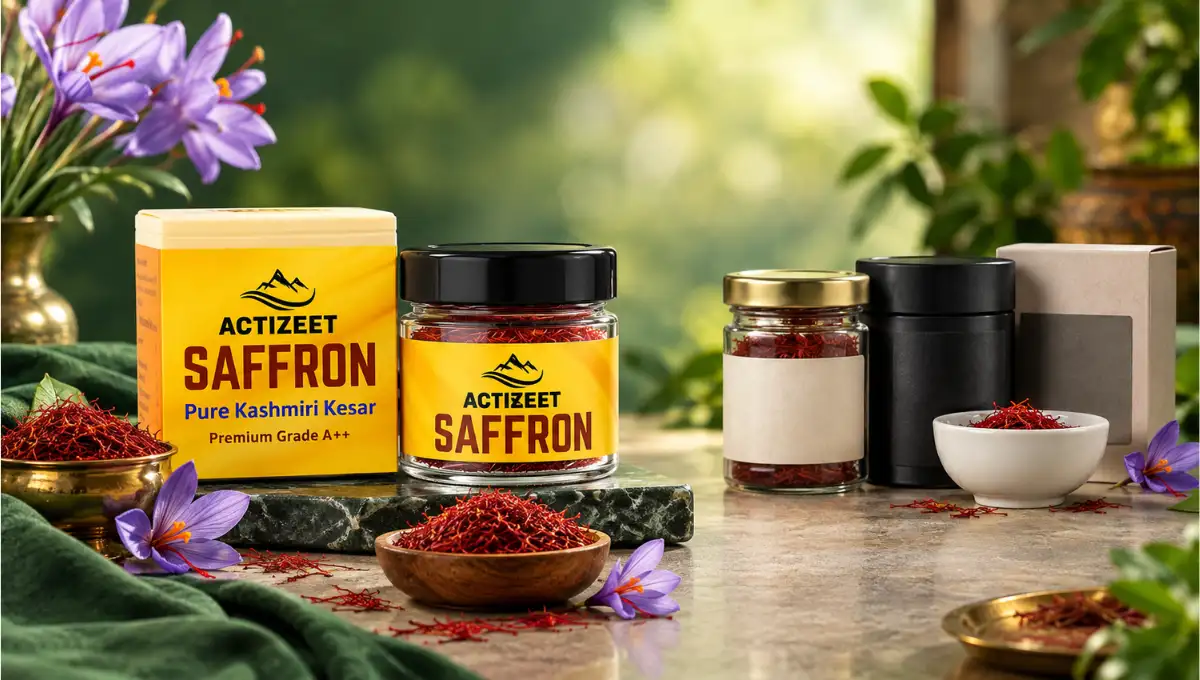
- ACTIZEET® Saffron (Kesar): Kashmiri Mongra threads, the red stigma tips, lab tested for colour, flavour and aroma compounds and hygienically packed.
The Principles We Work By
- Right plant, right part: Botanical names and traditionally used parts.
- Respect for tradition: Classical preparation methods where they matter.
- Testing for confidence: Checking purity and quality before products reach you.
- Simple ingredient lists: Single-ingredient products wherever possible, without artificial additives.
- Honest guidance: Clear usage instructions and measured claims.
We do not claim to have perfected every step. But we believe that showing customers how an ingredient becomes a product is one of the best ways to earn their trust.
From Nature to Your Daily Routine
Explore ACTIZEET® shilajit, saffron, Ayurvedic herbs and essential oils, prepared with care and tested for purity.
Shop the ACTIZEET® RangeFrequently Asked Questions
They usually pass through eight stages: selecting the right species and plant part, sourcing and harvesting, primary processing such as cleaning and drying, transformation by milling, purification, extraction or distillation, lab testing, formulation into a usable format, packaging and labelling, and finally storage, shipping and customer education.
Different parts of the same plant can have very different chemistry. For example, India's food regulator FSSAI advised in April 2026 against using ashwagandha leaves in food products, directing the industry toward the traditionally used root.
GACP stands for Good Agricultural and Collection Practices. The World Health Organization's GACP guidelines cover how medicinal plants should be identified, grown or collected, harvested, dried, stored and documented to improve the quality and safety of herbal products.
Identity testing to confirm the ingredient, purity testing for heavy metals, pesticide residues and microbes, strength testing for key compounds, and physical checks such as moisture and foreign matter. Results are recorded in a batch Certificate of Analysis.
ACTIZEET®, a brand of Tanmatra Ventures Private Limited, offers Himalayan shilajit resin, Kashmiri saffron, Ayurvedic herb powders and capsules such as ashwagandha, shatavari and triphala, and a wide range of essential oils.
Final Word: Quality Is Built at Every Step
A natural product is not made in a single moment. It is built step by step, from the choice of plant to the label on the pack. A mistake at any point can undo the care taken at every other point, and good work at every point is what turns a raw root, resin or flower into a product people can trust. As interest in natural wellness keeps growing, the brands that stand out will be the ones that respect this journey and are willing to show it. At Tanmatra Ventures Private Limited, that is what we aim to do with every ACTIZEET® product. The next time you pick up a natural product, think about the path it travelled, and look for the signs that someone looked after it along the way.
Discover natural products made with care
Visit the ACTIZEET® Shop