

Saffron Buying Guide · Brand Comparison · Kashmiri Kesar
ACTIZEET® Saffron (Kesar) vs Other Saffron Brands: An Honest Comparison
Saffron is often called the world's most expensive spice, and for good reason. Every thread is a tiny stigma picked by hand from a purple crocus flower, and it takes an enormous number of flowers to make even a small amount. That high value also makes saffron one of the most faked and mixed foods on the market. Walk into any store or scroll any shopping app and you will see "pure kesar" at wildly different prices, from Kashmir, Iran, Spain or simply "imported." So how do you know what you are really buying? In this guide, we compare ACTIZEET® Kashmiri Saffron with the main types of saffron sold in India, looking at origin, grade, colour and aroma strength, purity, testing, form and value, so you can choose with confidence.
- What Saffron Is and Why Quality Varies
- Quick Comparison Table
- 1. Origin: Kashmiri vs Iranian vs Others
- 2. Grade: Mongra, Lacha and Mixed Threads
- 3. Colour, Flavour and Aroma Compounds
- 4. Purity and the Adulteration Problem
- 5. Lab Testing and Standards
- 6. Form: Threads vs Powder vs Saffron Products
- 7. Price, Packaging and Real Value
- How to Check Real Kesar at Home
- Which Saffron Is Right for You?
- How to Use Saffron and Safety Notes
- Frequently Asked Questions
- Final Verdict
What Saffron Is and Why Quality Varies
Saffron comes from the flower of Crocus sativus. Each flower has just three thin red stigmas, which are picked by hand during a short autumn harvest, then carefully dried. In India, saffron is known as kesar and has been part of food, rituals, Ayurveda and celebrations for centuries. It colours biryani, flavours kheer, is stirred into warm milk and appears in traditional beauty preparations.
Why Saffron Is So Expensive
According to a peer-reviewed bulletin by the Botanical Adulterants Prevention Program (American Botanical Council), each saffron flower produces a single three-branched stigma weighing only about 2 to 2.5 milligrams, and harvesting and processing are done by hand. That is why a single gram of genuine saffron represents a great deal of careful labour.
Why Two "Pure Kesar" Packs Can Be So Different
Saffron quality depends on where it was grown, which parts of the flower are included, how it was dried and stored, and whether anything has been mixed in. Two packs both labelled "pure kesar" can differ hugely in colour strength, aroma and authenticity.
Quick Comparison Table
Rather than naming individual competitors, this table compares ACTIZEET® with the common types of saffron sold in India. Products within each category vary, so always check the specific label and lab information.
| Criteria | ACTIZEET® Kashmiri Saffron | Imported / Iranian Packs | Saffron Powder | Low-Priced Loose "Kesar" |
|---|---|---|---|---|
| Origin | Kashmir, India | Mostly Iran, sometimes Spain or Afghanistan; often just "imported" | Often not stated | Usually unverifiable |
| Grade | Mongra threads (red stigma tips) | Varies: Super Negin, Sargol, Pushal and others | Grade cannot be seen | Often mixed with yellow style or fillers |
| Form | Whole threads you can inspect | Usually threads | Ground, hardest to verify | Threads, often uneven |
| Additives | No artificial colours, flavours or preservatives (as stated by the brand) | Usually none in reputable brands | Risk of turmeric, paprika or dye | High risk of dyed fibres or other flowers |
| Testing | Lab tested for crocin, picrocrocin and safranal; batch quality evaluations (as stated by the brand) | Varies; some state an ISO category | Varies | Usually none |
| Packing | Hygienically packed, 1 g, 2 g and 4 g | Varies | Varies | Often loose paper or plastic |
Each point is explained in plain language below.
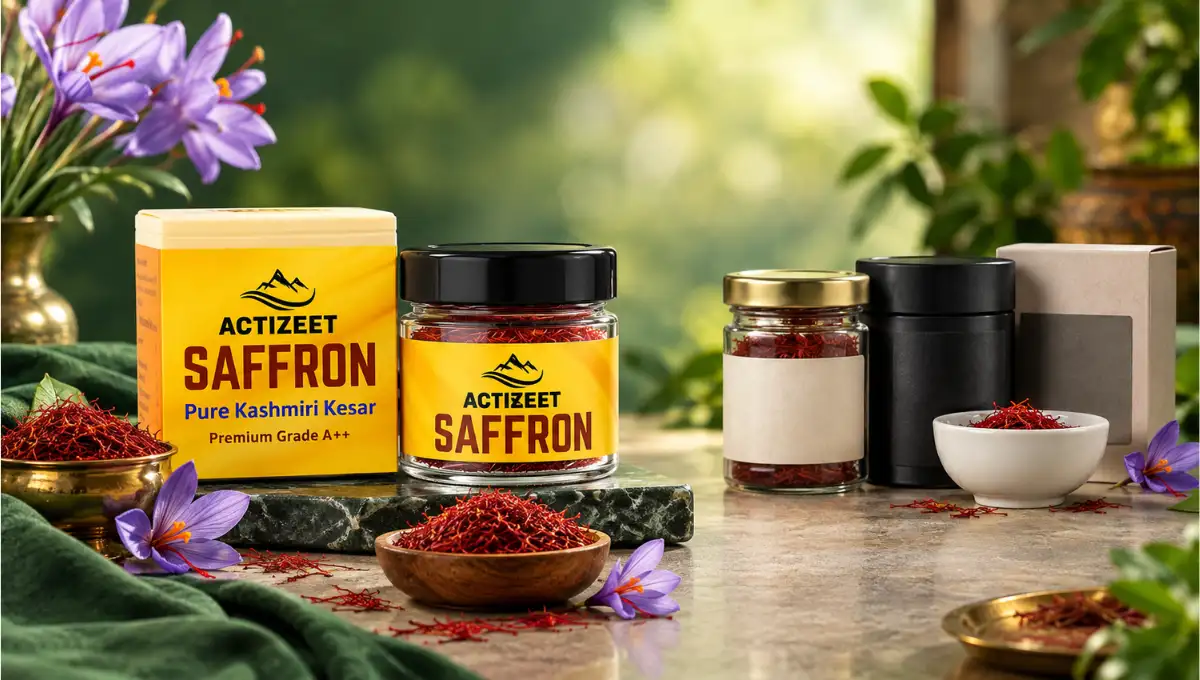
See the Kesar We Are Comparing
Pure Kashmiri Mongra saffron threads, lab tested and hygienically packed.
View ACTIZEET® Saffron (Kesar)1. Origin: Kashmiri vs Iranian vs Others
Kashmiri Saffron
Kashmir, especially the Pampore area near Srinagar, has grown saffron for centuries on its high plateau, known locally as the karewa land. Kashmiri saffron is known for long, thick, deep red threads and strong colour. In 2020, Kashmir saffron was registered as a Geographical Indication (GI) with India's Geographical Indications Registry (Intellectual Property India), which recognises that its qualities are linked to its place of origin. Supply is limited, so genuine Kashmiri saffron is usually priced at a premium.
Iranian Saffron
Iran is by far the world's largest producer, and much of the saffron sold in India is Iranian. Good Iranian saffron can be excellent, especially the higher grades such as Super Negin and Sargol. It is often more widely available and sometimes more affordable than Kashmiri saffron. The challenge for buyers is that packs simply labelled "imported" do not always say where the saffron came from or which grade it is.
Spanish, Afghan and Others
Spain, Afghanistan and a few other countries also produce saffron. Quality ranges from very good to poor, so origin alone is not a guarantee.
ACTIZEET®
ACTIZEET® Saffron is described by the brand as pure Kashmiri saffron, a product of India from Kashmir. For buyers who specifically want Indian-grown kesar with its traditional reputation, a clear Kashmir origin is a meaningful point of difference.
2. Grade: Mongra, Lacha and Mixed Threads
Each saffron thread has a deep red upper part, the stigma, and a pale yellow or white lower part, the style. The red stigma holds most of the colour, flavour and aroma. The style adds weight but very little value. How much style is left on the threads largely decides the grade.
Kashmiri Grades
- Mongra: Only the dark red stigma tips, with the yellow style removed. This is the top Kashmiri grade.
- Lacha: Stigmas with some yellow style still attached. Genuine, but less concentrated.
- Guchhi: Whole stigmas tied in bundles with the style included.
Iranian Grades
Iranian saffron uses names such as Super Negin, Negin and Sargol for all-red stigma cuts, and Pushal or Bunch for threads with style attached. These names are helpful, but they are not always used consistently by sellers.
ACTIZEET®
ACTIZEET® Saffron is sold as Mongra threads, which the brand describes as its premium "Category A++" saffron. Note that "A++" is the brand's own quality description, not an official ISO category. Mongra means you are paying for the red stigma, not the yellow style.
3. Colour, Flavour and Aroma Compounds
Saffron's value comes from three natural compounds:
- Crocin: Responsible for saffron's golden-yellow colour when soaked.
- Picrocrocin: Gives the slightly bitter, honey-like taste.
- Safranal: Creates the distinctive, hay-like aroma.
Why These Numbers Matter
The international standard for saffron, ISO 3632 from the International Organization for Standardization, sets out how saffron is graded, including tests for colouring strength, bitterness and aroma linked to these compounds. Higher colouring strength generally means you need fewer threads to get the same colour and flavour.
ACTIZEET®
ACTIZEET® states that its saffron is lab tested for high levels of crocin (colour), picrocrocin (flavour) and safranal (aroma). If you want exact values, ask for the batch report, which is the best way to compare any two saffron products side by side.
4. Purity and the Adulteration Problem
Because saffron is so valuable, it has long been a target for fraud. The Botanical Adulterants Prevention Program bulletin cited earlier lists a range of materials that have been passed off as saffron or mixed into it:
- Red-dyed paper strips and silk fibres.
- Corn stigmas (corn silk) dyed with beet juice.
- Pomegranate peel or fibres.
- Safflower and calendula (marigold) petals, sometimes called "false saffron."
- Ground turmeric or paprika mixed into saffron powder.
Other common tricks include adding yellow style to increase weight, coating threads with oil, honey or glycerine to make them heavier, and using artificial dyes to boost colour.
Where the Risk Is Highest
Loose, unbranded "kesar" sold at very low prices carries the greatest risk. Saffron powder is also risky because once threads are ground, you can no longer see what you are buying.
ACTIZEET®
ACTIZEET® sells whole Mongra threads, states that they contain no artificial colours, flavours or preservatives, and describes the product as carefully selected for purity and consistency. Whole threads give you the advantage of being able to check them yourself.
5. Lab Testing and Standards
Home checks can catch obvious fakes, but only a lab can confirm colouring strength, aroma levels and the absence of dyes or foreign plant material. Labs may use methods such as UV-visible spectrophotometry, microscopy, HPLC and HPTLC.
What a Good Saffron Lab Report Shows
- Colouring strength (crocin), bitterness (picrocrocin) and aroma (safranal) values.
- An ISO 3632 category, if the brand grades to that standard.
- Moisture content, since excess moisture adds weight and spoils quality.
- Checks for artificial dyes and foreign matter.
- A batch number, test date and named laboratory.
ACTIZEET® states that its saffron is lab tested and goes through batch quality evaluations. As with any brand, including ours, we encourage you to ask for the current batch report.
6. Form: Threads vs Powder vs Saffron Products
Whole Threads (ACTIZEET®)
Threads are the most trusted form. You can see their colour, shape and length, and they keep their aroma longer than powder. A few threads go a long way.
Saffron Powder
Powder dissolves quickly and is convenient for baking. But it loses aroma faster and is the easiest form to adulterate, because fillers like turmeric or paprika blend in invisibly.
Saffron-Flavoured Products
Kesar syrups, milk mixes, sweets and supplements may contain only a tiny amount of real saffron, or rely on flavourings and colours. Read the label to see how much saffron, if any, is actually included.
7. Price, Packaging and Real Value
- Think in strands, not grams. Most uses need only a few strands. A gram of good Mongra saffron can last for many servings.
- Stronger saffron is better value. High colouring strength means fewer threads for the same result, so cheaper, weaker saffron can end up costing more per cup or dish.
- Packaging protects quality. Saffron fades with light, heat and moisture. Airtight, light-protected packing helps preserve colour and aroma.
- Small packs keep it fresh. ACTIZEET® Saffron comes in 1 g, 2 g and 4 g packs, so you can buy an amount you will use while it is at its best.
How to Check Real Kesar at Home
These simple checks can help you spot obvious fakes. They are useful clues, not lab-level proof.
The Water Test
Drop a few threads into a glass of warm water. Real saffron releases a golden-yellow colour slowly, over several minutes, and the threads stay red. If the water turns red or orange instantly, or the threads lose their colour and turn pale, dye is likely involved.
The Look Test
Genuine threads are trumpet-shaped, wider at one end, with a slightly frilled tip. Thin, straight, uniform strands that look like hair or fibre are suspicious.
The Touch Test
Real saffron feels dry and slightly brittle. Threads that feel oily, sticky or damp may have been coated to add weight.
The Taste and Smell Test
Real saffron smells sweet and hay-like but tastes slightly bitter, not sweet. A sweet taste can be a warning sign.
Which Saffron Is Right for You?
Choose Kashmiri Mongra Like ACTIZEET® If You:
- Want Indian-grown kesar with a clear Kashmir origin.
- Prefer the top grade of red stigma tips without yellow style.
- Use saffron for milk, desserts, festive cooking or daily rituals.
- Want whole threads you can check yourself, backed by lab testing.
Consider a High-Grade Iranian Saffron If You:
- Are comfortable with imported origin.
- Can confirm the grade, such as Super Negin or Sargol, and see lab data.
Be Cautious With:
- Very cheap loose "kesar" with no brand or origin.
- Saffron powder from unknown sources.
- Products that only say "imported" with no grade.
- Threads that bleed red instantly in water.
How to Use Saffron and Safety Notes
Everyday Uses
- Kesar milk: Soak 3 to 5 strands in a little warm milk for a few minutes, then stir into a full cup.
- Tea and infusions: Add a few strands to warm water or tea.
- Rice dishes: Soak strands before adding to biryani or pulao for even colour.
- Desserts: Kheer, phirni, shrikhand, sweets, cakes and ice cream.
Always soak saffron in a little warm liquid first to release its colour and aroma. Store it in an airtight container in a cool, dry, dark place.
Safety Notes
Saffron is safe in normal food amounts, which are just a few strands. Very large amounts, in the range of several grams, can be harmful. Pregnant women should avoid taking saffron in large or medicinal quantities and should speak with their doctor about any use beyond normal cooking. If you take medication, have a medical condition or are considering saffron supplements, consult a qualified healthcare professional first.
Kashmiri Mongra Threads. Lab Tested. No Artificial Colours.
Available in 1 g, 2 g and 4 g packs for kesar milk, festive cooking and daily rituals.
Shop ACTIZEET® Saffron (Kesar)Frequently Asked Questions
ACTIZEET® offers Kashmiri saffron in Mongra grade, the red stigma tips without yellow style. The brand states it is lab tested for crocin, picrocrocin and safranal, contains no artificial colours, flavours or preservatives, and is hygienically packed. Many other products are imported without a stated grade, sold as powder or sold loose without testing.
Both can be high quality. Kashmiri saffron is GI-registered and known for thick, deep red threads and strong colour, with limited supply. Iranian saffron is more widely available, and its top grades are also excellent. Grade, freshness and testing matter as much as origin.
Mongra is the top grade of Kashmiri saffron. It contains only the dark red stigma tips, with the pale yellow style removed, so it delivers more colour, flavour and aroma per gram than Lacha or bundled grades.
Put a few threads in warm water. Real saffron releases a golden-yellow colour slowly while the threads stay red. Genuine threads are trumpet-shaped, dry to the touch and taste slightly bitter. For full certainty, ask the brand for a batch lab report.
For a cup of kesar milk, 3 to 5 strands soaked in warm milk is usually enough. Saffron is safe in normal food amounts, but very large amounts can be harmful, so consult a doctor before using it in larger quantities, especially during pregnancy.
Final Verdict: Choose Saffron You Can See, Smell and Verify
Saffron is a spice where quality differences are huge and fakes are common. The best choice is not always the cheapest or the most loudly advertised. It is the one with a clear origin, a stated grade, whole threads you can check, no artificial additives and lab testing behind it. Good Iranian saffron has its place, and many buyers use it happily. ACTIZEET® Saffron is for those who want pure Kashmiri kesar in Mongra grade, lab tested for its colour, flavour and aroma compounds and packed with care. Whichever brand you choose, try the water test, read the label and ask for the batch report. A spice this precious deserves that little bit of extra attention.
Ready for pure Kashmiri kesar?
Buy ACTIZEET® Saffron Now