

People · Traditional Knowledge · Ethical Sourcing
Life Behind the Herbs: Understanding India's Botanical Communities
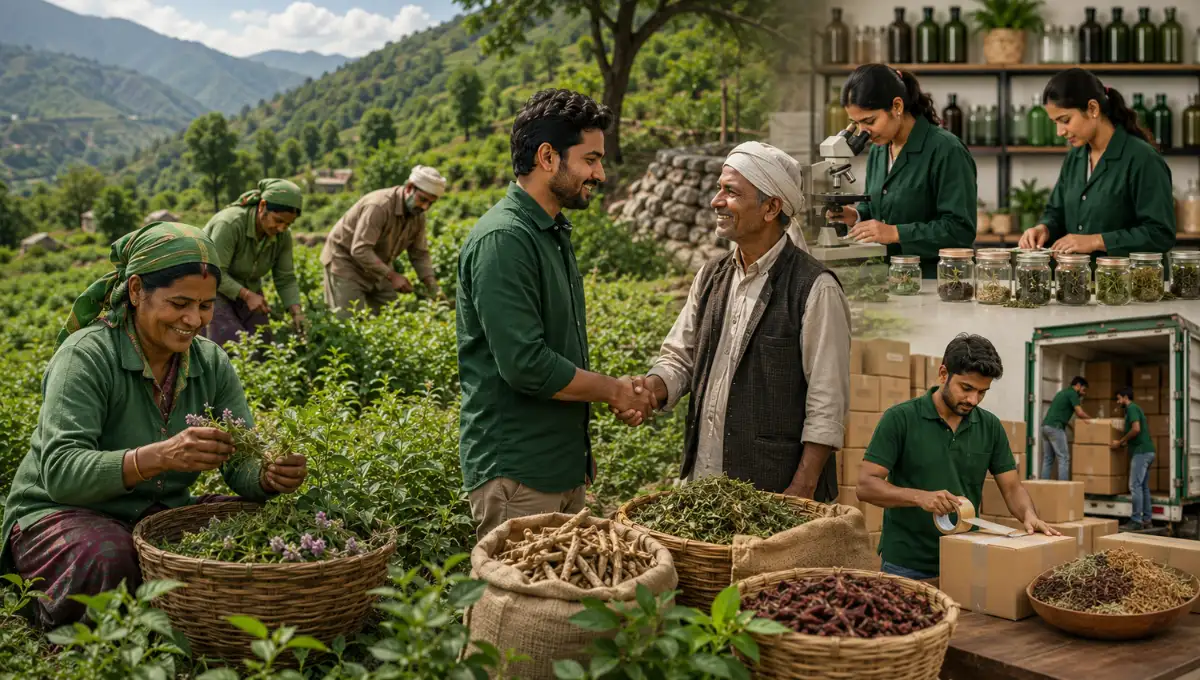
Before dawn in a village in Chhattisgarh, a group of women walk into the forest with baskets to gather fallen mahua flowers and ripe harad fruits. Hundreds of kilometres north, a collector in the Himalayas climbs a steep rock face in summer to reach dark resin seeping from the stone. In Madhya Pradesh, a farmer checks whether his ashwagandha roots are ready for harvest, while in a Kerala town, a vaidya from a family of healers prepares a decoction his grandfather taught him. These people rarely appear on product labels, yet almost every Ayurvedic and herbal product in India passes through their hands. This article looks at who they are, how they live and work, the knowledge they carry, the challenges they face, and why their wellbeing matters to anyone who uses natural products.
- Who Are India's Botanical Communities?
- Forest Dwellers and Tribal Gatherers
- The Central Role of Women
- High-Altitude Collectors of the Himalayas
- Medicinal Plant Farmers
- Traditional Healers and Knowledge Keepers
- The Challenges They Face
- Laws and Programmes That Support Them
- What Fair Partnership Looks Like
- Frequently Asked Questions
- Final Word
Who Are India's Botanical Communities?
"Botanical communities" is a simple way of describing the many groups of people whose lives are closely tied to plants: gathering them, growing them, trading them and using them for healing. In India, this includes tribal and forest-dwelling families, rural women, mountain collectors, small farmers, village herb traders and traditional healers.
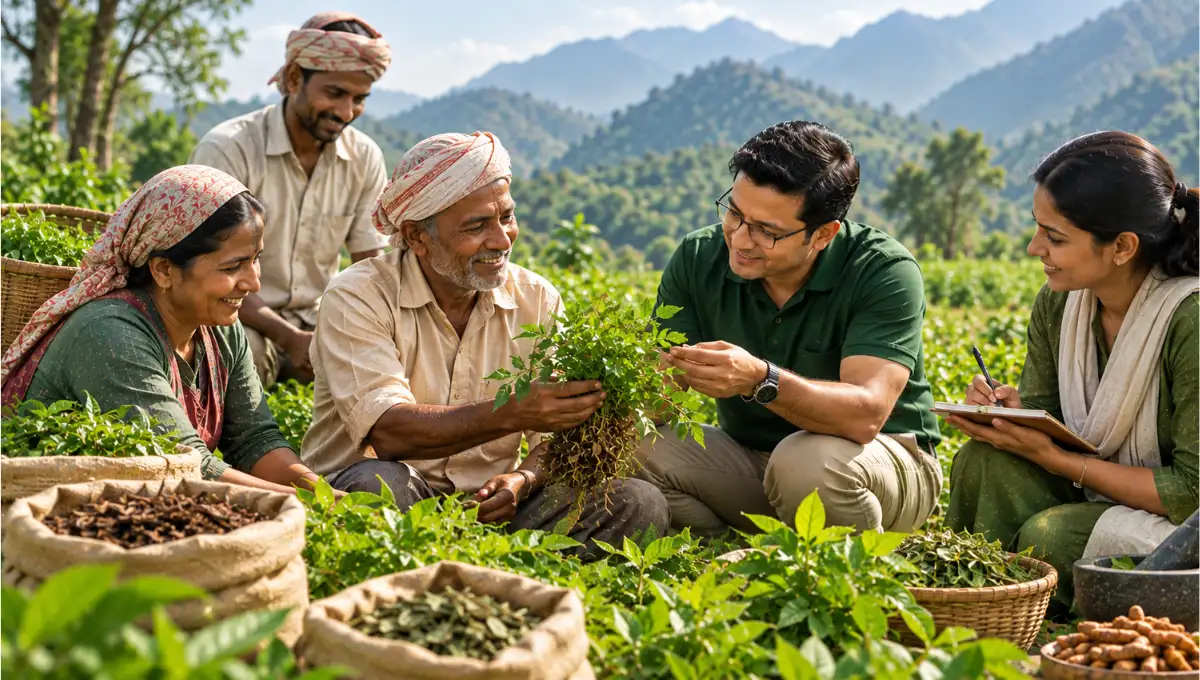
These communities are the first link in the natural products supply chain. They decide which plants are picked, when, how much and how carefully. Their skills shape the quality of the raw material long before any factory or lab gets involved. And many of them hold knowledge about plants that has been passed down orally for generations and is written in no book.
The ENVIS Centre on Medicinal Plants at FRLHT has documented more than 6,000 plant species used across India's codified systems such as Ayurveda and its many folk and tribal healing traditions. A large share of that knowledge lives not in texts but in the memories and daily practices of village and forest communities.
| Community | Main Role | Typical Plants and Materials |
|---|---|---|
| Tribal and forest-dwelling families | Wild collection, primary processing | Harad, baheda, amla, mahua, giloy, barks and roots |
| Himalayan collectors | High-altitude gathering | Shilajit, kutki, jatamansi and alpine herbs |
| Medicinal plant farmers | Cultivation and harvest | Ashwagandha, isabgol, tulsi, shatavari, aloe vera |
| Village traders and pansaris | Buying, sorting, selling | Mixed raw herbs for local and city markets |
| Vaidyas and folk healers | Knowledge, preparation, healing | Local herbs for home remedies and classical formulas |
Forest Dwellers and Tribal Gatherers
For millions of Indians, the forest is not a distant place. It is a kitchen, a pharmacy and a source of income. Communities such as the Gond, Baiga, Bhil, Santhal, Munda, Oraon and many others have lived with India's forests for centuries.
Minor Forest Produce as a Lifeline
Medicinal plants fall under what the government calls Minor Forest Produce (MFP), a category that also includes items like tendu leaves, honey, lac, gums and seeds. According to information from TRIFED shared on the government's Vikaspedia portal, around 100 million forest dwellers depend on MFP for food, shelter, medicines and cash income, and tribal households earn roughly 20 to 40 percent of their annual income from it. MFP is especially important during lean seasons, when farm work is scarce.
A Year Shaped by Seasons
A forest gatherer's calendar follows the plants. Mahua flowers fall in spring. Harad, baheda and amla fruits ripen in winter. Roots are dug after the monsoon when plants mature. Each season brings its own work, and experienced collectors know exactly which part of the forest to visit and when.
Knowledge That Protects Quality
Skilled gatherers can tell a genuine herb from a look-alike at a glance. They know which trees give the best fruit, how to peel bark without killing a tree, and how to dry produce so it does not rot. This practical knowledge is one of the most important quality controls in the whole supply chain, even though it is rarely recognised.
The Central Role of Women
Walk into almost any forest village during collection season and you will see that much of the work is done by women. The same TRIFED information notes that most minor forest produce is collected and used or sold by women, which gives the sector a strong link to women's financial independence.
Gatherers, Processors and Keepers of Knowledge
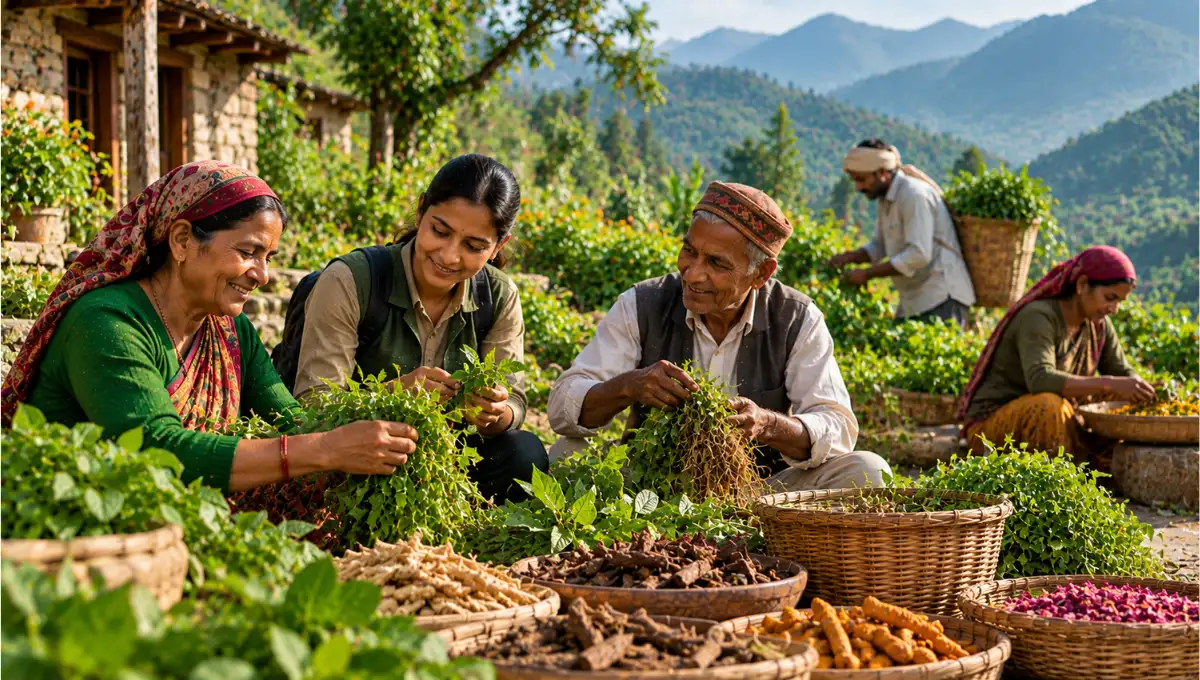
Women often handle collection, cleaning, sorting and drying. In many households, they are also the ones who know home remedies: which leaf to use for a fever, which bark for a stomach ache, which root for a new mother. This everyday healing knowledge keeps families healthy where clinics are far away.
Self-Help Groups and Collective Strength
Women's self-help groups have become a powerful way for gatherers to organise. By pooling their produce, they can process it locally, negotiate better prices and reduce dependence on a single trader. Many of these groups now run small units that clean, grade and pack herbs before sale.
High-Altitude Collectors of the Himalayas
Some of the most valued natural materials in Ayurveda come from the Himalayas. Collecting them is hard, seasonal and sometimes dangerous work.
Life in Short Seasons
Alpine meadows and rocky slopes are only accessible for a few months each year, usually in late spring and summer. Mountain families often move to higher pastures during this time, combining herding with herb collection. Plants like kutki and jatamansi grow slowly in harsh conditions, which makes careful harvesting especially important.
The Shilajit Collectors
Shilajit is a dark, mineral-rich resin that seeps out of rock crevices in high mountains during warm months. Local collectors often know specific rock faces that have produced it for generations. Reaching these spots can mean long treks and steep climbs. Because shilajit forms very slowly, experienced collectors understand that stripping a site bare leaves nothing for the future. Raw shilajit then goes through purification and testing before it can be used.
Remote and Often Underpaid
Distance from markets puts mountain collectors at a disadvantage. They often sell to the first buyer who reaches their village, with little knowledge of what their produce is worth further down the chain.
Medicinal Plant Farmers
A growing share of Ayurvedic raw materials now comes from farms. The Malwa region of Madhya Pradesh, parts of Rajasthan and Gujarat, and pockets across central and southern India have become known for crops like ashwagandha, isabgol, senna and safed musli.
Why Farmers Choose Medicinal Crops
Many medicinal plants suit dry conditions and poor soils where food crops struggle. Some need less water and fewer inputs. When prices are good, they can earn more per acre than conventional crops, and they reduce pressure on wild plant populations.
The Risks They Carry
Medicinal crop markets can swing sharply. A good price one year may lead many farmers to plant the same crop, followed by a crash the next. Farmers also need knowledge of the right varieties, harvest timing and drying methods, which is not always easy to get. Buy-back agreements with manufacturers and support from the National Medicinal Plants Board can help reduce these risks.
Traditional Healers and Knowledge Keepers
Alongside those who gather and grow herbs are those who understand how to use them. India has a wide range of traditional healers: family vaidyas trained in classical Ayurveda, folk healers who work from local plant knowledge, bone setters, traditional birth attendants and tribal healers whose practices are specific to their region.
Family Lineages
In states like Kerala, some families have practised Ayurveda for many generations, passing on formulas, preparation methods and clinical experience from parent to child. In tribal areas, healers often learn through long apprenticeships in the forest, identifying plants in the field rather than from books.
Sacred Groves and Cultural Protection
Many communities protect patches of forest as sacred groves, known by names such as devrai in Maharashtra, kavu in Kerala and sarna in Jharkhand. These groves often shelter rare medicinal plants and old trees. Faith and custom have protected them for centuries, making them some of India's oldest conservation areas.
Knowledge at Risk
This knowledge is fragile. As young people move to cities for work and education, fewer are learning plant lore from their elders. When a healer passes away without a successor, generations of knowledge can vanish. Community-led documentation, such as People's Biodiversity Registers, helps record this knowledge with the consent and ownership of the community.
The Challenges They Face
Despite being essential to a fast-growing industry, many botanical communities remain among India's poorest. Some common problems include:
Long Chains of Middlemen
Herbs may pass through several traders before reaching a manufacturer. Each adds a margin, and the collector at the start of the chain often receives only a small fraction of the final value.
Distress Selling
Families with little savings often need cash immediately and sell produce right after collection, when prices are lowest. Without storage facilities, they cannot wait for better rates.
Lack of Processing Skills and Equipment
Simple steps like proper cleaning, drying and grading can raise the value of herbs significantly. Without training or equipment, communities sell raw, lower-grade material and miss out on this added value.
Shrinking Resources
Overharvesting by outsiders, forest loss and climate change reduce the plants available to local collectors, affecting both their income and their traditional way of life.
Little Recognition
The knowledge and effort of these communities are rarely acknowledged by the brands that benefit from them. This invisibility makes it easier for unfair practices to continue.
Laws and Programmes That Support Them
India has put several measures in place to protect the rights and incomes of botanical communities. They are not perfect, but they provide an important foundation.
The Forest Rights Act, 2006
The Scheduled Tribes and Other Traditional Forest Dwellers (Recognition of Forest Rights) Act, administered by the Ministry of Tribal Affairs, recognises the rights of forest-dwelling communities over the lands and resources they have traditionally used. This includes the right of ownership, access to collect, use and dispose of minor forest produce, along with community rights to protect and manage forests. For many gatherers, this law turned a customary practice into a legal right.
Minimum Support Price for Minor Forest Produce
Under this scheme, the government sets minimum prices for a list of forest products. If market prices fall below that level, state agencies are meant to step in and buy at the support price, giving gatherers a safety net against distress selling.
Van Dhan Vikas Kendras
Launched in 2018 by the Ministry of Tribal Affairs and TRIFED, the Van Dhan scheme groups tribal gatherers into self-help groups and sets up local centres for training, primary processing and value addition. The idea is simple: help communities clean, process and pack their produce themselves, so that more of the value stays in the village.
Biodiversity Law and Benefit Sharing
The Biological Diversity Act sets up local Biodiversity Management Committees and provides for benefit sharing when biological resources and associated knowledge are used commercially. In principle, this lets communities share in the value created from what they have protected.
What Fair Partnership Looks Like
Laws set the minimum. Real change also depends on how brands choose to work with the people who supply them. Fair partnerships benefit everyone: communities earn more, brands get better raw materials, and plant populations are better protected.
For Brands
- Buy closer to the source. Working directly with collector groups, farmer producer organisations and self-help groups cuts out unnecessary middlemen.
- Pay fairly and on time. Stable prices and prompt payment reduce distress selling.
- Invest in skills. Training in sustainable harvesting, drying and grading raises both quality and income.
- Commit for the long term. Multi-year buying relationships give communities the confidence to invest in better practices.
- Respect knowledge. Acknowledge the source of traditional knowledge and follow benefit-sharing obligations.
- Protect the resource. Agree on harvest limits and seasons with collectors so plants can regrow.
For Consumers
- Ask brands where their herbs come from and who collects them.
- Be wary of prices that seem too low for rare or hard-to-collect materials.
- Support products made by tribal cooperatives and community enterprises.
- Value transparency over vague claims about being "natural" or "pure."
Some brands are starting to tell these human stories as part of their identity. ACTIZEET®, which works with Himalayan shilajit, reflects this shift by recognising that every jar begins with mountain collectors and careful hands, and that respecting those people is part of offering a product worth trusting.
Frequently Asked Questions
Many wild Ayurvedic herbs are collected by tribal and forest-dwelling communities, often by women. Himalayan materials are gathered by mountain communities, while cultivated herbs like ashwagandha and isabgol are grown by farmers in states such as Madhya Pradesh, Rajasthan and Gujarat.
Minor forest produce refers to non-timber products collected from forests, such as medicinal plants, fruits, seeds, flowers, leaves, gums, honey and lac. Around 100 million forest dwellers in India depend on it for food, medicine and income.
They are community-based centres set up under a scheme launched in 2018 by the Ministry of Tribal Affairs and TRIFED. They organise tribal gatherers into self-help groups and provide training and facilities for processing and value addition, so communities earn more from their forest produce.
The Forest Rights Act, 2006 recognises the rights of forest-dwelling communities to own, collect, use and sell minor forest produce, and to protect and manage community forests. It gives legal backing to practices many communities have followed for generations.
Choose brands that explain where their ingredients come from and how they work with collectors and farmers. Products from tribal cooperatives, self-help groups and brands with direct, long-term sourcing partnerships are more likely to return fair value to the people behind the herbs.
Final Word: Every Herb Has a Human Story
It is easy to think of herbs as simple ingredients: a powder in a jar, a name on a label. But behind each one is a person who knew where to find it, when to pick it and how to handle it with care. India's botanical communities are the living foundation of Ayurveda and the natural products industry. They protect forests, preserve knowledge and keep supply chains running, often for very little reward. Supporting them is not charity. It is the smartest way to ensure the quality, authenticity and future of the products we value. When brands pay fairly, share benefits and tell these stories honestly, and when buyers choose those brands, the whole chain grows stronger. The next time you open a herbal product, take a moment to think about the hands and the lives behind it.