

Botanical Sourcing · Tribal Livelihoods · Fair Trade
The People Behind India's Botanical Supply Chains
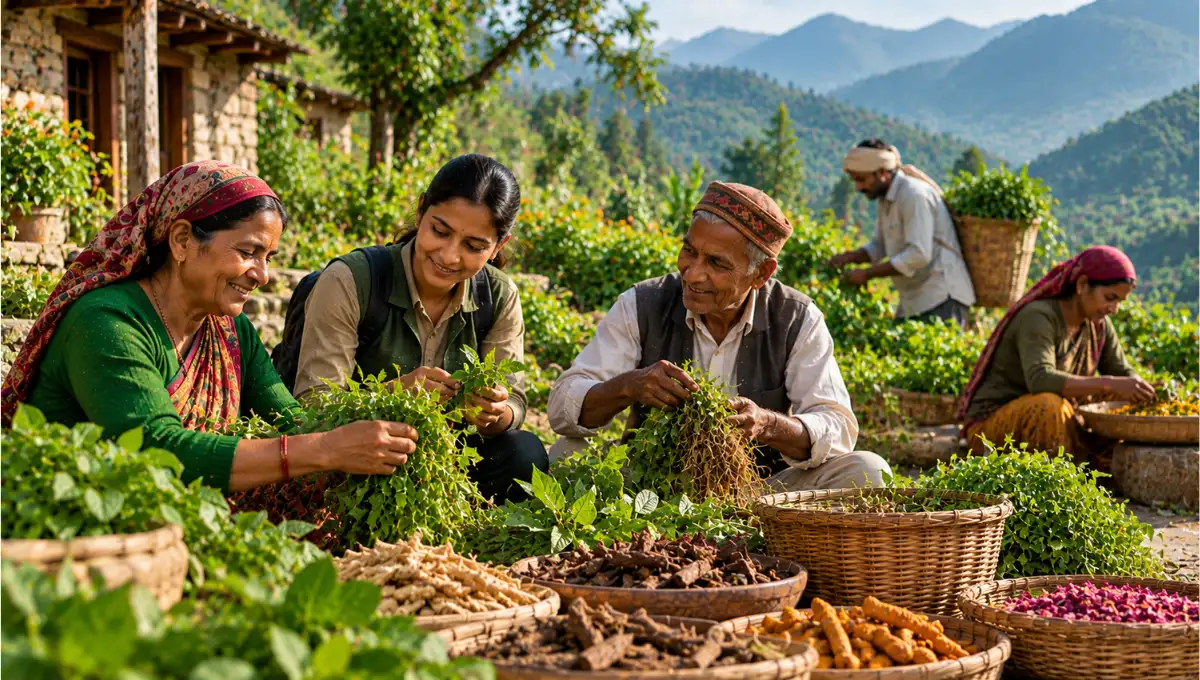
Every jar of ashwagandha powder, every bottle of shilajit resin, every packet of triphala churna has a human story behind it that almost never makes it onto the label. Long before an herb reaches a processing facility, a specific person, most often a woman from a forest-dwelling tribal community, has walked into the forest at dawn, spent hours identifying, collecting, and carrying plant material on her head or back, and sold it for a price she rarely had any real power to negotiate. India's entire Ayurvedic and herbal products industry, an industry worth billions and growing rapidly, rests on the labor of these collectors, and understanding who they are, what they actually earn, and what a fairer supply chain could look like is essential to understanding what "natural" and "traditional" genuinely mean in practice, not just in marketing language.
- Who Actually Collects India's Medicinal Plants?
- How Central Forest Produce Really Is to Tribal Household Income
- The Middleman Problem: Why Collectors Earn So Little
- What the Government Has Tried to Do About It
- The Traditional Knowledge That Is Quietly Disappearing
- Why This Should Matter to Anyone Buying Ayurvedic Products
- What Fair, Ethical Sourcing Actually Requires
- Frequently Asked Questions
- Final Word
Who Actually Collects India's Medicinal Plants?
India's medicinal plant supply chain begins overwhelmingly with forest-dwelling and tribal communities, most concentrated in central Indian states like Chhattisgarh, Madhya Pradesh, Odisha, and Jharkhand, along with hill and forest regions across the country. Research documenting India's rural relationship with medicinal plants notes that roughly 70 percent of the Indian population lives in rural areas, many in close proximity to forests, and depends on plant material for medicine, food, and daily livelihood needs, a practice with roots stretching back to prehistoric times.
Within these communities, the actual collection work is disproportionately done by women. Recent field reporting from Chhattisgarh's forest villages, one of India's most significant medicinal plant collection regions, documented this pattern directly: women in these communities do the bulk of the physical collection work, spending entire days gathering, cleaning, and sorting forest produce including medicinal herbs, tubers, and roots, while men more often handle the eventual selling of the collected material. This gendered division of labor is not incidental. It reflects generations of accumulated botanical knowledge that has traditionally been passed down and held predominantly by women in many of these tribal communities, knowledge about which plants to collect, at what season, and by what method, that represents a genuinely irreplaceable form of expertise.
How Central Forest Produce Really Is to Tribal Household Income
What is officially termed Minor Forest Produce, a category that includes honey, tendu leaves, mahua flowers, bamboo, and a wide range of medicinal plants, herbs, roots, and tubers, is anything but minor to the households that depend on it. According to India's Ministry of Tribal Affairs, Minor Forest Produce accounts for around 20 to 40 percent of the annual income of many Scheduled Tribe households, a genuinely substantial share of total household earnings for a huge portion of India's tribal population.
The Forest Rights Act of 2006 formally recognizes tribal and forest-dwelling communities' rights to collect these products, including medicinal plants, herbs, roots, and tubers, reflecting a legal acknowledgment that this collection activity is a legitimate and protected livelihood rather than an informal or incidental practice. For generations, these communities have gathered forest produce and sold it in local markets as both a seasonal supplement and, in many areas, a regular and essential source of household income, a role that predates and exists largely independently of the modern branded supplement industry that ultimately depends on this same raw material.
The Middleman Problem: Why Collectors Earn So Little
Despite how central this labor is to the entire Ayurvedic and herbal products industry, the people doing the actual collection work are consistently the least compensated part of the entire supply chain. Recent field reporting from Chhattisgarh documented this directly and starkly: collectors described spending entire days gathering, cleaning, and sorting forest produce, only to earn a few dozen rupees when selling locally, because government procurement centers offering fair support prices were either too distant to reasonably access or operated too irregularly to rely on. The same reporting found that formal government procurement volumes in the state had collapsed dramatically, falling from over 627,000 quintals in 2021 to just 35,000 quintals by 2024-25, pushing collectors back toward the very middlemen the procurement system was originally designed to bypass.
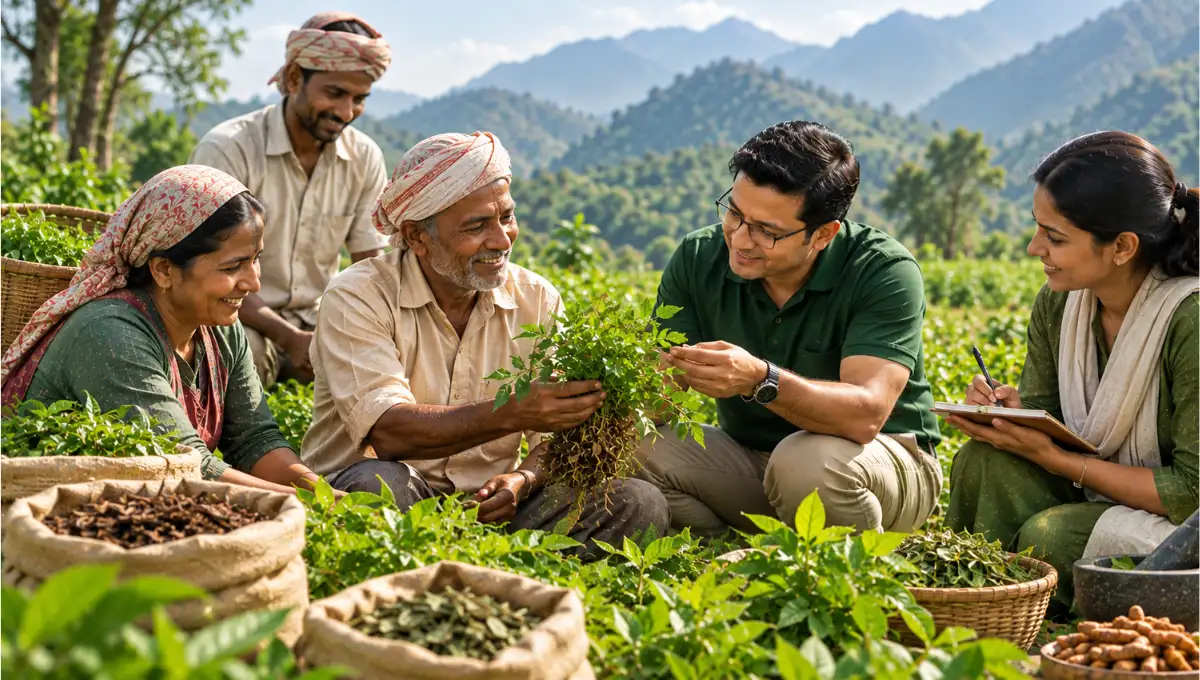
Research published through the Food and Agriculture Organization examining structural problems in India's phyto-medicinal trade identified the underlying mechanism clearly: wild medicinal herbs are typically sold without any significant processing or value addition at the point of collection, and producers' access to buyers is generally limited to local sales or weekly village markets, a genuinely narrow and disadvantaged negotiating position. The same research noted that this situation is compounded by an absence of clear property rights, institutional support, and consistent market information, leaving forest-dwelling collectors largely uninformed about fair pricing, legal collection limits, or alternative buyers, a knowledge and power asymmetry that consistently benefits traders and petty contractors at the direct expense of the person who actually did the physical collection work.
This is the uncomfortable reality sitting underneath almost every unbranded, anonymously sourced botanical ingredient moving through India's herbal supply chain: a collector, most often a woman, working an entire day in forest conditions for what amounts to a genuinely small fraction of what the finished, branded, packaged product eventually sells for.
What the Government Has Tried to Do About It
This is not a problem that has gone entirely unaddressed at the policy level. The Pradhan Mantri Janjatiya Vikas Mission is a current government initiative specifically designed to help tribal forest produce collectors move up the value chain, from simply gathering and selling raw material to participating in processing, packaging, and direct market access, rather than remaining permanently at the lowest-value end of the supply chain. Recent reporting on the mission describes its central goal as helping tribal producers capture more of the value their labor creates, through investment in local processing infrastructure, skills training, and more direct market linkages that reduce dependence on the layers of middlemen that have historically captured most of the margin.
Earlier institutional efforts have shown that this kind of intervention can genuinely work when implemented consistently. Research on India's medicinal plant trade specifically cited the Gujarat State Forest Development Corporation's model as an example: the corporation appoints collection agents who purchase forest produce from tribal collectors at prices fixed by a committee that includes tribal representation alongside business and government stakeholders, then sells the procured material through open auction, a structure specifically designed to ensure collectors receive a fair, transparent price rather than whatever a local middleman is willing to offer. Studies of this specific model found that it successfully provided gainful employment to poorer sections of the community during non-agricultural seasons, demonstrating that fairer, better-structured procurement systems are genuinely achievable, not merely a theoretical ideal.
The consistent lesson across these interventions is that the core problem is not usually a lack of demand for what tribal collectors gather. It is a lack of direct, reliable market access and price transparency, exactly the structural gap that better-designed procurement systems, and companies willing to build direct sourcing relationships rather than purchasing anonymously through multiple layers of traders, can genuinely help close.
The Traditional Knowledge That Is Quietly Disappearing
There is a dimension to this story that goes beyond fair pricing alone, and it may ultimately prove even harder to reverse. Ethnobotanical field research documenting tribal medicinal plant knowledge, including detailed studies of communities like the Baiga tribe of Chhattisgarh, whose traditional knowledge includes deep familiarity with plants like Withania somnifera, ashwagandha, has consistently identified a widening knowledge gap between older and younger generations. Field research studying tribal medicinal plant knowledge in central India found explicitly that community members over roughly 50 to 65 years of age hold significantly more knowledge about wild plant identification, seasonal collection timing, and traditional preparation methods than younger generations, who are increasingly disconnected from this knowledge base as economic pressures push younger community members toward other forms of work.
This matters directly for the future of India's entire botanical supply chain, because this generational knowledge, knowing precisely when a specific plant reaches peak potency, which part of the plant to collect, how to identify a genuine species from a similar-looking but therapeutically different one growing in the same forest, is not something that can simply be looked up or reconstructed once it is lost. It exists almost entirely in the accumulated, lived experience of specific individuals and communities, and when the economic incentive to pass that knowledge down disappears, along with it, the practical viability of sustainably and correctly sourcing many of these plants at all begins to erode.
Why This Should Matter to Anyone Buying Ayurvedic Products
It is easy for this entire supply chain to remain invisible to the end consumer of a finished, branded Ayurvedic product, and that invisibility is precisely the problem. A jar of ashwagandha powder or a bottle of shilajit resin carries no information about whether the collector who gathered the raw material was paid fairly, whether the collection method was sustainable, or whether the community's traditional knowledge was respected and appropriately compensated as part of the transaction. This information gap is not accidental. It is structurally convenient for supply chains built around anonymous bulk purchasing through multiple layers of traders, since none of those intermediary layers have any obligation to disclose what happened at the very beginning of the chain.
Consumers who care about ethical sourcing, and increasingly research suggests many do, deserve to understand that "natural" and "traditional" as marketing terms say nothing on their own about whether the human beings at the origin of that supply chain were treated fairly. These are two entirely separate questions, and a product can be genuinely botanically authentic while still being sourced through a supply chain that pays its collectors close to nothing for their labor.
What Fair, Ethical Sourcing Actually Requires
Given everything above, here is what genuinely fair sourcing looks like for a company operating in India's herbal and Ayurvedic products space.
Direct Relationships Rather Than Anonymous Bulk Purchasing
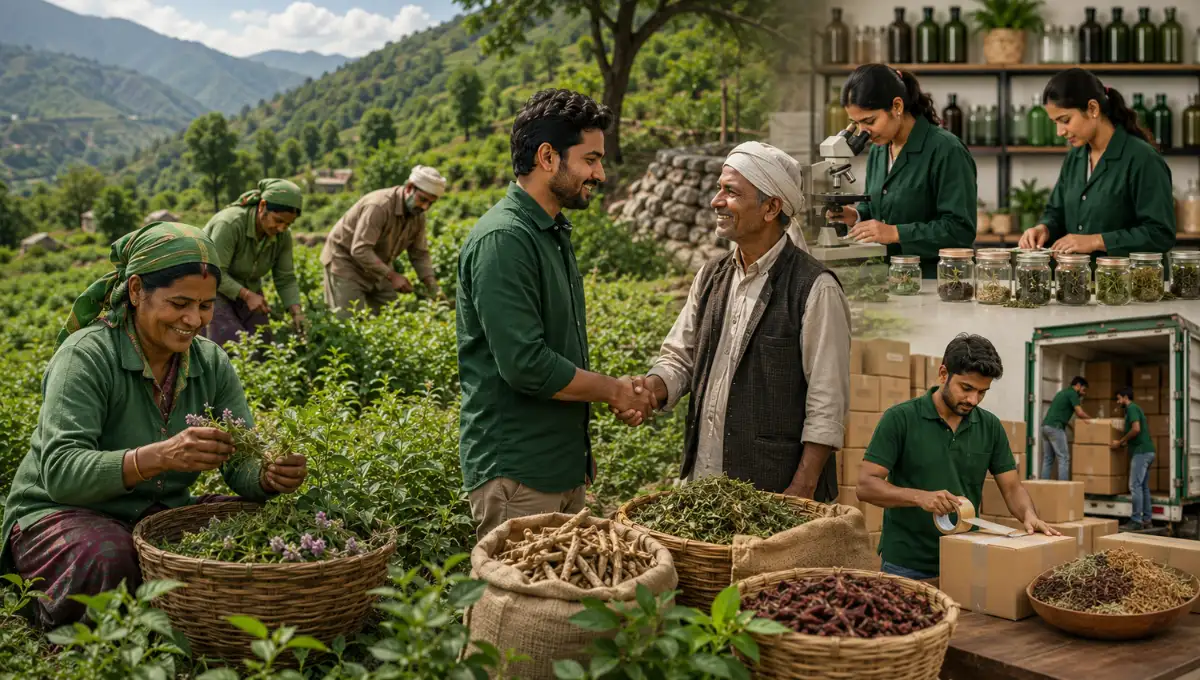
Companies that build ongoing, direct relationships with specific collector communities or farmer cooperatives, rather than purchasing anonymous material through multiple layers of traders, have far more ability to verify and influence how fairly the people at the start of the chain are actually compensated.
Price Transparency and Consistency
Given how much collector income has historically depended on inconsistent, opaque local pricing, companies genuinely committed to fair sourcing should offer predictable, transparent pricing that collectors can rely on across seasons, rather than opportunistically buying at the lowest available local rate.
Investment in Local Value Addition
Following the model that government initiatives like the Pradhan Mantri Janjatiya Vikas Mission are actively pursuing, companies can support local processing and value-addition capacity within collecting communities themselves, allowing a greater share of a product's eventual retail value to stay with the people who did the original collection work.
Respecting and Compensating Traditional Knowledge
Companies benefiting commercially from traditional botanical knowledge, knowledge about correct species identification, harvest timing, and preparation methods developed and preserved by specific communities over generations, have a genuine obligation to ensure that knowledge is fairly acknowledged and compensated as part of the sourcing relationship, not simply extracted for free.
Transparency With the End Consumer
Brands willing to actually communicate where and how their botanicals were sourced, including acknowledging the human labor behind that sourcing, are giving consumers the information needed to make genuinely informed and values-aligned purchasing decisions, rather than leaving the entire question invisible behind a finished, branded package.
This is the standard that responsible Ayurvedic wellness brands should be building their sourcing around, given how directly the industry's integrity depends on the people at the very start of its supply chain. ACTIZEET® is one example of a brand within this category treating sourcing relationships and traceability as a genuine priority alongside its quality testing standards, recognizing that a truly trustworthy Ayurvedic product has to account for the people who gathered its ingredients, not just the compounds those ingredients contain.
Frequently Asked Questions
According to India's Ministry of Tribal Affairs, Minor Forest Produce, a category that includes medicinal plants, herbs, roots, and tubers alongside items like honey and tendu leaves, accounts for approximately 20 to 40 percent of the annual income of many Scheduled Tribe households, making it a genuinely substantial and often essential part of household livelihood rather than a marginal supplementary activity.
Field research and reporting from major collection regions like Chhattisgarh consistently document that women in forest-dwelling tribal communities perform the bulk of the physical collection, cleaning, and sorting work, while men more often handle the eventual sale of the collected material. This work is frequently underpinned by generations of botanical knowledge traditionally held and passed down by women within these communities.
Research has identified several compounding structural factors: collectors typically have limited access to buyers beyond local markets or middlemen, government fair-price procurement centers are often too distant or too irregular to reliably access, and a general lack of price transparency and market information leaves collectors in a weak negotiating position. This combination consistently allows traders and intermediaries further down the supply chain to capture a disproportionate share of the eventual product's value.
Yes. The Pradhan Mantri Janjatiya Vikas Mission is a current government initiative specifically aimed at helping tribal forest produce collectors move beyond raw material collection into processing, packaging, and more direct market access, so a greater share of final product value stays with the original collectors. Earlier state-level models, such as the Gujarat State Forest Development Corporation's fixed-price procurement and auction system, have demonstrated that fairer, better-structured procurement can work effectively when implemented consistently.
Final Word: A Supply Chain Is a Chain of People, Not Just Ingredients
India's Ayurvedic and herbal products industry likes to describe itself in terms of ancient wisdom, sacred botanicals, and centuries of tradition, and all of that is genuinely true. What gets left out of that framing far too often is that this entire tradition is sustained, right now, by specific living people, most often tribal women in central India's forest regions, walking into the forest at dawn to gather the plants that eventually become the products sold under polished, modern branding. Their labor, their knowledge, and their fair compensation are not separate from the question of what makes an Ayurvedic product genuine. They are the actual foundation the entire industry stands on. A company that cannot answer honestly who collected its ingredients and what they were paid has not fully earned the trust that words like "natural" and "traditional" are meant to convey.