


Natural Products · Sustainable Sourcing · Conservation
What Does Sustainability Mean for a Natural Products Company?
Sustainability has become such a common word on natural product packaging that it risks meaning almost nothing at all: recyclable boxes, a leaf logo, a line about "giving back to the earth." For a company whose entire product line depends directly on harvesting living plants from the wild or from cultivated land, sustainability has to mean something far more specific and far more consequential than packaging choices. It has to mean the difference between an industry that can keep sourcing the plants it depends on for another century, and one that is quietly consuming its own raw material supply faster than nature can replace it. This is not an abstract concern. It is already happening to specific medicinal plants that entire traditional medicine systems, India's own Ayurvedic tradition included, depend on.
- Sustainability Is More Than Packaging
- The Documented Reality of Medicinal Plant Overharvesting
- Why This Matters Specifically for India's Ayurvedic Industry
- Wild Harvesting vs. Cultivation: A Genuine Trade-Off
- Sustainability Also Means the People Who Harvest the Plants
- Certification Standards That Actually Verify Sustainable Sourcing
- What Genuine Sustainability Looks Like in Practice
- Frequently Asked Questions
- Final Word
Sustainability Is More Than Packaging
Ask most consumers what makes a natural products company sustainable, and the answer usually involves recyclable packaging, reduced plastic use, or perhaps a carbon-neutral shipping claim. These things matter, but they address the most visible and, frankly, the easiest part of the sustainability question. The much harder and much more consequential question sits upstream, at the point where the actual plant material enters the supply chain in the first place: was this ingredient harvested in a way the source plant population can actually sustain, year after year, without depleting itself toward scarcity or extinction.
This upstream question rarely appears on packaging because it is genuinely harder to verify and communicate than a recycling symbol. But it is the question that determines whether a natural products company, and the entire traditional medicine and wellness industry it belongs to, has a viable long-term future at all.
The Documented Reality of Medicinal Plant Overharvesting
The scale of this problem is not speculative. Research reviewing the global conservation status of medicinal plants has found that of the estimated 50,000 to 80,000 flowering plant species used medicinally worldwide, around 15,000 are now considered threatened with extinction, driven primarily by increasing population, rising market demand, overharvesting, and habitat destruction acting together. This is not a distant future risk. It is a documented, ongoing depletion happening in real time across the plant species that traditional medicine systems, including Ayurveda, have relied on for centuries.
The International Union for Conservation of Nature, the global authority responsible for the IUCN Red List of Threatened Species, has directly studied this dynamic in Asia's medicinal plant trade specifically. Researchers from IUCN and TRAFFIC examined seven medicinal plant species with significant commercial demand and found that all seven were declining due to overharvesting, even though the specific mechanisms varied between species. Their report noted plainly that wild plant species form the very foundation of healthcare practices throughout much of Asia, particularly traditional systems such as Ayurveda, Siddha, Unani, and Traditional Chinese Medicine, which makes their ongoing depletion a direct threat to the future practice of these medicine systems themselves, not just an abstract conservation statistic.
Peer-reviewed research on the sustainable use of medicinal plants has reached a consistent conclusion across many different species and geographies: slow-growing wild plant populations that occur in low natural densities are particularly vulnerable to overharvesting, especially when root, bark, or whole-plant harvesting methods are used rather than more sustainable leaf or fruit collection. Species that take years to mature, and are then harvested destructively before they can reproduce and replenish their population, face a genuinely compounding depletion problem that gets measurably worse the more successful a plant becomes commercially.
Why This Matters Specifically for India's Ayurvedic Industry
This is not a problem happening somewhere else, unrelated to India's own natural products industry. IUCN's own research on Asia's medicinal plant trade found that India emerged as a major destination for trade in nearly all of the threatened species studied, confirming that India is both a major hub of the wild-collected plant medicine industry in Asia and directly implicated in the overharvesting pressure affecting these species. Separate conservation research has specifically flagged India, alongside China, Kenya, Uganda, Tanzania, and Nepal, as among the countries where the risk of medicinal plant extinction is currently highest, precisely because these countries combine the greatest medicinal plant biodiversity with the most intensive commercial harvesting pressure.
This matters enormously for any company operating in the Ayurvedic and traditional Indian wellness space, because the entire category depends on continued access to the specific wild and cultivated botanicals its formulations require. A company that sources without regard to the sustainability of its supply, simply purchasing whatever raw material is cheapest and most available in a given season, is not just making an ethical choice with no direct consequence to its own business. It is directly contributing to the depletion of the very raw material its long-term survival as a company depends on, a genuinely short-sighted position disguised as ordinary commercial sourcing.
Wild Harvesting vs. Cultivation: A Genuine Trade-Off
The obvious-sounding solution to overharvesting, simply switching entirely to cultivated rather than wild-harvested plant material, turns out to be more complicated than it first appears. Conservation research examining specific vulnerable species has found that even where cultivation is technically possible, current cultivation levels are often insufficient to meet the full scale of commercial demand, meaning wild harvesting continues alongside cultivation rather than being fully replaced by it. Some medicinal plants also take many years to reach a harvestable size, creating a structural gap between when commercial demand exists and when cultivated supply can realistically catch up to meet it.
There is also a genuine quality dimension to this trade-off that pure conservation advocacy sometimes overlooks. Traditional systems including Ayurveda have long held that wild-harvested plants from specific, well-established growing regions often carry a superior and more concentrated therapeutic compound profile compared to intensively farmed cultivated equivalents, a claim that modern phytochemical research examining soil, climate, and growing stress on secondary metabolite production has increasingly supported. This creates a genuine tension: the more sustainable sourcing option is not always the option that traditional formulation standards would consider equivalent in quality, and companies serious about sustainability need to navigate this honestly rather than simply asserting that cultivated material is a costless substitute in every case.
What conservation researchers actually recommend is not a blanket preference for cultivation over wild harvesting, but species-specific management: cultivating plant populations aggressively where cultivation is viable and where wild population pressure is severe, while applying carefully regulated, quota-based, rotational wild harvesting practices for species and regions where cultivation cannot yet meet quality or scale requirements, always calibrated to what the specific wild population can actually regenerate without net decline.
Research on sustainable harvesting practices has found that the specific plant part being collected significantly changes the sustainability calculus. Harvesting leaves, fruits, or seeds is generally considered far less destructive to a wild plant population than harvesting roots, bark, or the whole plant, since the plant typically survives leaf or fruit collection and can regenerate the following season, while root and bark harvesting often kills the individual plant outright. This is directly relevant to many Ayurvedic herbs, since a meaningful number of classical formulations specifically call for root or bark material, precisely the harvesting methods that carry the highest sustainability risk. Companies serious about sustainable sourcing need to weigh this plant-part-specific risk directly, rather than treating all wild harvesting as equally sustainable simply because it involves a plant rather than a mined mineral.
Certification Standards That Actually Verify Sustainable Sourcing
Given how easy it is for a company to claim sustainability without any independent verification, formal certification standards matter here just as much as they do for purity and quality testing. FairWild, a certification standard specifically developed for wild-collected botanical ingredients, has been highlighted in peer-reviewed conservation research as a genuine mechanism for balancing market demand with conservation outcomes, verifying that wild-harvested plant material was collected according to specific ecological sustainability and fair labor standards rather than simply trusting a supplier's unverified claim.
This kind of independent, audited certification matters for exactly the same reason that organic certification or third-party quality testing matters elsewhere in the natural products industry: it converts a claim that cannot be checked into a standard that can be. A company that can point to a specific, named, independently verified sustainability certification for its wild-harvested ingredients is offering meaningfully stronger evidence than one that simply states "sustainably sourced" on its packaging with no supporting documentation behind the claim.
What Genuine Sustainability Looks Like in Practice
Given everything above, here is a practical framework for what a natural products company genuinely committed to sustainability should actually be doing.
Know the Conservation Status of Every Wild-Harvested Ingredient
A company should know, for each wild-sourced botanical it uses, whether that species carries an IUCN Red List classification or any documented regional conservation concern, rather than assuming abundance simply because the plant is currently commercially available and inexpensive.
Prioritize Cultivation Where It Is Viable Without Sacrificing Quality
Where cultivated material can genuinely match the quality and compound profile of wild-harvested equivalents, shifting sourcing toward cultivation reduces pressure on wild populations directly, provided the shift is verified rather than assumed.
Favor Leaf and Fruit Harvesting Over Root and Bark Where Formulation Allows
Given the documented sustainability difference between these harvesting methods, companies should actively seek formulation and sourcing approaches that reduce reliance on the most ecologically destructive harvesting methods wherever traditional efficacy standards permit it.
Build Stable, Long-Term Relationships With Specific Farms and Collector Communities
Consistent, predictable purchasing relationships reduce the boom-and-bust harvesting pressure that erratic demand creates, while also supporting the economic stability of the people the sourcing depends on.
Pursue Independent Sustainability Certification Rather Than Self-Declared Claims
Standards like FairWild exist specifically to convert unverifiable sustainability claims into audited, checkable standards, and companies serious about the issue should treat pursuing this kind of certification as a genuine priority rather than an optional extra.
This is precisely the standard that responsible Ayurvedic and natural wellness companies need to hold themselves to, given how directly the industry's raw material future depends on it. ACTIZEET® is one example of a brand within the Ayurvedic wellness space treating sourcing sustainability as a core operational consideration alongside its quality and testing standards, recognizing that a brand's long-term viability and the long-term viability of the botanicals it depends on are genuinely the same question.
Frequently Asked Questions
Conservation research estimates that of the 50,000 to 80,000 flowering plant species used medicinally worldwide, around 15,000 are currently threatened with extinction, driven by a combination of rising population, growing commercial demand, overharvesting, and habitat destruction. This is a substantial and ongoing conservation concern rather than a hypothetical future risk.
Yes. IUCN and TRAFFIC research on Asia's medicinal plant trade specifically identified India as a major destination for trade in nearly all the threatened species studied, and separate conservation research has named India among the countries where medicinal plant extinction risk is currently highest, due to the combination of exceptional plant biodiversity and intensive commercial harvesting demand.
Not always, on either count. Conservation research notes that current cultivation levels for some species are insufficient to meet full commercial demand, meaning wild harvesting continues regardless. There is also a genuine quality consideration, since traditional and modern phytochemical research alike have found that specific growing conditions, sometimes only present in particular wild habitats, can produce a different and sometimes more potent compound profile than intensively farmed cultivated material. Sustainable sourcing decisions need to weigh both factors species by species.
FairWild is a certification standard specifically developed for wild-collected botanical ingredients, verifying through independent audit that the material was harvested according to defined ecological sustainability and fair labor standards. Peer-reviewed conservation research has highlighted it as a genuine mechanism for balancing market demand with species conservation, making it a meaningfully stronger sustainability signal than an unverified brand claim of "sustainably sourced" with no supporting audit or documentation.
Final Word: Sustainability Is a Supply Chain Question, Not a Packaging Choice
A natural products company that treats sustainability as a marketing layer, added on top of sourcing decisions made purely for cost and convenience, is missing the entire point of the word. Genuine sustainability in this industry means understanding the conservation status of every wild-harvested ingredient a company depends on, actively managing the tension between wild collection and cultivation, protecting the livelihoods of the people who do the actual harvesting, and seeking independent verification rather than relying on an unaudited claim. The plants that traditional medicine and natural wellness depend on took centuries to earn their reputation for efficacy. Whether they are still available to the next generation of practitioners and consumers depends entirely on how seriously today's industry takes exactly this question.



Sustainability Also Means the People Who Harvest the Plants
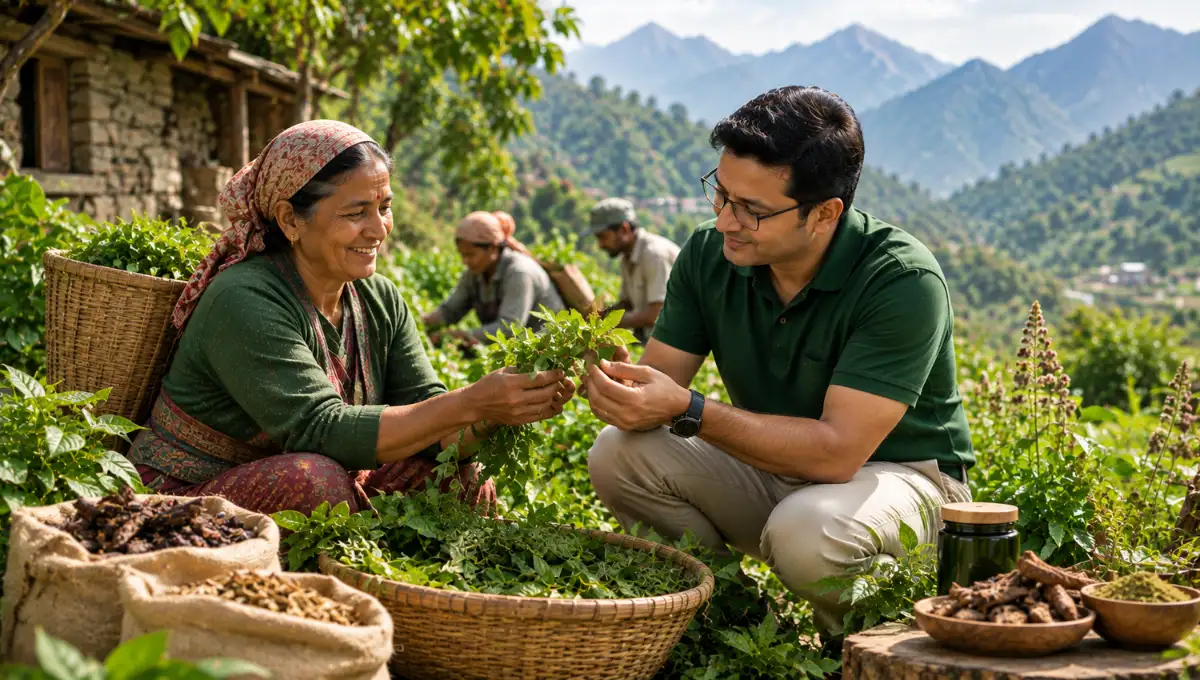
Ecological sustainability is only half the picture. Research studying commercial medicinal plant harvesting has made a point that deserves far more attention than it typically receives: unsustainable harvesting practices do not only threaten the survival of the plant species itself. They threaten the livelihoods of the rural and often economically vulnerable communities that depend on wild plant collection as an income source, since a depleted wild population eventually means less harvestable material and less income for the very collectors whose livelihood the trade was supposed to support.
This creates a direct alignment between ecological and social sustainability that natural products companies should treat as a single, unified sourcing responsibility rather than two separate initiatives. A company that pays collectors and farmers fairly, provides consistent and predictable demand rather than erratic boom-and-bust purchasing that encourages panic overharvesting in high-demand years, and invests in training collectors on sustainable harvesting techniques is simultaneously protecting its own long-term raw material supply and supporting the economic stability of the communities its business depends on. These are not competing priorities. They are the same priority viewed from two different angles.