

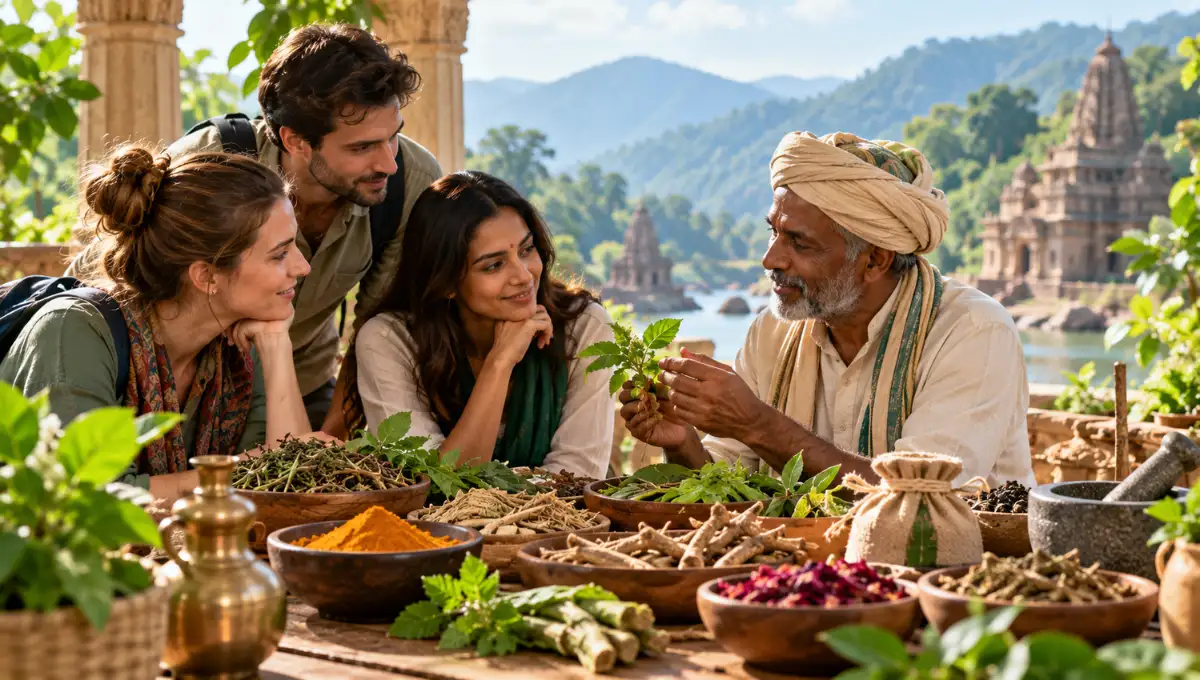

Botanical Heritage · Traditional Knowledge · Natural Science
Why the World Is Rediscovering India's Botanical Heritage
More than three centuries ago, a Dutch governor in Kerala sat down with local Ayurvedic physicians and began recording the plants of the Malabar coast. The result was a twelve-volume botanical work that European scientists studied for generations. Long before that, Indian pepper, cardamom and turmeric had shaped trade routes and empires. Today, a new wave of curiosity is sweeping across laboratories, kitchens, wellness shelves and policy rooms around the world, and once again it is pointing toward India's plants. This article explores what India's botanical heritage really is, how the world encountered it in the past, why it is being rediscovered now, and how responsible companies, including Tanmatra Ventures Private Limited and our brand ACTIZEET®, can help carry that heritage forward with care.
- What We Mean by India's Botanical Heritage
- The First Discovery: Spices, Trade and Early Botany
- How Much of This Knowledge Was Sidelined
- Why the Rediscovery Is Happening Now
- Science Takes a Closer Look
- Protecting Heritage From Biopiracy
- Indian Botanicals the World Now Knows
- Rediscovery Brings Responsibility
- How Tanmatra Ventures and ACTIZEET® See Our Role
- Frequently Asked Questions
- Final Word
What We Mean by India's Botanical Heritage
India's botanical heritage is more than a list of useful plants. It is the combination of three things that have grown together over thousands of years.
Extraordinary Plant Diversity
India stretches from Himalayan snowfields to tropical coasts, deserts, grasslands and rainforests. According to India's country profile with the Convention on Biological Diversity, it is one of the world's megadiverse countries, home to about 7 to 8 percent of recorded species, with more than 45,000 plant species documented and parts of four global biodiversity hotspots.
Documented Knowledge Systems
Ayurveda, Siddha, Unani and Sowa-Rigpa have recorded how plants are identified, prepared, combined and used. Classical texts such as the Charaka Samhita and Sushruta Samhita describe hundreds of medicinal plants and detailed methods of preparation.
Living Everyday Practice
Much of India's plant knowledge was never written down. It lives in kitchens, village healers, tribal communities and family habits: tulsi in the courtyard, turmeric in milk, neem twigs for teeth, ginger for a cold. This everyday wisdom is as much a part of the heritage as any classical text.
The First Discovery: Spices, Trade and Early Botany
The world has been fascinated by India's plants for a very long time. Today's interest is better described as a rediscovery than a discovery.
The Spice Routes
Black pepper from the Malabar coast was prized in ancient Rome. Cardamom, cinnamon, ginger and turmeric travelled across the Arabian Sea, through Persia and into Europe and Africa. In later centuries, the search for direct access to Indian spices helped drive European voyages of exploration. Indian plants quite literally changed the map of the world.
Hortus Malabaricus
Between 1678 and 1693, the Dutch governor of Malabar, Hendrik van Rheede, published Hortus Malabaricus, a twelve-volume illustrated record of the plants of Kerala. It was compiled with the help of local experts, including the Ayurvedic physician Itty Achuden, and described hundreds of plants along with their local names and uses. It is still regarded as one of the earliest comprehensive works on the flora of Asia, and a powerful example of how Indian traditional knowledge fed into global science.
Colonial Botanical Gardens
Botanical gardens set up during the colonial era, such as the one in Howrah near Kolkata, studied and moved Indian plants across the world. Some of this work advanced science. Some of it also took knowledge and resources away from the communities that had nurtured them, without credit or benefit.
How Much of This Knowledge Was Sidelined
If the world has known about India's plants for so long, why does today's interest feel new? Part of the answer is that, for much of the twentieth century, traditional plant knowledge was pushed to the margins.
The Rise of Synthetic Medicine
Modern pharmaceuticals brought enormous advances in treating infections and acute illness. Many people, in India and abroad, began to see traditional remedies as old-fashioned. Herbal knowledge was often labelled "folk" or "unscientific" without being properly studied.
Loss of Living Knowledge
As families moved to cities and lifestyles changed, fewer young people learned plant knowledge from elders. Some village healers had no successors. Forest loss reduced access to plants that communities had used for generations.
Quality Problems
Poorly made herbal products, adulteration and exaggerated claims also damaged credibility. These problems were real, and they made it harder for genuine knowledge to be taken seriously.
Why the Rediscovery Is Happening Now
Several shifts have come together to bring India's plants back into focus.
A Search for Prevention and Balance
Lifestyle conditions such as stress, poor sleep and digestive problems have pushed people to think more about daily habits and prevention. Indian traditions have always emphasised routine, diet and seasonal living, which suddenly feel very relevant.
A Move Toward Plant-Based and Natural Living
Consumers worldwide are reading labels and choosing ingredients they recognise. Roots, leaves, seeds, spices and resins with a long history of use fit this mood well.
Global Institutional Recognition
International bodies are now treating traditional medicine as a serious field of study. The WHO Global Traditional Medicine Centre, set up in Jamnagar, Gujarat, works to strengthen evidence, data and standards for traditional medicine worldwide. WHO reports that 170 of its 194 Member States say their populations use traditional and complementary medicine. Locating this centre in India reflects the country's deep heritage in the field.
Pride and Confidence at Home
Within India, there is renewed confidence in traditional knowledge. The Ministry of Ayush, growing research institutions and a new generation of Indian brands are presenting this heritage with modern standards, rather than apologising for it.
The Digital Effect
Social media, online research and global e-commerce have made it easy for someone in Toronto or Tokyo to learn about tulsi, buy Indian herbs and read studies about them. Knowledge that was once local can now travel instantly.
Science Takes a Closer Look
One of the most important drivers of rediscovery is that scientists are once again looking seriously at plants as sources of useful compounds.
Plants Remain a Major Source of Medicines
A widely cited review by Newman and Cragg, published in the Journal of Natural Products (American Chemical Society), tracked nearly four decades of newly approved drugs and found that natural products and compounds derived from them continue to be a major source of new medicines. Traditional knowledge often points researchers toward which plants are worth studying first.
An Indian Example: Sarpagandha
Rauvolfia serpentina, known in Ayurveda as sarpagandha, had long been used traditionally in India. In the twentieth century, Indian researchers studied it closely, and the compound reserpine, isolated from it in the 1950s, became one of the early modern medicines for high blood pressure. It is a clear case of traditional knowledge leading to a globally used drug.
Modern Tools, Old Questions
Today, chromatography, DNA barcoding, genomics and clinical trials let researchers ask precise questions about herbs like ashwagandha, turmeric, brahmi and shilajit. Not every traditional claim holds up, and honest science will always separate what works from what does not. But this careful testing is exactly what gives the heritage new credibility.
Whole-Plant Thinking
Modern research is also becoming more interested in how compounds work together, rather than looking only for one "active" molecule. This idea, sometimes called synergy, sits close to Ayurveda's long-standing preference for whole herbs and carefully balanced combinations.
Protecting Heritage From Biopiracy
Rediscovery has a darker side. When valuable plant knowledge travels without protection, others may try to claim it as their own.
The Turmeric and Neem Cases
In the 1990s, a US patent was granted for using turmeric to heal wounds, a use well known in India for generations. India's Council of Scientific and Industrial Research challenged it with evidence from old texts, and the patent was revoked in 1997. A European patent connected to the antifungal use of neem oil was also challenged and later revoked. These cases became turning points in how India protects its traditional knowledge.
The Traditional Knowledge Digital Library
To prevent similar cases, India created the Traditional Knowledge Digital Library (TKDL). It translates classical formulations from Ayurveda, Unani, Siddha, Sowa-Rigpa and yoga into formats that patent examiners in different countries can search. If someone tries to patent something already documented in India's heritage, examiners can now find the earlier record.
Benefit Sharing
India's Biological Diversity Act sets up a framework so that communities who conserve plants and knowledge can share in the benefits when those resources are used commercially. Rediscovery is only fair when the people behind the heritage are recognised and rewarded.
Indian Botanicals the World Now Knows
A handful of Indian plants and natural materials have become familiar names far beyond South Asia.
| Botanical | Traditional Place in India | How the World Uses It Today |
|---|---|---|
| Turmeric (Curcuma longa) | Kitchen spice, rituals, home remedies | Lattes, supplements, research on curcumin |
| Ashwagandha (Withania somnifera) | Rasayana root for strength and calm | One of the best-known "adaptogen" herbs |
| Tulsi (Ocimum tenuiflorum) | Sacred household plant | Herbal teas and daily wellness blends |
| Neem (Azadirachta indica) | Village pharmacy tree, oral care | Skincare, oral care, natural farming |
| Shilajit | Himalayan mineral resin used as a rasayana | Growing global interest in mineral-rich resins |
| Triphala | Classic blend of amla, harad and baheda | Digestive wellness products worldwide |
| Millets (ragi, jowar, bajra) | Traditional staple grains | Climate-resilient, nutritious "ancient grains" |
Origin as Value
India is also using Geographical Indication (GI) tags to protect plant products linked to specific regions, such as Kandhamal Haladi turmeric from Odisha and Malabar pepper from Kerala. GI tags tell buyers that origin matters and help ensure local growers benefit from the reputation they built.
Rediscovery Brings Responsibility
Rising global interest is good news, but it also brings risks. How India and its businesses respond will decide whether this heritage is honoured or exhausted.
Quality Must Match Reputation
When demand rises, some sellers cut corners with adulteration, contamination or the wrong plant parts. A recent example is India's 2026 move, through FSSAI and the Ministry of Ayush, to restrict the use of ashwagandha leaves in food products and direct manufacturers toward the traditionally used root. Strong standards protect both consumers and the heritage itself.
Protecting Wild Plants
Many medicinal plants and natural materials are still collected from the wild. Some, like shilajit, form very slowly and cannot be farmed. Sustainable harvesting, cultivation of high-demand herbs and conservation of habitats are essential if rediscovery is not to become depletion.
Respecting Context
A herb removed from its tradition can lose meaning. Turmeric in a sugary drink, or ashwagandha sold with no guidance, misses part of what the heritage offers. Brands that explain where a plant comes from and how it has traditionally been used help keep that context alive.
Honest Claims
Heritage is not a licence for exaggeration. Responsible businesses describe traditional use and current research honestly, without promising cures.
How Tanmatra Ventures and ACTIZEET® See Our Role
At Tanmatra Ventures Private Limited, we see ourselves as custodians as much as sellers. India's botanical heritage was built over thousands of years by countless people. Our job is to carry a small part of it forward in a way that would make those people proud. Our Ayurvedic wellness brand, ACTIZEET®, is where we try to put this into practice.
Choosing Heritage Ingredients Carefully
We focus on ingredients with deep roots in Indian tradition. ACTIZEET® Himalayan Shilajit Resin comes from high-altitude Himalayan rock formations and is purified using the traditional Surya Taapi method. ACTIZEET® Ashwagandha Powder is made from Withania somnifera root, the part classical Ayurveda has always used.
Pairing Tradition With Testing
Tradition tells us what to use and how to prepare it. Testing helps confirm purity and safety. We believe both are needed for heritage to earn trust in today's world.
Keeping It Simple and Honest
Our products are single-ingredient, without artificial additives, and we try to describe them in plain, measured language. We would rather share the story of a plant honestly than promise more than it can deliver.
Respecting the People and Places Behind the Plants
We are mindful that every jar begins with mountain collectors, farmers and fragile ecosystems. Responsible sourcing and fair relationships are part of how we try to honour the heritage, not an afterthought.
Frequently Asked Questions
It is the combination of India's rich plant diversity, documented knowledge systems such as Ayurveda, Siddha and Unani, and the living, everyday use of plants in Indian homes and communities, built up over thousands of years.
Interest in prevention and natural living, growing scientific research on plant compounds, recognition from bodies such as the WHO, renewed confidence within India and easy global access to information have all come together to bring Indian botanicals back into focus.
Hortus Malabaricus is a twelve-volume illustrated work on the plants of Kerala, published between 1678 and 1693 under Hendrik van Rheede with help from local experts, including the Ayurvedic physician Itty Achuden. It is one of the earliest comprehensive records of Asian flora.
Through tools such as the Traditional Knowledge Digital Library, which helps patent offices identify existing traditional knowledge, the Biological Diversity Act with its benefit-sharing rules, and Geographical Indication tags for region-specific products.
ACTIZEET®, a brand of Tanmatra Ventures Private Limited, offers traditional Indian ingredients such as Himalayan shilajit resin and ashwagandha root powder, prepared with respect for classical methods, kept free of artificial additives and tested for purity.
Final Word: An Old Heritage for a New Age
India's plants have travelled the world before, in spice ships, in botanical volumes and in the memories of migrants. What is different now is the depth of the interest. People are not just buying Indian spices. They are studying Indian herbs, learning Indian health traditions and asking where their ingredients come from. This rediscovery is a chance to correct old wrongs, to give credit to the communities who protected this knowledge, and to show that tradition and science can work together. It also carries a duty: to keep quality high, harvest responsibly and speak honestly. At Tanmatra Ventures Private Limited, we hope ACTIZEET® can play a small part in that story, offering the world a piece of India's botanical heritage with the care it deserves.
Experience India's Botanical Heritage
Traditional ingredients, carefully prepared and tested for purity.
ACTIZEET® Shilajit Resin ACTIZEET® Ashwagandha Powder