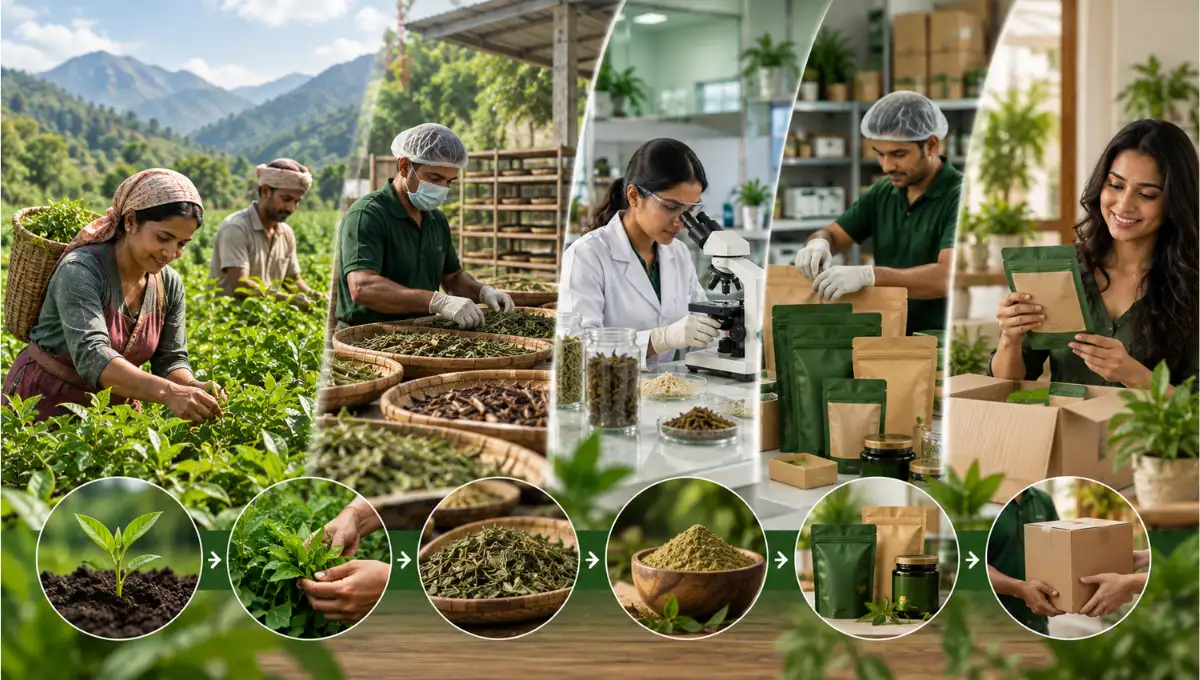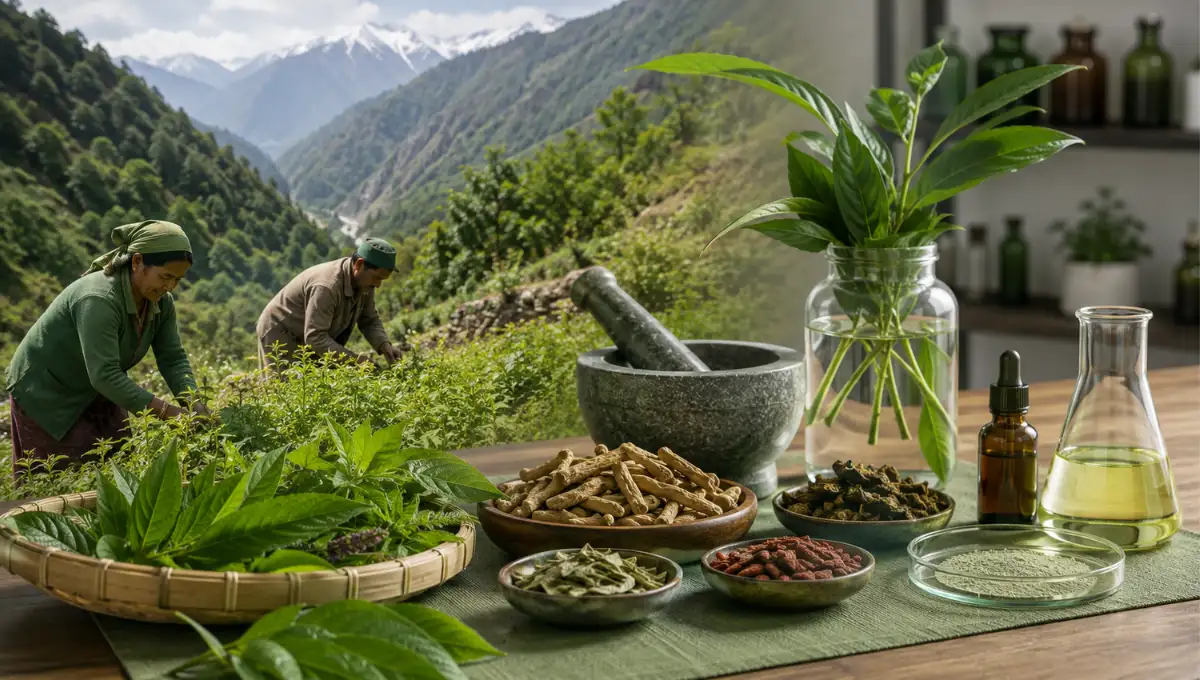

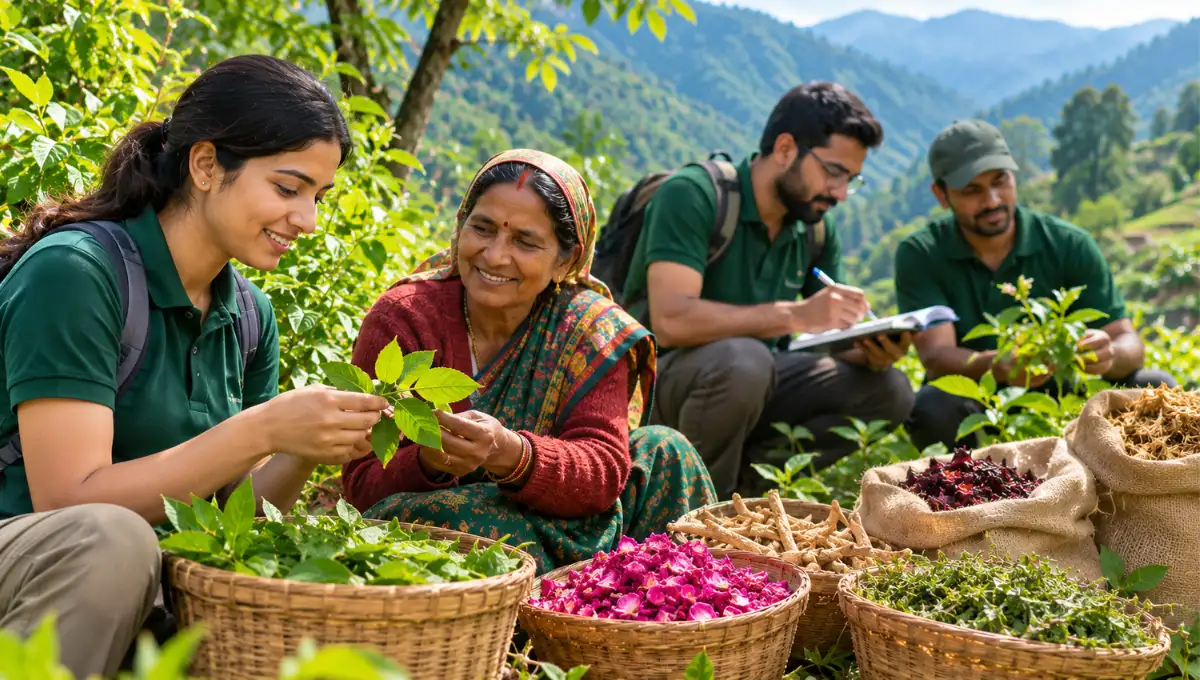

Ethical Sourcing · Sustainability · Supply Chain Transparency
What Responsible Botanical Sourcing Really Means
"Ethically sourced." "Sustainably harvested." "Responsibly grown." These phrases now appear on herbal powders, essential oils, spices and supplements everywhere. They sound reassuring, but they rarely explain what was actually done. Did someone check that the wild plant population could recover? Were collectors paid fairly and on time? Can the brand trace a jar back to a region or a batch? Responsible botanical sourcing is not a slogan. It is a set of practical choices that protect plants, people and product quality all at once. In this guide, we break it down into clear principles, show what good and poor practice look like, and share how we at Tanmatra Ventures Private Limited think about sourcing for our ACTIZEET® range.
- Why Sourcing Matters So Much for Botanicals
- The Three Goals: Plants, People and Product
- Principle 1: Protect the Plant and Its Habitat
- Principle 2: Choose Wild or Cultivated Wisely
- Principle 3: Treat Collectors and Farmers Fairly
- Principle 4: Protect Quality From the First Step
- Principle 5: Know Where It Came From
- Principle 6: Respect Laws and Traditional Knowledge
- Responsible vs Irresponsible Sourcing
- How to Spot Sourcing Greenwashing
- How Tanmatra Ventures Approaches Sourcing
- Frequently Asked Questions
- Final Word
Why Sourcing Matters So Much for Botanicals
With most manufactured goods, quality is decided mainly inside the factory. With botanicals, much of it is decided long before that, in forests, fields and mountain slopes. The plant species, the place it grew, the time it was picked, the way it was dried and the hands that handled it all shape what ends up in the final product.
The Scale of India's Herb Trade
India is one of the world's richest sources of medicinal plants, and the trade is large. A demand and supply study by the National Medicinal Plants Board (NMPB), Ministry of Ayush estimated that around 1,178 medicinal plant species are in trade in India, with 242 of them in high demand of more than 100 tonnes a year. A large share of traded medicinal plants is still collected from the wild, often by tribal and forest-dwelling communities.
Rising Demand, Rising Pressure
Growing interest in Ayurveda, herbal supplements and natural personal care, both in India and abroad, is good news for traditional medicine and for rural incomes. It also increases pressure on wild plants, on collectors and on supply chains that were never designed for this scale. Responsible sourcing is how the industry grows without using up the very resources it depends on.
The Three Goals: Plants, People and Product
A simple way to understand responsible botanical sourcing is to see it as protecting three things at the same time.
- Plants: Wild populations, genetic diversity and the ecosystems they live in should remain healthy for future harvests.
- People: Collectors, farmers and workers should be paid fairly, work safely and share in the value they help create.
- Product: The ingredient should be correctly identified, clean, consistent and traceable from source to shelf.
These three goals are closely linked. A healthy forest supports the livelihoods of the families who collect from it, and those families, when treated fairly, become the best guardians of both the forest and the quality of what it produces. Responsible sourcing simply recognises that connection and builds business decisions around it.
If any one of these is ignored, the others usually suffer too. Underpaid collectors have every reason to harvest quickly rather than carefully. Overharvested plants become scarce, which encourages substitution and adulteration. Poor traceability makes all of these problems harder to detect.
Principle 1: Protect the Plant and Its Habitat
Harvest Within Natural Limits
Sustainable wild harvesting means taking only what a plant population can replace. In practice, that can include:
- Leaving enough mature plants to reproduce.
- Harvesting after seeds have set.
- Rotating collection areas so no single patch is stripped bare.
- Using methods that do not kill the plant where possible, such as harvesting leaves, fruits or a portion of bark rather than uprooting.
Extra Care for Slow and Scarce Materials
Some materials renew very slowly. High-altitude Himalayan herbs such as jatamansi and kutki grow in harsh conditions and have faced heavy collection pressure. Shilajit, a mineral-rich resin that seeps from Himalayan rock, forms over long periods and cannot be farmed at all. For materials like these, leaving collection sites in good condition is essential.
Avoid Threatened Species
Responsible buyers check the conservation status of what they source and avoid wild collection of threatened species, or buy them only from verified cultivation.
Recognised Frameworks
The FairWild Standard is one internationally recognised framework for this. It is a verification system for sustainably collected wild plants, fungi and lichens that combines ecological sustainability with social and fair trade requirements, including fair prices for collectors.
Principle 2: Choose Wild or Cultivated Wisely
Neither wild collection nor farming is automatically "better." Responsible sourcing chooses the right approach for each ingredient.
When Cultivation Makes Sense
For high-demand herbs that grow well on farms, such as ashwagandha, tulsi, moringa, aloe vera and shatavari, cultivation reduces pressure on wild plants, gives farmers a valuable crop and improves traceability and consistency.
When Wild Collection Makes Sense
Some plants are difficult to farm, lose quality when cultivated or grow abundantly in the wild, such as many forest fruits and barks. Others, like shilajit, are not plants at all. For these, sustainable wild collection by skilled local communities is the right path.
Good Agricultural and Collection Practices
Whichever route is chosen, the World Health Organization's guidelines on Good Agricultural and Collection Practices (GACP) for medicinal plants set a widely used benchmark. They cover correct identification, cultivation and collection methods, harvest timing, drying, storage, record-keeping and sustainable practice, with the goal of improving the quality and safety of finished herbal products.
Principle 3: Treat Collectors and Farmers Fairly
Behind every herb is a person who found it, grew it, harvested it or dried it. In India, much of this work is done by tribal families, rural women, small farmers and mountain communities, many of whom remain among the country's poorest despite supplying a fast-growing industry.
Fair and Timely Payment
Long chains of middlemen often leave collectors with only a small share of the final value. Families short of cash may sell right after harvest when prices are lowest. Responsible buyers pay fair, stable prices and pay on time.
Long-Term Relationships
Buying from the same groups year after year gives communities confidence to invest in better practices, such as proper drying sheds or careful harvesting. One-off purchases at the lowest price do the opposite.
Skills and Value Addition
Training in sustainable harvesting, cleaning, drying and grading helps communities earn more from what they collect. Government initiatives such as Van Dhan Vikas Kendras support tribal self-help groups in processing produce locally so more value stays in the village.
Safe and Dignified Work
Responsible sourcing also means no child labour, safe working conditions and respect for the rights of forest-dwelling communities.
Fairness is not only an ethical issue. When collectors earn a fair living from a plant, they have a direct reason to protect it.
Principle 4: Protect Quality From the First Step
Correct Identification
Responsible sourcing starts with the right species and the right plant part. Many herbs share common names, and the part used matters. In April 2026, India's food regulator FSSAI advised against using ashwagandha leaves in any form in food products, directing manufacturers toward the root that Ayurveda has traditionally used.
Clean Harvest and Handling
Collecting from clean areas away from roads, mines and polluted water reduces the risk of heavy metals and other contaminants. Drying on clean surfaces, away from soil and animals, prevents dirt and microbes.
Proper Storage
Cool, dry, pest-free storage keeps herbs from going mouldy or losing potency before they reach the factory.
Testing on Arrival
Even well-sourced material should be checked for identity and purity when it arrives. Sourcing and testing work together: good sourcing reduces risk, and testing confirms the result.
Principle 5: Know Where It Came From
Traceability means being able to follow an ingredient from the finished product back to its origin.
Shorter, Clearer Supply Chains
Every extra trader between the collector and the brand adds a chance for mixing, substitution or poor storage. Buying closer to the source, through farmer groups, cooperatives or direct partnerships, improves both quality and transparency.
Records and Batch Numbers
Recording the region, harvest season, supplier and batch for each lot makes it possible to investigate any problem and to answer customer questions honestly.
Origin as Information
Naming a region, such as Kashmir for saffron or the Himalayas for shilajit, gives customers something concrete to evaluate. India's Geographical Indication tags, such as the one for Kashmir saffron, show how a specific origin can become a recognised mark of quality.
Principle 6: Respect Laws and Traditional Knowledge
Forest and Biodiversity Laws
In India, state forest departments control collection from forest land, and many forest products need transit permits. The Biological Diversity Act, 2002, amended in 2023, regulates commercial use of biological resources and provides for benefit sharing with local communities in many cases. The Forest Rights Act, 2006 recognises the rights of forest dwellers to collect and sell minor forest produce.
Benefit Sharing
Much of what we know about medicinal plants comes from generations of community knowledge. When businesses profit from these plants, responsible sourcing means recognising that contribution, through fair payments, local investment or support for conservation.
Going Beyond Minimum Compliance
Laws set the floor, not the ceiling. The most responsible companies treat legal compliance as the starting point and build fair, sustainable practices on top of it.
Responsible vs Irresponsible Sourcing
| Area | Irresponsible Practice | Responsible Practice |
|---|---|---|
| Harvesting | Uproot everything, any season | Harvest limits, right season, leave plants to regrow |
| Species choice | Ignore conservation status | Avoid threatened wild species, support cultivation |
| Payment | Lowest possible price, delayed payment | Fair, stable prices paid on time |
| Relationships | One-off buying through many middlemen | Long-term partnerships closer to the source |
| Handling | Dried on bare ground, damp storage | Clean drying, dry and pest-free storage |
| Traceability | Origin unknown | Region, season and batch recorded |
| Communication | Vague "ethically sourced" claims | Specific, checkable information |
How to Spot Sourcing Greenwashing
Not every sourcing claim is backed by real action. Here are some signs to watch for.
Warning Signs
- Big words such as "ethical," "eco" or "sustainable" with no details behind them.
- No region named, only "sourced from nature" or "from the finest farms."
- Images of forests and farmers with no information about who they are or how they are paid.
- Prices for rare or slow-forming materials that seem far too low.
- No answer when you ask about origin, plant part or testing.
Good Signs
- A named region and source type, wild or cultivated.
- Botanical names and plant parts on the label.
- Information about how collectors or farmers are engaged.
- Recognised certifications where relevant, such as organic or FairWild.
- Batch testing and willingness to share results.
- Honest admission of what the brand is still working on.
India's consumer protection rules and advertising standards increasingly expect environmental and ethical claims to be specific and supportable, which is good news for honest brands and buyers alike.
How Tanmatra Ventures Approaches Sourcing
At Tanmatra Ventures Private Limited, we see sourcing as the first and most important step in making a natural product. Our ACTIZEET® range, which includes Himalayan shilajit, Kashmiri saffron, Ayurvedic herb powders and essential oils, depends entirely on the health of the plants and the people behind them. These are the principles we try to follow.
Naming the Source
We share where key ingredients come from. ACTIZEET® Himalayan Shilajit Resin comes from high-altitude Himalayan rock formations, and ACTIZEET® Saffron is Kashmiri kesar. We believe customers have a right to know the origin of what they use.
Respecting Slow-Forming Resources
Our shilajit is collected by local mountain communities using traditional methods. Because shilajit forms so slowly, we place importance on collection practices that leave sites able to keep producing in future seasons.
The Right Plant, the Right Part
We use botanical names and traditionally used plant parts. ACTIZEET® Ashwagandha Powder, for instance, is made from Withania somnifera root.
Checking What Arrives
Good sourcing reduces risk, and testing confirms it. Our products go through quality evaluations and are tested for purity before they reach you.
Always Improving
Responsible sourcing is a journey, not a finish line. We keep asking better questions of our supply chain and welcome questions from customers about where and how our ingredients are sourced.
Natural Products, Thoughtfully Sourced
Explore ACTIZEET® shilajit, saffron, Ayurvedic herbs and essential oils, with named origins and quality testing.
Shop the ACTIZEET® RangeFrequently Asked Questions
It means obtaining plant ingredients in a way that protects wild plant populations and habitats, treats collectors and farmers fairly, maintains product quality from the first step and allows the ingredient to be traced back to its origin.
Neither is always better. Cultivation suits high-demand herbs that grow well on farms and reduces pressure on wild plants. Sustainable wild collection suits plants that are hard to farm or naturally abundant, and materials like shilajit that cannot be farmed.
GACP refers to the WHO guidelines on Good Agricultural and Collection Practices for medicinal plants, covering identification, harvesting, drying, storage and records. FairWild is a verification system for sustainably collected wild plants that combines ecological and fair trade requirements.
Look for a named region, botanical names and plant parts, information on how collectors or farmers are engaged, relevant certifications, batch testing and a willingness to answer questions. Be wary of vague claims without details.
ACTIZEET®, a brand of Tanmatra Ventures Private Limited, names the origin of key ingredients such as Himalayan shilajit and Kashmiri saffron, uses traditionally used plant parts, works with local mountain communities for shilajit collection and tests products for purity.
Final Word: Sourcing Is Where Trust Begins
Responsible botanical sourcing is easy to claim and harder to practise. It means harvesting within nature's limits, choosing wisely between wild and cultivated sources, paying the people behind the herbs fairly, protecting quality from the very first step, knowing where every ingredient came from and respecting the laws and knowledge that surround these plants. None of this is glamorous, and much of it happens far from the shop shelf. But it is where trust in a natural product truly begins. At Tanmatra Ventures Private Limited, we are committed to keeping these principles at the heart of ACTIZEET®, and to keep improving. When you choose a natural product, ask where it came from. The answer says a lot about everything else.
Choose products that respect their source
Visit the ACTIZEET® Shop