

Botanical Sourcing · Herbal Quality · Supply Chain Science
Why the Source of a Botanical Ingredient Matters
Two jars of ashwagandha powder can sit next to each other on a shelf, both labeled Withania somnifera, both claiming to be pure root extract, and still be genuinely different products once you look past the label. Not because one brand is lying and the other is honest, though that does happen, but because the plant itself is not a fixed, uniform thing. Where a botanical was grown, what soil it grew in, how it was harvested, and how far it traveled before it was processed all shape what actually ends up in the jar. This is one of the most consequential and least understood facts in the entire natural products industry, and it explains why sourcing, not just the ingredient name on a label, is the real determinant of quality.
- Same Botanical Name, Genuinely Different Plant
- How Soil and Climate Shape a Plant's Chemistry
- The Heavy Metal Risk Hiding in Poor Sourcing
- What the Research Specifically Found About Indian-Sourced Herbs
- Why Supply Chain Length Adds Risk at Every Step
- Terroir Is Not Just a Wine Word
- What Good Sourcing Actually Looks Like
- Frequently Asked Questions
- Final Word
Same Botanical Name, Genuinely Different Plant
It is easy to think of a botanical species as a fixed, standardized thing, the way we think of a chemical compound. Withania somnifera is Withania somnifera, the thinking goes, wherever it grew. But this assumption breaks down the moment you look at actual phytochemical research. Plants are not static chemical factories. They are living organisms that respond continuously to their growing environment, and that response directly changes the concentration and even the type of active compounds they produce.
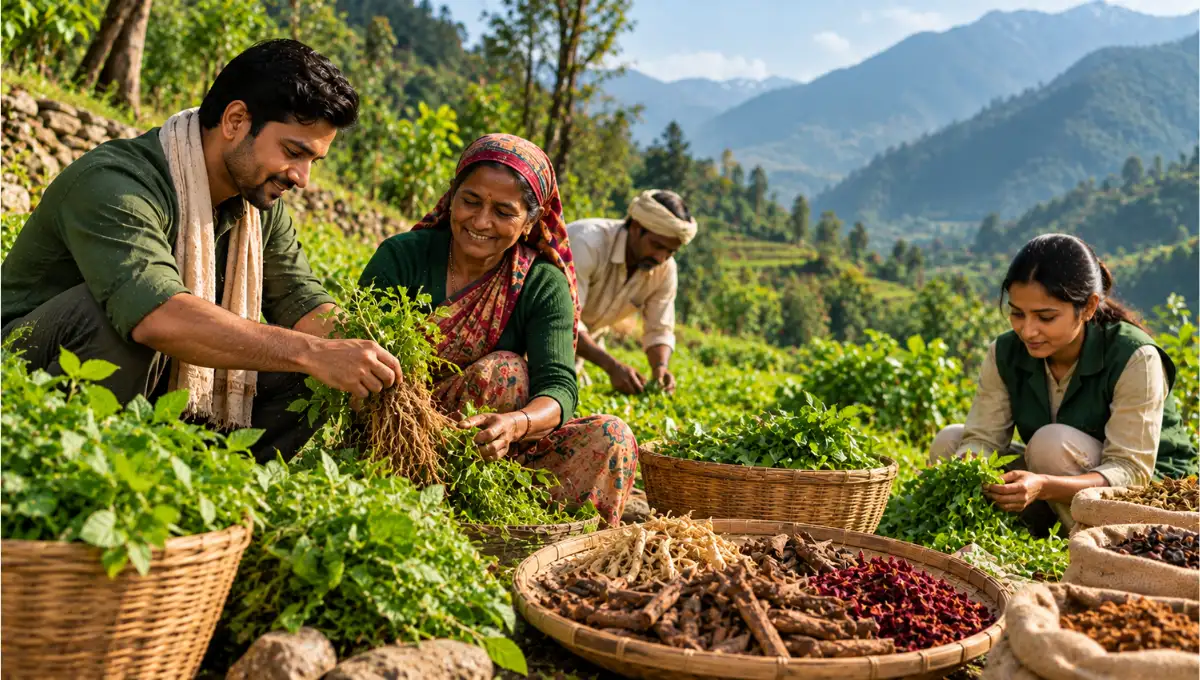
Researchers studying medicinal plant variability across different growing regions have documented this repeatedly and specifically. A study on Centella asiatica, an herb widely used across Ayurvedic and Southeast Asian traditional medicine, found that plants from different districts in Nepal showed measurably different concentrations of the key active triterpenes, asiaticoside and asiatic acid, with the highest concentrations found in specific localities rather than distributed evenly across the species' growing range. The same research also documented significant differences in basic pharmacognostical characteristics, the physical and microscopic traits used to identify and grade the plant, simply based on whether the sample came from Sikkim or West Bengal. Same species. Same botanical name. Genuinely different plant material once it reaches a lab bench.
This is not an isolated finding limited to one herb. Broader review research on geographical variation in medicinal plants has reached the same conclusion across many species: geography, soil, and climate measurably shape a plant's phytochemical profile, and this variation has direct implications for how consistently a product can deliver the therapeutic activity its label implies.
How Soil and Climate Shape a Plant's Chemistry
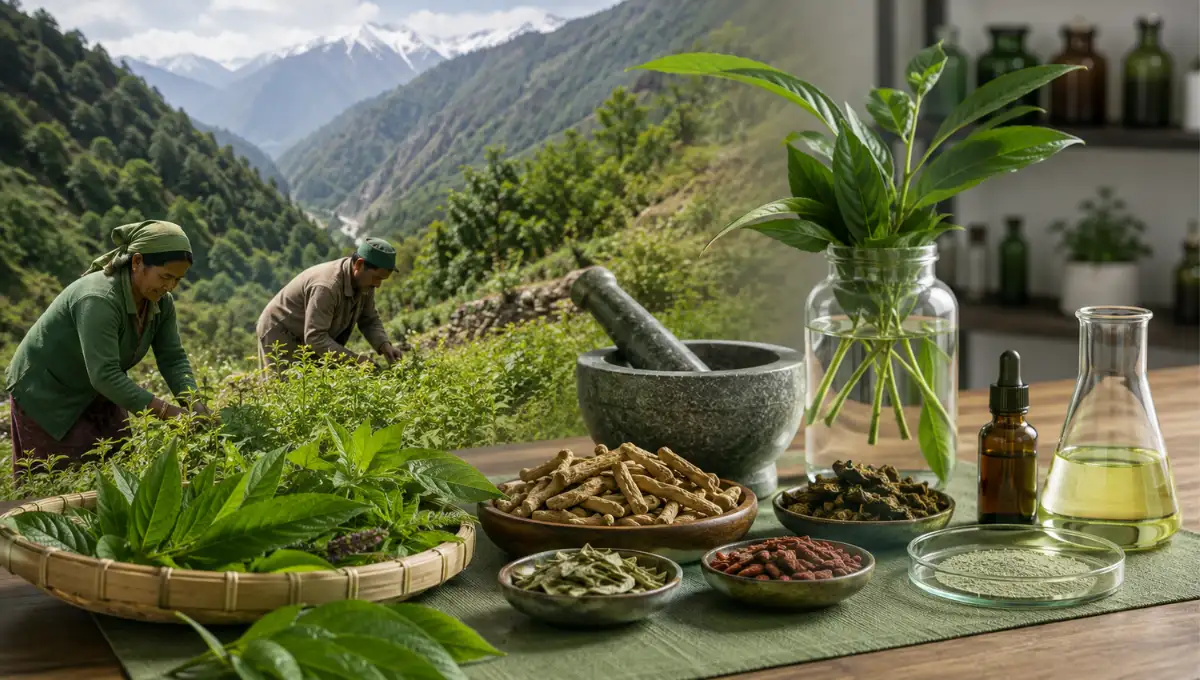
The mechanism behind this variation is not mysterious once you understand it. Plants produce their active compounds, the alkaloids, flavonoids, terpenes, and glycosides that give herbs their therapeutic properties, largely as secondary metabolites, meaning compounds the plant makes in response to environmental stress, soil nutrient availability, and climate rather than compounds essential to its basic survival. This means the specific conditions a plant experiences during growth directly influence how much of these compounds it produces.
Recent phytochemical research has quantified some of these relationships with real precision. One study on a medicinal plant species found that temperature primarily influenced the biosynthesis of specific flavonoid compounds, while rainfall levels separately affected phenolic acid content, and that heat stress specifically suppressed the production of key flavonoids like quercetin. Separate research on soil conditions found that soil fertilization level is a critical variable, since overly nutrient-rich soils can actually reduce secondary metabolite content, while plants grown in sandier, more mineral-stressed soils tend to produce higher terpene concentrations. In other words, the growing conditions that would produce the highest yield of plant biomass are not necessarily the same conditions that produce the highest concentration of the specific medicinal compounds a buyer is actually paying for.
This is precisely why classical Ayurvedic and traditional medicine systems have always emphasized specific regional sourcing for specific herbs, whether that is Nagori ashwagandha from Rajasthan's particular soil and climate conditions, or Himalayan shilajit from a specific altitude band. This was not superstition. It reflected generations of accumulated observation that plant material from certain regions consistently performed better therapeutically than the same species grown elsewhere, an observation that modern phytochemical analysis has now independently confirmed through direct laboratory measurement rather than tradition alone.
The Heavy Metal Risk Hiding in Poor Sourcing
Geography does not only affect a plant's beneficial compounds. It affects what harmful material a plant absorbs as well, and this is where sourcing quality becomes a genuine safety issue rather than simply a potency question. Plants absorb whatever is present in their growing soil and water, including toxic heavy metals like lead, cadmium, arsenic, and mercury when those metals are present in the surrounding environment, whether from natural geological deposits or from industrial contamination, mining activity, or the historical use of metal-based pesticides.
This is not a theoretical risk. A peer-reviewed study analyzing eleven commercially available adaptogenic herbal supplements, including ashwagandha, ginseng, rhodiola, and schisandra, found that most of the tested products contained lead and nickel levels exceeding safe regulatory limits, in some cases by more than three times the permissible threshold. The researchers specifically noted that tablet forms showed the highest contamination levels, which they connected to processing steps during manufacturing, and that contamination patterns correlated closely with known industrial and agricultural pollution sources in the raw material's growing region.
Other researchers examining supplement contamination more broadly have made the underlying point plainly: heavy metals in botanical products are rarely the result of deliberate adulteration. They are usually a direct, traceable consequence of where and how the plant was grown, since dietary supplements in most jurisdictions are not required to undergo mandatory pre-market heavy metal testing the way pharmaceutical drugs are, leaving this verification step largely voluntary and dependent entirely on individual brand practice.
It is worth being precise here rather than alarmist. Lead, cadmium, arsenic, and mercury occur naturally in soil and rock everywhere on earth, not only in industrially polluted regions, so their mere presence at trace levels is not automatically evidence of contamination or poor sourcing. What matters is concentration relative to established safety thresholds, and this is exactly why independent, quantitative laboratory testing, rather than a general assumption about a region's industrial history, is the only reliable way to know whether a specific batch of botanical material is within safe limits. Sourcing region is a meaningful risk indicator, but it is testing, not geography alone, that ultimately confirms safety.
What the Research Specifically Found About Indian-Sourced Herbs
Because a meaningful share of the global herbal supplement supply, ashwagandha in particular, is sourced from India, it is worth addressing this directly rather than glossing over it. The same adaptogenic supplement contamination study referenced above found that raw materials sourced from India showed significantly higher nickel concentrations compared to material sourced from China, a statistically significant difference the researchers specifically flagged in their findings. Separately, older research examining Ayurvedic herbal products directly found that a notable proportion of tested samples contained lead levels exceeding safe exposure thresholds.
This finding should not be read as a blanket indictment of Indian botanical sourcing as a whole, and it would be a mistake to read it that way. India remains home to some of the most biodiverse and pharmacologically important medicinal plant regions on earth, and the vast majority of India's herbal export industry operates responsibly. What this research actually demonstrates is something more specific and more useful: contamination risk correlates with growing region and cultivation practice, not with species or country identity alone, and this is precisely why sourcing verification needs to happen at the level of the specific farm, region, and supplier a brand actually works with, rather than being assumed safe or unsafe purely based on a country of origin label.
For Indian Ayurvedic brands specifically, this research is a direct argument for exactly the kind of sourcing transparency and independent batch testing that separates a serious quality operation from one relying purely on traditional reputation. A brand that can name its specific growing region, and that backs this up with independent heavy metal testing on every batch, is addressing precisely the risk this research identified. A brand that simply states "sourced from India" with no further detail is not.
Why Supply Chain Length Adds Risk at Every Step
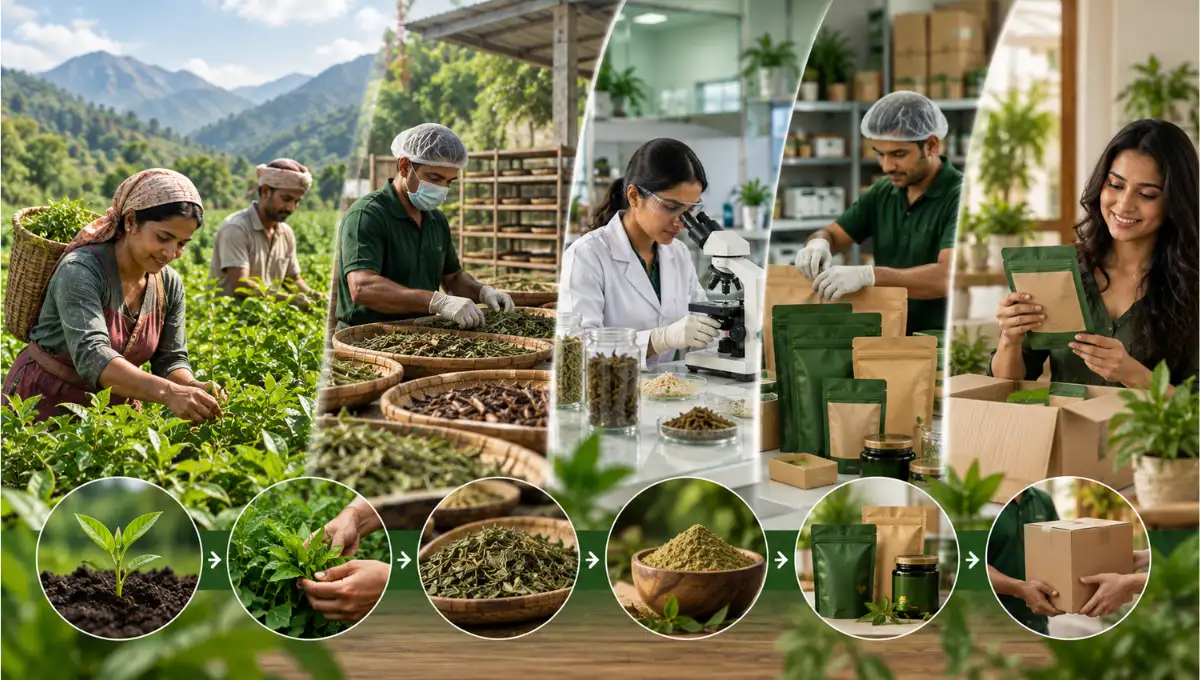
Sourcing is not just about where a plant grew. It is also about how many hands and how many steps stand between the farm and the finished product, and every additional step in that chain is another opportunity for quality to be compromised, whether through mixing batches from different growing regions, through inadequate storage conditions, or through processing shortcuts that were never disclosed to the brand selling the finished product.
Independent laboratory analysis of finished herbal supplements has repeatedly documented exactly this kind of downstream inconsistency. A screening study testing duplicate bottles of 29 different herbal supplements for consistency in antioxidant activity, phenolic concentration, and flavonoid concentration found substantial variability, not only between different brands, but between two bottles of the supposedly identical product sold under the same label. This kind of bottle-to-bottle inconsistency is a strong indicator of a supply chain where raw material sourcing, and the batch-to-batch consistency that depends on it, is not being tightly controlled or verified at each stage.
A shorter, more direct, more transparent supply chain, ideally one where a brand has a documented, ongoing relationship with a specific farm or collection region rather than purchasing anonymous bulk material through multiple intermediary traders, gives far fewer opportunities for this kind of quality drift to occur unnoticed.
Terroir Is Not Just a Wine Word
The wine industry has a specific term for the combination of soil, climate, and geography that shapes a grape's final character: terroir. It is worth borrowing this concept directly for medicinal botanicals, because the underlying phenomenon is scientifically identical. Just as a Burgundy grape and a Napa Valley grape of the same varietal produce meaningfully different wine because of where they grew, a Rajasthani ashwagandha root and an ashwagandha root grown in a different region under different soil and climate conditions will produce meaningfully different withanolide concentrations, even though both are correctly labeled Withania somnifera.
Recent research into rhizosphere soil microbiology has pushed this understanding even further, finding that the specific microbial community living around a plant's roots in a given location directly regulates the accumulation of its key medicinal compounds, essentially identifying a biological mechanism for why geoherbalism, the traditional practice of identifying specific superior growing regions for specific medicinal plants, actually works at a measurable chemical level rather than simply being an inherited cultural belief.
This is exactly why a brand's willingness to name a specific growing region for a specific herb, rather than a vague country-level sourcing claim, is one of the most meaningful quality signals available to a consumer evaluating a botanical product.
What Good Sourcing Actually Looks Like
Given everything above, here is a practical framework for evaluating whether a botanical brand's sourcing claims genuinely hold up.
Specific Region, Not Just Country
A brand that names the specific district or growing region, Nagori Rajasthan, Bandikodu Kerala, or a specific Himalayan altitude band, is giving you information that is actually tied to documented phytochemical variation. A generic "sourced from India" or "Himalayan origin" claim provides far less useful information.
Batch-Specific Heavy Metal Testing
Given that contamination risk is tied to specific growing conditions that can vary even within a single region or season, testing needs to happen on individual production batches, not just once when a product line is first developed.
Direct or Short Supply Relationships
Brands with a documented, ongoing relationship with specific farms or collection cooperatives have meaningfully more control over consistency than those purchasing anonymous bulk material through multiple layers of traders.
Appropriate Harvest Timing Disclosure
Since climate and season measurably affect a plant's active compound content, brands that specify appropriate harvest windows are demonstrating an understanding of exactly the variability this research has documented.
Willingness to Share Testing Data, Not Just Claim It
A brand confident in its sourcing and testing will generally make batch certificates of analysis available on request. A brand that only asserts "tested" without offering to show the results is giving you less than it could.
This is the standard that brands like ACTIZEET® have positioned themselves around within the Ayurvedic category, treating specific regional sourcing and batch-level testing as foundational rather than an afterthought, an approach that directly addresses the exact variability and contamination risks this research has documented rather than relying on species name and country of origin alone to imply quality.
Frequently Asked Questions
Yes, and this is well documented in phytochemical research. Studies on plants like Centella asiatica have found measurably different concentrations of key active compounds depending on the specific district a sample was collected from, even within the same country and the same botanical species. Soil composition, climate, altitude, and rainfall all directly influence how much of a plant's therapeutic compounds it produces.
Research suggests it is more common than most consumers assume. A peer-reviewed study testing eleven commercially available adaptogenic supplements found that most exceeded safe lead and nickel limits, in some cases by several times the permissible threshold. This reflects the reality that dietary supplements are generally not subject to mandatory pre-market heavy metal testing in most jurisdictions, making independent, voluntary testing by responsible brands the primary safeguard available to consumers.
No, and that would be an overly broad conclusion to draw. Research has found that contamination risk correlates with specific growing regions and cultivation practices, not with a country of origin as a whole. India remains a major source of high-quality medicinal botanicals globally. The practical takeaway is that sourcing verification needs to happen at the level of the specific farm or region a brand works with, backed by independent testing, rather than being assumed based on country alone in either direction.
Look for a specific growing region rather than just a country name, confirmation of batch-specific (not just product-line) heavy metal and purity testing, and ideally the willingness of the brand to provide a certificate of analysis on request. These specifics are far more meaningful indicators of quality than general marketing language like "pure" or "authentic" without supporting detail.
Final Word: The Label Names the Species, the Source Determines the Quality
A botanical name on a label tells you what the plant is supposed to be. It tells you almost nothing about the soil it grew in, the rainfall it received, the altitude it was cultivated at, or the industrial history of the land nearby. Those details, the ones research now shows measurably shape both a plant's therapeutic potency and its safety profile, live entirely in sourcing decisions that happen long before a product ever reaches a shelf. Treating source as a minor supply chain detail, rather than a central determinant of quality, is exactly the gap that allows genuinely different products to sit side by side under the same botanical name. The brands worth trusting are the ones willing to talk about where their herbs actually came from, in specific, checkable detail, because that specificity is where real quality has always lived.