

Supply Chain · Botanical Sourcing · Ayurvedic Quality
From Farm to Consumer: Understanding the Botanical Supply Chain
A jar of ashwagandha powder sitting on a shelf looks like a finished, simple thing. What it actually represents is the end of a long, multi-stage journey that began months or years earlier, in a specific field or forest, and passed through the hands of farmers, collectors, processors, testers, and distributors before it ever reached a consumer's kitchen counter. The World Health Organization itself has noted that between 65 and 80 percent of the world's population relies on plants or plant-derived products for various health needs, which means this supply chain, largely invisible to the end buyer, is one of the most consequential and least understood pieces of infrastructure in global healthcare. Understanding exactly how a botanical ingredient moves from farm to consumer, and where quality can genuinely be gained or lost along the way, is essential for anyone who wants to buy natural products with real confidence rather than blind trust.
- Stage One: Cultivation or Wild Collection
- The Global Standard Behind Good Sourcing: WHO's GACP Guidelines
- Stage Two: Harvest Timing and Post-Harvest Handling
- Stage Three: Drying, Processing, and Extraction
- Stage Four: Quality Testing and Verification
- Stage Five: Distribution and the Final Mile to Consumers
- Where This Chain Most Commonly Breaks Down
- What a Shorter, More Trustworthy Chain Looks Like
- Frequently Asked Questions
- Final Word
Stage One: Cultivation or Wild Collection
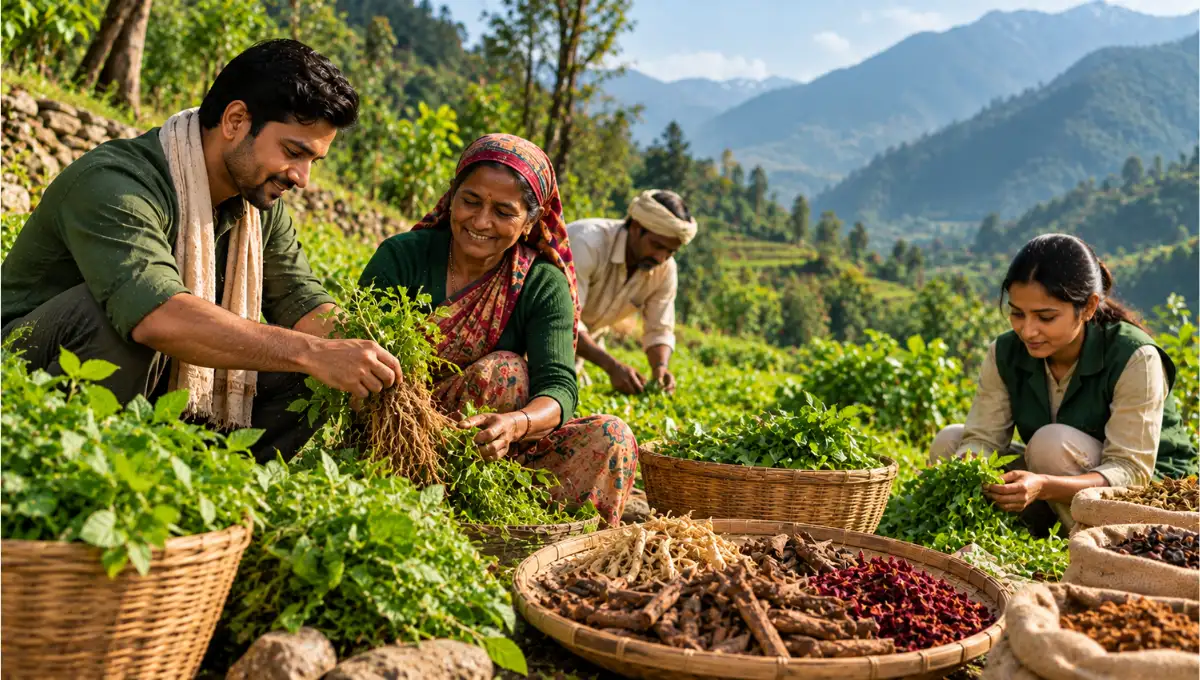
Every botanical supply chain begins with one of two fundamentally different starting points: deliberate cultivation on farmland, or collection from wild-growing plant populations, most often in forest regions. Cultivated botanicals, grown from selected seed stock on dedicated agricultural land, offer more predictable yield, more controllable growing conditions, and generally easier traceability back to a specific farm. Wild-collected botanicals, gathered by trained collectors, often from forest-dwelling communities with generations of accumulated plant identification knowledge, can offer a different and sometimes more concentrated compound profile, particularly for species that have historically resisted successful cultivation or that traditional medicine specifically values for their wild-growing character.
Both pathways carry genuine trade-offs. Cultivation offers consistency and traceability but requires the plant to actually grow well under farmed conditions without losing the therapeutic compound concentration that made it valuable in the first place. Wild collection can preserve genetic diversity and, for some species, deliver superior potency, but it depends entirely on the health of the wild population being harvested from, a genuine and ongoing concern given how many medicinal plant species face documented conservation pressure from overharvesting.
The Global Standard Behind Good Sourcing: WHO's GACP Guidelines
Given how much variability exists across different sourcing regions and practices, the World Health Organization developed a formal, internationally recognized framework specifically to standardize what "good" sourcing should actually look like at this earliest stage of the supply chain. The WHO Guidelines on Good Agricultural and Collection Practices, generally referred to as GACP, were developed with contributions from more than 240 experts and reviewers across 105 countries, providing detailed technical guidance covering everything from proper plant identification and seed selection to cultivation methods, collection permissions, harvesting technique, and post-harvest handling.
These guidelines exist specifically because the WHO recognized that quality assurance for herbal medicine has to start at the very beginning of the supply chain, not simply at the finished product testing stage. As the guidelines themselves state directly, obtaining medicinal plant materials of good quality is the necessary foundation for the safety, efficacy, and sustainable production of herbal products, and this quality cannot be reliably added back in later if the underlying sourcing and collection practices were poor from the outset. This is precisely why understanding the earliest stage of a supply chain matters so much: no amount of downstream processing sophistication can fully compensate for raw material that was poorly sourced, poorly identified, or poorly handled at the point of harvest.
Stage Two: Harvest Timing and Post-Harvest Handling
Once a plant has grown to maturity, the specific timing and method of harvest becomes a genuinely critical quality determinant that most consumers never think about. A plant's active compound concentration is not static. It fluctuates by season, by time of day, and by the plant's specific stage of growth, meaning the same botanical species harvested a few weeks too early or too late, or gathered at the wrong time of day, can yield meaningfully different potency even when everything else about its growing conditions was identical.
Post-harvest handling introduces its own set of quality risks. Freshly harvested plant material needs to be processed, cleaned, and either dried or extracted within an appropriate timeframe to prevent microbial growth, enzymatic degradation of active compounds, or physical spoilage. Material that sits too long before processing, or that is handled in unhygienic conditions during this transition period, can lose potency or, worse, develop contamination that no amount of subsequent testing can fully undo without discarding the affected batch entirely.
Stage Three: Drying, Processing, and Extraction
This is the stage where raw plant material begins its transformation into the powder, resin, extract, or oil that will eventually reach a consumer, and it is also one of the stages with the greatest potential to either preserve or destroy the value of everything that came before it. Drying temperature is a particularly consequential variable: many of the compounds responsible for a botanical's therapeutic activity, including vitamin C in amla, isothiocyanates in moringa, and various heat-sensitive alkaloids across many other species, degrade meaningfully when exposed to excessive processing heat, meaning a rushed, high-temperature drying process can produce a finished product that looks correct but has lost much of its actual biological activity.
For essential oils specifically, distillation duration and technique matter just as much. Some botanicals, vetiver being a particularly clear example, require unusually long distillation times, sometimes 18 to 36 hours, to fully extract their heavier, more valuable compound fraction, and producers who shorten this process to increase throughput end up with a thinner, less complete product that shares a name with genuine vetiver oil but not its actual composition. This is precisely why processing methodology, not just raw material sourcing, deserves genuine scrutiny from anyone evaluating a botanical product's quality.
Stage Four: Quality Testing and Verification
Before a processed botanical ingredient becomes part of a finished consumer product, it should pass through independent quality verification, though whether this actually happens consistently across the industry is a genuine and well-documented concern. The Botanical Adulterants Prevention Program, a research consortium built through the American Botanical Council, the American Herbal Pharmacopoeia, and the National Center for Natural Products Research, has published adulteration findings across 29 different commonly used botanicals since 2011, confirming that testing at this stage is not merely a formality but a genuinely necessary safeguard against substitution, dilution, and mislabeling that can occur at multiple earlier points in the chain.
Proper testing at this stage should confirm botanical identity, verify active compound concentration matches what the finished product will claim, and screen for contamination including heavy metals, pesticide residue, and microbial content. Given how sophisticated some adulteration techniques have become, experts in this field have noted that combining multiple testing methods, macroscopic examination, chemical analysis, and increasingly DNA-based diagnostics, produces far more reliable verification than relying on any single method alone.
Stage Five: Distribution and the Final Mile to Consumers
The final stage of the journey, moving a tested, finished botanical product from manufacturer to consumer, seems like the simplest link in the chain, but it carries its own quality considerations. Storage conditions during warehousing and transport, particularly temperature and humidity control, continue to affect a botanical product's shelf life and potency even after processing and testing are complete. A perfectly sourced, perfectly tested product that then sits in a poorly ventilated warehouse through a hot, humid season, or travels through a supply chain with inconsistent cold storage, can still degrade meaningfully before it ever reaches a consumer's home.
This is also the stage where packaging quality matters more than most consumers realize. Properly sealed, appropriately opaque, moisture-resistant packaging protects a finished botanical product from light degradation, oxidation, and humidity absorption during this final leg of its journey, while poor packaging can undo much of the quality work invested in the earlier stages of the chain.
Where This Chain Most Commonly Breaks Down
Understanding all five stages makes it much easier to identify exactly where botanical supply chains most commonly fail, and the pattern is remarkably consistent across the research on this topic: the longer and more anonymous a supply chain is, the more opportunities exist for quality to degrade unnoticed at any single stage. Research from the Food and Agriculture Organization examining structural problems in India's phyto-medicinal trade specifically identified this dynamic, noting that wild medicinal herbs are typically sold without significant processing or value addition at the point of collection, moving through multiple layers of local traders and brokers before reaching a manufacturer, with each additional intermediary layer adding both cost and opacity without necessarily adding any quality verification along the way.
A supply chain with five or six anonymous intermediary layers between farm and finished product gives a manufacturer, and ultimately a consumer, almost no visibility into what actually happened at the sourcing and early processing stages. Batches from different growing regions, different harvest qualities, and even different botanical grades can be blended together at various points in this kind of chain, with no single actor in the chain necessarily having full visibility or accountability for the end result.
What a Shorter, More Trustworthy Chain Looks Like
Given where the risks concentrate, here is what a genuinely well-managed botanical supply chain looks like in practice, stage by stage.
Direct or Near-Direct Sourcing Relationships
Companies that maintain ongoing, documented relationships with specific farms or collector communities, rather than purchasing anonymous bulk material through multiple trader layers, have dramatically more visibility into what actually happened at the sourcing stage.
GACP-Aligned Cultivation and Collection Practices
Sourcing partners who follow the kind of standardized good practice framework WHO's GACP guidelines describe, appropriate plant identification, harvest timing, and post-harvest handling, are starting the entire chain from a stronger quality foundation.
Appropriate, Disclosed Processing Methodology
Manufacturers who specify their drying temperatures, distillation times, or extraction methods, rather than leaving this information opaque, are giving buyers genuine insight into whether the finished product likely preserved its raw material's potential.
Independent, Batch-Specific Testing
Given how much can go wrong across five distinct stages, testing needs to happen on the actual finished batch a consumer will receive, not just once when a product line was originally developed.
Appropriate Final-Mile Packaging and Storage
Sealed, appropriately protective packaging and climate-conscious distribution protect all of the quality work invested in the earlier stages from being undone during the final journey to a consumer's home.
This is precisely the kind of shortened, transparent supply chain that responsible Ayurvedic and herbal wellness brands should be building toward, treating traceability from farm to finished product as a core operational commitment rather than a marketing afterthought. ACTIZEET® is one example of a brand within this category working to maintain exactly this kind of visibility across the botanical supply chain, from documented sourcing relationships through appropriate processing and independent batch testing, recognizing that a consumer's trust in a finished product depends entirely on what happened at every stage that came before it, most of which they will never personally see.
Frequently Asked Questions
GACP stands for Good Agricultural and Collection Practices, a set of technical guidelines developed by the World Health Organization with input from over 240 experts across 105 countries. They provide detailed standards for cultivating, collecting, and initially processing medicinal plants to ensure quality, safety, and sustainability from the very earliest stage of the botanical supply chain, recognizing that quality problems at the sourcing stage cannot be reliably fixed later in the process.
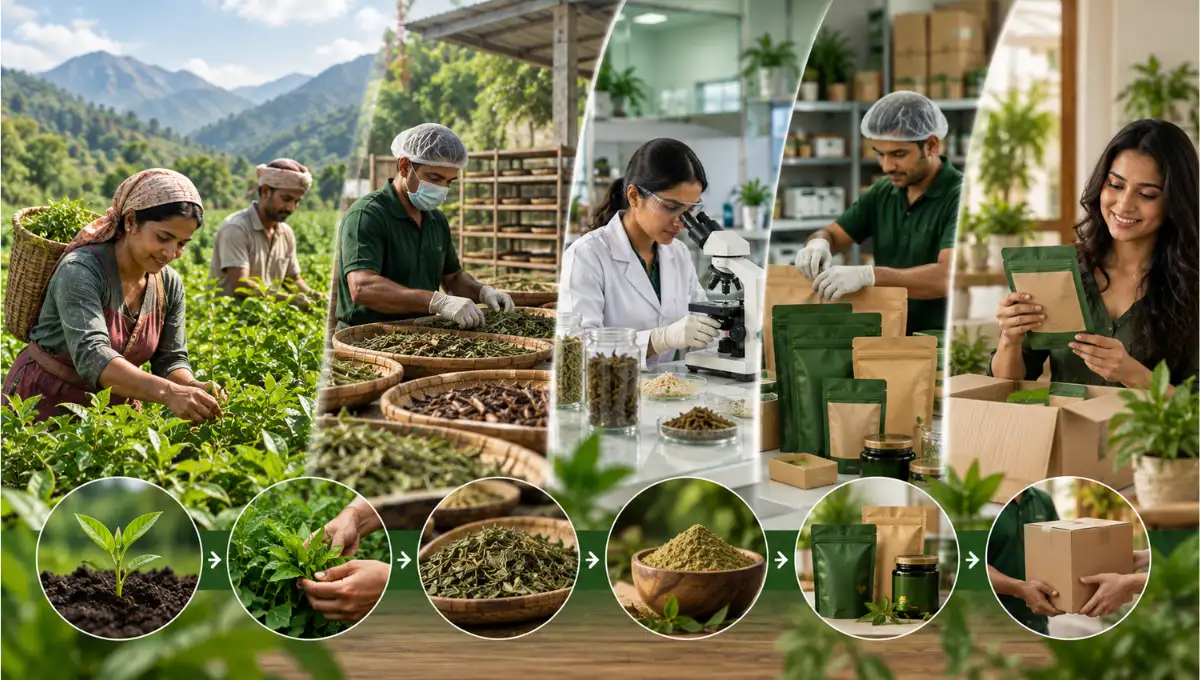
While the exact structure varies by product, most botanical ingredients pass through five broad stages: cultivation or wild collection, harvest and post-harvest handling, processing and extraction, quality testing and verification, and final distribution and packaging to the consumer. Each of these stages carries its own specific quality risks and requires appropriate practices to preserve the raw material's original value.
Research from the Food and Agriculture Organization on India's herbal trade has found that supply chains involving multiple layers of anonymous traders and brokers create opacity, with each additional layer adding cost and reducing visibility into what happened at earlier stages, without necessarily adding quality verification. A shorter, more direct supply chain gives both manufacturers and consumers much clearer visibility into sourcing and handling quality.
Yes, significantly in some cases. Many active compounds in botanicals are heat-sensitive and degrade when exposed to excessive drying or processing temperatures, and some ingredients, like certain essential oils, require specific, sometimes lengthy processing methods to fully extract their valuable compounds. Rushed or high-temperature processing can produce a finished product that looks correct on the label but has lost much of its actual biological activity compared to properly processed material.
Final Word: The Journey Determines the Destination
A finished botanical product on a store shelf represents the very last visible moment of a journey that began, invisibly to the consumer, months or years earlier in a specific field or forest. Every stage along that journey, cultivation or collection, harvest timing, processing method, testing rigor, and final distribution, has the genuine power to either preserve or quietly undermine the value of everything that came before it. Understanding this full chain, rather than judging a product purely by its finished packaging, is what separates an informed buyer from one simply trusting a label. The brands worth choosing are the ones willing to talk openly about every stage of this journey, because that transparency is the only real evidence that nothing important was lost along the way.